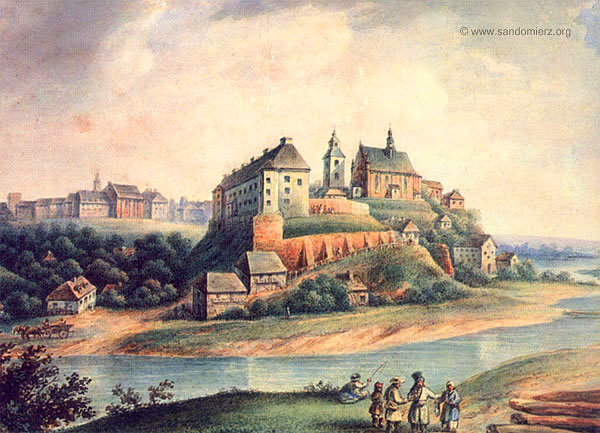
I read this great sentence the other day, about cats, but I can't find it. And I don't even know if I read it yesterday or if it was days ago, it can't be that hard to track down, I haven't read that much in the last few days. I've been reviewing sections of The Passion According to G.H., but I can be fairly confident that's not where the sentence is from, there are no cats in it, just the cockroach, and the drawing of the dog on the wall, it was a dog, wasn't it? So maybe the new book I started, Salki, fortunately I'm not very far along, I can just skim back to the beginning, but no cats, just that fabulous description of Krakow — they might've been Polish cats — and I already don't recognize so much of this book, how can I say I'm reading it if I can't even remember five pages ago?, but the tone, the listiness of it, feels a little like my cat sentence, maybe it comes from a part of the book I haven't read yet, so I check the review that spurred me to acquire this book, but the sentence isn't there either. The review notes a similarity to Perec, and I recall having looked at some of my notes on Life: A User's Manual, and though I don't recall any cats in the text — no, I don't think they were French cats — just that great picture of Perec with a cat on his shoulder — I check my notes again to be sure, but no cat sentence. The only other things I've read in recent days are a few articles, some reviews, nothing noteworthy, nothing I saved or bookmarked, how could I have let such a great sentence pass me by, unmarked, I fear it may be lost forever.
The sentence went something like this, about the change of season transpiring over their alley world, and how the outdoor cats were noting the changes and somehow plotting, and the indoor/outdoor cats feel unprepared, caught between two worlds, while the indoor cats watch the outdoor cats and can afford to feel smug but are also a little bit jealous, or wistful, all the cats in their alley, I can picture it, definitely they feel like Montreal cats.
Monday, October 30, 2017
Sunday, October 29, 2017
Addicted to the condiment of the word
Ah, speaking to me and to you is being mute. Speaking to the God is the mutest that exists. Speaking to things, is mute. I know this sounds sad to you, and to me too, since I am still addicted to the condiment of the word. And that is why muteness hurts me like a dismissal.I adore this book. I want to read it again. The Passion According to G.H., by Clarice Lispector, is a mystical, and sometimes mystifying, marvel.
But this book is not for everybody.
This is the story of woman who finds a cockroach. They stare into each other's being. This novel is about those minutes that turn into hours.
My love for this book is more about the reading experience it gave me than about the book itself. I can imagine failing miserably with this book at another time in my life.
While it is short enough to read in a weekend, it plunges to existential depths in liquid time. It did me good to read it over months, chapter by chapter, often rereading pages. It took me deep into myself, but also brought me out of myself. This book was a tool for introspection.
After a couple days of (mostly) sober reflection, I realize that the ending is a little disappointing, as a novel. What's astounding is that this should be considered a novel at all; it's a philosophical treatise, more Kierkegaard than Kafka. But amazingly, for most of the book, I turned pages based on that novelistic framework: what's going to happen next? how will it end?
As the novel closes there are some loose threads: Does the cockroach die*? (Can we consider G.H. to be a death-eater, a sin-eater?)
*[A few reviews summarize the ending — SPOILER ALERT — thusly: G.H. eats the dead cockroach. My reading tells me this: she eats the white matter that spurted from its body (this is a sexual passion before it is a religious one). She eats "of the roach," the paste of the roach, the roach's matter. G.H.'s initial slam did not kill the roach instantaneously; all G.H. learns she learns from the living roach, she describes the roach as dying (are we not all dying?), but there is no dead body. Fellow readers, what say you? And does it matter in terms of G.H.'s experience (I think it might)?]
How did G.H. get from yesterday to today? How did she leave the room? Presumably she is at a desk, writing about her experience. And now that's done, will she go dancing?
(I know one thing: if I reach the end of this story, I shall go, not tomorrow, but this very day, out to eat and dance at the "Top-Bambino," I furiously need to have some fun and diverge myself. Yes, I'll definitely war my new blue dress that flatters me and gives me color, I'll call Carlos, Josefina, Antonio, I don' really remember which of the two of them I notices wanted me or if both of them wanted me, I'll eat crevettes à la whatever, and I know because I'll eat crevettes, tonight, tonight will be my normal life resumed, the life of my common joy, for the rest of my days I'll need my light, sweet and good-humoured vulgarity, I need to forget, like everyone.)This paragraph is so out of step with the rest of the book. (Later she decides against the blue dress in favour of the black and white one [p183].) Is this the old G.H.? Or the new G.H.? Do we all so desperately need to forget? (Yes!)
The first sentence of each chapter repeats the last sentence of the preceding chapter, which effectively pulls the reader along. While there's no secret message here, this list of first sentences provides an interesting summation of the novel's contents.
— — — — — — I'm searching, I'm searching.The last sentence is:
Because a world fully alive has the power of a Hell.
Only I will know if that was the failure I needed.
Then I headed into the dark hallway behind the service area.
Then, before understanding, my heart went gray as hair goes gray.
That was when the cockroach began to emerge.
Each eye reproduced the entire cockroach.
I had reached the nothing, and the nothing was living and moist.
Forgiveness is an attribute of living matter.
I had committed the forbidden act of touching the unclean.
Then, once again, another thick millimeter of white matter spurted out.
Finally, my love, I gave in, and it became a now.
Since what I was seeing predated humanity.
Neutral crafting of life.
No longer even fear, no longer even fright.
Give me your hand:
Prehuman divine life is of a presentness that burns.
I was seeking an expanse.
I suddenly turned to the interior of this room which, in its burning, at least was not populated.
But there is something that must be said, it must be said.
Because inside myself I saw what hell is like.
Hell is my maximum.
I was eating myself, I am who am also living matter of the Sabbath.
She would feel like the lack of something that should have been hers.
Because the naked thing is so tedious.
I must not fear seeing humanization from the inside.
Infinitely increasing the plea that is born of neediness.
The taste of the living.
Our hands that are coarse and full of words.
Because I haven't told everything.
The divine for me is whatever is real.
All that is missing is the coup de grâce — which is called passion.
Giving up is a revelation.
And so I adore it. — — — — — —The dashes bring us full circle to the start of the novel, suggesting there might be something cyclical thematically as well.
G.H. starts the book claiming to have lost something. Her humanity? Her inhumanity? What has she become?
The convoluted sentence structure (not to be mistaken for convoluted thought; in fact, Lispector (and her translator, Idra Novey) wields a precision of language in verbing and positioning subject and object in relation to each other) brings to mind Kierkegaard or Kant. Some of the concepts Lispector dances with: transcendence, consubstantiation, immanence. Being and nothingness. Divinity and humanness.
In addition: notions of time and history, and indirectly the cultural trappings of art and sexuality. Beauty.
It made me lose my bearings and helped me find them again.
Previous Passion posts
This book is like any other book
I lost my human form for several hours
Everything there was sliced-up nerves
I, whatever that was
A belly entirely new and made for the ground
The simple moistness of the thing
Feeling with hellish voracity
Labels:
Clarice Lispector,
philosophy
Wednesday, October 25, 2017
Feeling with hellish voracity
Because inside myself I saw what hell is like.— from The Passion According to G.H., by Clarice Lispector.
Hell is the mouth that bites and eats the living flesh with its blood, and the one being eaten howls with delight in his eye: hell is pain as delight of the matter, and with the laughter of delight, the tears run in pain. And the tear that comes from the laughter of pain is the opposite of redemption. I was seeing the inexorability of the roach with its ritual mask. I was seeing that that was hell: the cruel acceptance of pain, the solemn lack of pity for one's own destiny, loving the ritual of life more than one's own self — that was hell, where the one eating the other's living face was indulging in the joy of pain.
For the first time I was feeling with hellish voracity the desire to have had the children I never had: I wanted to have reproduced, not in three or four children, but in twenty thousand my organic hellishness full of pleasure.
Labels:
Clarice Lispector
Sunday, October 22, 2017
Two humiliating negatives
The door no longer creaked as it had done in her father's time; it opened quietly, but she was immediately and simultaneously aware of both past and present, of the smooth movement of the door and the creak that was no longer there. She shivered under the eiderdown. Two humiliating negatives.Iza's Ballad, by Magda Szabó, is an achingly beautifully sad novel.
The title of the book is somewhat misleading. It's about the people that surround Iza, and while this helps create a picture of the life she moves through, we never get to know her intimately. Which is, perhaps, the point.
Translator George Szirtes explains in his introduction (I've learned to save these for after I read the novel — if they don't contain outright spoilers, they can very much colour your perception of the work) that the Hungarian title is Pilátus, the reasons for which I won't go into here. The English title sets a different expectation, and I'm not sure it's much better.
I picked up Iza's Ballad expecting to learn something about myself. After all, my name is Iza too, at least in some circles. For the most part, it's the story of how Iza, a successful doctor, divorced, brings her aging mother to live with her in the big city after her father dies. I have an aging mother too.
Iza is good person. She always does the right thing. Textbook. The world is her problem to solve. She views her mother as a patient more than as a person.
Her mother, Ettie, referred to mostly as "the old woman," loves her daughter dearly, doesn't want to hurt her feelings, respects her judgement, and, above all, trusts her (whom else can she trust?) — Iza always knows what to do, she's so clever.
It's heartbreaking to see these two women working at cross-purposes, both well-intentioned, both trying to do the best for the other, and failing miserably. It's a massive failure of communication, as well as a failure of courage on Ettie's part and a failure of understanding on Iza's.
We're treated also to portraits of Iza's father Vince, a former judge whose career fell victim to censure; her ex-husband Antal, an orphan, now a doctor in her small hometown; Lidia, his new love interest, a nurse who sat by Vince's deathbed; Domokos, a writer, Iza's would-be suitor; and other minor characters who flit through their lives, both in Budapest and in the villages. These people are so fully and compassionately drawn.
The eponymous ballad is not simply a poetic rendering to tell us this is Iza's story; there is an actual folksong at the heart of her character, one so sad, she could not bear to hear how it ended.
[I could find no trace of this particular song, words by Bajza József, but I imagine it is something like this one.]
"Good Lord," thought Lidia, "how exhausted she must be with that constant self-discipline, that need to save not only her family but the whole world. How hard to live with the hardness of heart that dares not indulge itself by grieving over dead virgins! The poor woman believes that old people's pasts are the enemy. She has failed notice how those pasts are explanations and values, the key to the present."Beyond that, Iza's Ballad is about our idea of home — is it our stuff? the people? And what when our belongings and our loved ones are gone? Sometimes it really is a place, but it's a half-remembered, half-imagined place. It may be a seemingly random, inconsequential place imbued with only half-real memories and meaning.
The original Hungarian title would appear to be a harsh condemnation of Iza. I prefer to take pity on her. She is after all, her mother's daughter.
I read Szabó's The Door last year and thought it was brilliant. I was delighted to learn that Iza's Ballad was available in English. I was devastated to realize that Szabó died ten years ago, and thus only a finite number of her works will ever be available to me. I'll be looking up the recently released Katalin Street shortly.
Reviews Worth Reading
The Globe and Mail: In Iza’s Ballad, Magda Szabo delivers a compelling parable of mid-20th century progress:
But Iza's Ballad relies on contrasts; Ettie exists fundamentally in relation, and opposition, to her daughter. [...] It is more of a study of the spaces between people, and what those represent.New York Times: In Magda Szabo's Novel, a Widow Is Uprooted From What She Loves (Lauren Groff):
Szabo excels at summoning the delicate and wordless spaces between people who love each other; as the book goes on, the emotional layers build quietly and almost unbearably. You feel tragedy amassing, somehow, out of ineffable wisps of feeling.Anomaly: Stumbling Toward Affection: On Magda Szabó’s Iza’s Ballad:
Absent antagonists and filled with loving, goodhearted characters, Szabó’s novel might be confused for that of an idealist, were it not for its characters’ muted and pervasive despair. Without evil men to blame, we must study the protagonists’ frustrations, see in them our own, and consider how one can look at others and perceive them as more than manifestations of vitals and symptoms.
Labels:
Magda Szabó,
NYRB,
translation
Saturday, October 21, 2017
The simple moistness of the thing
Reading The Passion According to G.H. (Clarice Lispector) is an exhausting, but thoroughly rewarding, experience. I'm not sure I can maintain this slow pace. I build momentum, and start to zip along, then remind myself to stop and think. Then I reread, and absorb. What am I absorbing, though? Cockroach guts?
I've tried to summarize this book, or the experience of it, to a few people. It goes like this:
It's about a woman, an artist, who comes face to face with a cockroach. Eye to eye. Just that, really. A hundred pages in and maybe an hour has passed, maybe mere minutes, or less. She goes into the maid's room (who resigned the day previously), and the room is bright and dry and pristine white (except for the weird cave painting on the wall). But there in the wardrobe is a cockroach. And it petrifies G.H. And she tries to slam the door on it, but that only results in the white mucous spurting out. And then she confronts it.
And I'm on tenterhooks.
Will G.H. finally succeed in killing it? Will she forgive it, have mercy on it? Will she become it?
What the fuck is this about anyway? Is it about G.H. coming to terms with her classism or racism? Is there an element of lesbianism and/or homophobia vis-à-vis her relationship with the maid? Is it about getting in touch with her emotions? Her sexuality or sexual passion? Her primal being? (The language is startlingly erotic.)
Is it about fertility? What about fertility as creativity, as an artist? There is timelessness in being — the roach's being — but also in art. Is she pregnant?
And what about religious passion? Where's god in all this? (The language is startlingly religious, too.) Are we driving at some cosmic oneness? What transcendence is this?!
What does this book give me? Every page has quotable aha phrases, but do they bring me anything new, anything I've not already internalizedin my life? Then why do I love this book so much?
Of all the books, this is the book I don't want to end. I started reading this book last February, I could easily devour it in an evening, but I deliberately prolong it, something tells me it's better this way, how long can I make it last?
The way it slows down time. The way it instills mindfulness, in a pre-bullshitty-coopted-by-yoga-culture way. [Maybe because I am witness to a slow parade of large black ants across my kitchen, one ant per day, each larger than the last. I kill them all, but I grow tired of my Sisyphean role. The book came before the ants, though.]
I'm halfway. I don't think I can hold myself back any longer. "Transcending is an exit." Everything becomes nameless.
This is gripping existential drama unfolding in slow motion! Feel the horror!
"Freedom is a secret."
I've tried to summarize this book, or the experience of it, to a few people. It goes like this:
It's about a woman, an artist, who comes face to face with a cockroach. Eye to eye. Just that, really. A hundred pages in and maybe an hour has passed, maybe mere minutes, or less. She goes into the maid's room (who resigned the day previously), and the room is bright and dry and pristine white (except for the weird cave painting on the wall). But there in the wardrobe is a cockroach. And it petrifies G.H. And she tries to slam the door on it, but that only results in the white mucous spurting out. And then she confronts it.
And I'm on tenterhooks.
Will G.H. finally succeed in killing it? Will she forgive it, have mercy on it? Will she become it?
What the fuck is this about anyway? Is it about G.H. coming to terms with her classism or racism? Is there an element of lesbianism and/or homophobia vis-à-vis her relationship with the maid? Is it about getting in touch with her emotions? Her sexuality or sexual passion? Her primal being? (The language is startlingly erotic.)
Is it about fertility? What about fertility as creativity, as an artist? There is timelessness in being — the roach's being — but also in art. Is she pregnant?
And what about religious passion? Where's god in all this? (The language is startlingly religious, too.) Are we driving at some cosmic oneness? What transcendence is this?!
I don't want to feel directly in my very delicate mouth the salt in the eyes of the roach, because, my mother, I had been used to the sogginess of its layers and not the simple moistness of the thing.Is this about death? Does she die? (No, she can't die, she's relaying all this the next day.) Does the cockroach die?
Even the beauty of salt and the beauty of tears I would have to abandon. Even that, since what I saw predated humanity.
What does this book give me? Every page has quotable aha phrases, but do they bring me anything new, anything I've not already internalizedin my life? Then why do I love this book so much?
Of all the books, this is the book I don't want to end. I started reading this book last February, I could easily devour it in an evening, but I deliberately prolong it, something tells me it's better this way, how long can I make it last?
The way it slows down time. The way it instills mindfulness, in a pre-bullshitty-coopted-by-yoga-culture way. [Maybe because I am witness to a slow parade of large black ants across my kitchen, one ant per day, each larger than the last. I kill them all, but I grow tired of my Sisyphean role. The book came before the ants, though.]
I'm halfway. I don't think I can hold myself back any longer. "Transcending is an exit." Everything becomes nameless.
This is gripping existential drama unfolding in slow motion! Feel the horror!
"Freedom is a secret."
Labels:
Clarice Lispector
Tuesday, October 17, 2017
Comforted by its benign hum
The old woman, who was frightened of all machines, found a curious way of making the acquaintance of the refrigerator. She discovered that the fridge made a sort of animal noise, a low purr. It startled her at first, but then she imagined having a conversation with it and would sit beside it, feeling she was not alone. The noise reminded her of some kind of cat but since her last pet had been Captain, a dog, a soft thing as far as she was concerned, it represented a clumsy white version of Captain. On one occasion she spilled cherry soup in it and tried to wash it up because she was afraid of being told off. Iza went quite pale when she saw it, because of course she hadn't turned the electricity off first. "Look, my dear," said the girl. "This is not a block of ice. Never even think of cleaning it with a wet rag. Never mind if it leaves a stain." She pulled out the plug of the fridge and the purring stopped.— from Iza's Ballad, by Magda Szabó.
After that she no longer tried to make friends with the refrigerator and directed her desperate efforts to understanding how it worked, so that she might prove herself capable of operating it. The trouble was that Iza never had the time to explain and she was reluctant to ask the conductor's wife. She took much more care touching it now and simply sit beside it, comforted by its benign hum.
Poor old woman. Poor fridge. It's like Iza unplugs it as a punishment for them both.
Mmm. Cherry soup.
Labels:
Magda Szabó
Thursday, October 12, 2017
A belly entirely new and made for the ground
What is there to forgive?
[Whom is she addressing as "my love"? Her lover? The reader? The cockroach? The maid?]
G.H. is compelled to organize, to organize hope. She needs some organizing principle by which to recover. She is aware that she managed to leave the room, but recovery is still required.
She lives so far above the world, she knows her life may suddenly collapse.
She questions why this happened to her. "What was it that called me: madness or reality?" (p 66).
She feels unclean. "And why was the unclean forbidden?" (p 67).
She comes to understand: "Becoming unclean with joy" (p70). Joy without redemption, joy without hope. (Is this a purer joy, or a more sinful one?)
She lowers herself to the roach's level, and sees it as it is, beyond ideas.
And then there's more white matter spurting out! "The roach wasn't seeing me with its eyes but with its body." (p 73).
The wings are receding. "My convictions and my wings were quickly drying up" (p 73).
And she's just looking at the roach, and it's hideous and beautiful. And completely feminized: "Its two eyes were alive like two ovaries. It was looking at me with the blind fertility of its gaze. It was fertilizing my dead fertility" (p 74). Is G.H. indulging in a lesbian fantasy? [So the roach is meant to symbolize the maid, then?]
More white matter!
[How can this not be sexual?]
G.H. confides that she never experiences this — this slowing of time — by day; only at night. She is feeling pleasure in all this. "My love."
She claims to be asking for help, but it's not clear of whom or for what purpose exactly: what does she need help for?
[Whom is she addressing as "my love"? Her lover? The reader? The cockroach? The maid?]
G.H. is compelled to organize, to organize hope. She needs some organizing principle by which to recover. She is aware that she managed to leave the room, but recovery is still required.
She lives so far above the world, she knows her life may suddenly collapse.
She questions why this happened to her. "What was it that called me: madness or reality?" (p 66).
She feels unclean. "And why was the unclean forbidden?" (p 67).
She comes to understand: "Becoming unclean with joy" (p70). Joy without redemption, joy without hope. (Is this a purer joy, or a more sinful one?)
More and more I had nothing to ask for. And I was seeing, with fascination and horror, the pieces of my rotten mummy clothes falling dry to the floor, I was watching my transformation from chrysalis into moist larva, my wings were slowly shrinking back scorched. And a belly entirely new and made for the ground, a new belly was being reborn.What new being is this?
She lowers herself to the roach's level, and sees it as it is, beyond ideas.
And then there's more white matter spurting out! "The roach wasn't seeing me with its eyes but with its body." (p 73).
The wings are receding. "My convictions and my wings were quickly drying up" (p 73).
And she's just looking at the roach, and it's hideous and beautiful. And completely feminized: "Its two eyes were alive like two ovaries. It was looking at me with the blind fertility of its gaze. It was fertilizing my dead fertility" (p 74). Is G.H. indulging in a lesbian fantasy? [So the roach is meant to symbolize the maid, then?]
More white matter!
[How can this not be sexual?]
G.H. confides that she never experiences this — this slowing of time — by day; only at night. She is feeling pleasure in all this. "My love."
She claims to be asking for help, but it's not clear of whom or for what purpose exactly: what does she need help for?
But what I'd never experienced was the crash with the moment called "right now." Today is demanding me this very day. I had never before known that the time to live also has no word. The time to live, my love, was being so right now that I leaned my mouth on the matter of life. The time to live is a slow uninterrupted creaking of doors continuously opening wide. Two gates were opening and had never stopped opening. But the were continuously opening onto — onto the nothing?
The time to live is so hellishly inexpressive that it is the nothing. What I was calling "nothing" was nevertheless so stuck to me that to me it was... I? and that's why it was becoming the nothing. The doors as always kept opening.
Finally, my love, I gave in. And it became a now.
Labels:
Clarice Lispector
Monday, October 09, 2017
I, whatever that was
At long last I've returned to Clarice Lispector's The Passion According to G.H. This book deserves focus, which I feel I can now give. Part of me has delayed this moment: truly, I do not want this book to end, and part of me does not want to know how it ends.
At this point, the novel is all potential: me (because of course the reader relates to G.H.) versus the cockroach.
When we last left off, the cockroach began to emerge.
Here it is, causing such fear, "a fear much greater than myself," a catalyst to G.H. realizing herself, her power, her "I, whatever that was" (p 46).
And, oh my god, she slams the door shut on the creature! Because she can!
She looks at it, and it is ancient. "It looked like a dying mulatto woman" (p 49). (Like the maid?)
"What I was seeing was life looking back at me" (p 51). Something primordial, raw matter. She fears it, and she recognizes herself in it, and she hates it for doing so. (She hates herself?)
Silence opens within her, and she's looking for the courage to abandon hope. The cockroach makes her do this. What does one achieve by abandoning hope? A truth beyond conventional expectations?
G.H. is reminded of the time she saw her own blood outside of herself, recognizing herself as existing in something external. As if this cockroach too is constituent of her lifeblood.
The room is a places beyond "he" or "she," beyond "I." The room is an existential abyss, a desert that seduces. The cockroach seduces. G.H. becomes irreducible.
And the tension snaps (p 59). (Did she scream or not scream?)
G.H. is in the room. She is in the drawing on the wall. She is there with her fifteen million daughters (p 60). She is finally outside of herself. And by everything looking at everything, everything knowing everything, forgiveness arrives.
At this point, the novel is all potential: me (because of course the reader relates to G.H.) versus the cockroach.
When we last left off, the cockroach began to emerge.
Here it is, causing such fear, "a fear much greater than myself," a catalyst to G.H. realizing herself, her power, her "I, whatever that was" (p 46).
And, oh my god, she slams the door shut on the creature! Because she can!
Because during those seconds, eyes shut, I was becoming aware of myself as one becomes aware of a taste: all of me tasted of steel and verdigris, I was all acid like metal on the tongue, like a crushed green plant, my whole taste rose to my mouth. What had I done to myself? With my heart thumping, my temples pulsing, this is what I'd done to myself: I had killed. I had killed! But why such delight, and besides that a vital acceptance of that delight? For how long, then, had I been about to kill?For G.H., it's not about her capacity to kill so much as what she's killed. But no, it's not dead yet! Can she slam it again? No, G.H., don't look at it! She looks at it. All is lost.
She looks at it, and it is ancient. "It looked like a dying mulatto woman" (p 49). (Like the maid?)
"What I was seeing was life looking back at me" (p 51). Something primordial, raw matter. She fears it, and she recognizes herself in it, and she hates it for doing so. (She hates herself?)
Silence opens within her, and she's looking for the courage to abandon hope. The cockroach makes her do this. What does one achieve by abandoning hope? A truth beyond conventional expectations?
G.H. is reminded of the time she saw her own blood outside of herself, recognizing herself as existing in something external. As if this cockroach too is constituent of her lifeblood.
So I opened my eyes all at once, and saw the full endless vastness of the room, that room that was vibrating in silence, laboratory of hell.To enter the room, G.H. must pass through the cockroach. This is not physically true. Unless she means another room, of a spiritual kind. Or to earn access back to the reality of the room we already know to exist.
The room is a places beyond "he" or "she," beyond "I." The room is an existential abyss, a desert that seduces. The cockroach seduces. G.H. becomes irreducible.
I had reached the nothing, and the nothing was living and moist.Good god, the cockroach is oozing! Something thick and white and slow. She needs to scream a secret scream that will unleash all the screams. It sounds to me like a scream of sexual awakening — abandoned. To depart civilization (enter the desert?), scientists have permission, priests have permission, but women do not.
And the tension snaps (p 59). (Did she scream or not scream?)
G.H. is in the room. She is in the drawing on the wall. She is there with her fifteen million daughters (p 60). She is finally outside of herself. And by everything looking at everything, everything knowing everything, forgiveness arrives.
Labels:
Clarice Lispector
Sunday, October 08, 2017
My heart was beating at a slight remove
I didn't realize it at the time, I told myself, but Ange's shadow was already very discreetly darkening this room where the three of us used to sit, happy and serene, it was already there, lurking in a corner, remaking our future, because, though I surely didn't realize it at the time, my heart was beating at a slight remove from the two others, imperceptibly less innocent, less constant, less convinced.I read a review of this novel one morning, and bought myself a copy that very afternoon.
My Heart Hemmed In, by Marie Ndiaye, is an intensely claustrophobic, paranoid novel. I carried it with me in my soul, it weighed on me, it dragged me down.
This is how I felt all week long:
What? What's going on? Why are people treating me this way? What did I do? Did I do something? What happened? Why does everyone think I know what happened? Why don't they believe me? Why won't anyone be straight with me? Are they afraid of me? Repulsed be me? Why won't they tell me? Why has my period stopped? What happened?
This was a spiritually exhausting read. Brilliant.
It starts with Nadia and Ange, teachers, on their way home from school. As they settle in at home it becomes evident that Ange has been seriously injured. Narrated by Nadia, we're as much in the dark as she is. Who did this (and what is it exactly they did) and why?
It seems everyone — the neighbours, the pharmacist, the school principal — is well aware of what transpired. Nadia alone is oblivious. And it's hinted that it's all her fault.
Nadia admits that she and Ange were guilty of arrogance. It's also suggested that they are outsiders to this community. But is that sufficient to bring on this level of harm and ostracization?
Is she an immigrant? But she was born in a nearby Bordeaux neighbourhood. Is it because she's fat? (Or possibly pregnant?) Does her ex-husband have something to do with it? Nothing is clear.
I was sympathetic toward Nadia at the beginning, but she can be inappropriately brash (a sign of weakness?) and she makes some odd decisions. While the sentiment expressed toward her seemed to be part of something bigger, at some point I had to consider whether she as an individual had in fact brought any of this on herself.
She's not exactly likeable.
I extend an uncertain hand. She brushes hers against it, not squeezing it, and I shiver at the touch of a warm, tender skin, telling myself that my own dry, dimpled, frightened little hand must make her feel like she's touching a lizard.
"Good trip?" she asks.
But she's already turned around, uninterested in my answer, or even whether I answer, and so I say nothing, impotent and desolate, feeling my capacity for reflection and judgment and perspective being drowned by the tidal wave of unconditional admiration and painful obeisance that hadn't washed over me for so long, protected as I was by Ange's assurance, he who could never be felt to feel reverence for anything or anyone.
This reading experience called to mind a few other novels:
- Magda Szabo's The Door, for it's depiction of "community" from one specific — and warped — perspective, as well as the narrator's way of introspection — self-probing but somehow still always at a remove or missing the point.
- Clarice Lispector's The Passion According to G.H. (which I've not finished), for it's distortion of time, it's urgency, but also the sense of the self being swallowed by the self — all that introspection having a deleterious effect.
- Herman Koch's The Dinner, to a lesser extent, for that pressing sense that this story is bigger than just what happens to one or two little people — that it's important. Also possibly because I was on some level aware of the a racist element in this book.
The ending is quite baffling, but that comes after a long string of bafflements.
1. Why the italics? Is that her heart talking? Is it what's muffled, screaming to get out? Is this her innermost voice? But no, it expresses some very banal things.
2. Who is the great Noget? A writer of treatises on education, he espouses something like tough love, but his treatment of Nadia and Ange could be construes as the opposite. He coddles them, shields them. At times, it seems, with sinister purposes. Is he taking revenge on Ange, or rewarding him? Is he trying to teach Nadia a lesson? What lesson?
3. What happened to Yasmine? Nadia's mother hints at something terrible? Did Wilma devour her? Metaphorically or literally? Why must Nadia not eat the meat?
4. Food plays a role. Nadia eats Noget's food, despite feeling there's some hideous intention in his cooking. Such rich food, she's been tricked. There's the charitable food of a stranger. There's the meat, bloody meat at her son's home. At long last there's the restorative food at her parents' house, prepared by honest fingers.
5. So many smells! The ongoing and intensifying smell of Ange's putrefaction. "He can't smell the stench of his own infection, but he's repelled by the aroma of fine food." The fog, permeating the city with a metallic smell. A woman's accent like a revolting smell. Some healthy, sweet smells, and warm intimate smells. The smell of the dog's saliva, strong and sour. The way the dog reacts to her, Nadia must smell like a dog.
6. There is no humour in this book, just absurdity. Trams don't pick her up. Streets become unrecognizable. The very city seems to want to expel her.
7. What exactly happened? (I have some ideas now.) Nadia may have missed something in the news, because they don't have a television.
At heart, this is a book about owning one's self, owning one's heritage, one's past.
Oh, her poor heart!
This is a figment of my overwrought mind, and I know it. I'm perfectly sane, perfectly capable, even in my mistrust and trepidation, of grasping its outlandishness. But knowing that doesn't stop my heart, my poor fat-encased heart, from racing ach time someone pops up before me, looking slightly haunted (is that real or feigned?), and fixing me with the wide-eyed stare of someone who doesn't see the person he was expecting.
No, I'm not out of my mind. Why should I be so convinced that everything I see has some direct connection to me? I can't rid myself of the feeling the whole city is spying on me. And my heart is cornered, surrounded by the baying pack, and it's hammering on the wall of my chest, wishing it could break out of its cramped cage, my poor aging heart, my poor trembling heart.
How does one come to know one's own heart? Or anyone else's?
The heart of the city: "I've been walking the heart of this city, its black old heart, its cold old heart, for the past half century" — "its old, dark, ungrateful heart," "dark and perversely changeable, the heart of my city.""
Her son's heart: "("my little heart," I so long called him, and now here he is forsaking his mother's old heart)."
Her ex-husband's heart: "his devoted but unformed heart, his rudimentary heart."
Nadia's "petty old heart." "My stolid heart, my weakening, stolid heart, keep on bravely beating in your prison of fat!"
"I find I have to stop and rest until my heart, my scandalized, insulted heart, starts to beat a little slower." "But my heart is uneasy, the side of my heart that's still decent, appalled, and humiliated, but meek, so very meek." "My heart clenched, a heart that's not so old anymore, my old heart now young again, stupidly beating in time with what inhuman heart?"
"I feel my agitation and doubts, my confusion and hatred, flowing away with my tears, draining my fat, heavy old heart of the questions that had been choking it."
In the end, Nadia expels the tumour (whatever its nature — rancor?) growing inside her.
Because I say to myself, where could that thing — that black, glistening, fast-moving thing I saw slide over the floor of my room one night as I was undressing for bed — possibly have sprung from if not my own body? A quick, black, glistening thing that left a faint trail of blood on the floor, all the way to the door.It's a bloody horror novel.
Labels:
French literature,
Marie Ndiaye
Thursday, October 05, 2017
A sort of mute, craven respect
"This is all intolerable," I say.— from My Heart Hemmed In, by Marie Ndiaye.
I fall to my knees by the bed. I bury my burning face in the mattress, pressing Ange's hand to my forehead, my hair.
"You see, you see," I say, as softly as I can, and there's almost a rusted sound to my voice, a withered sound, "we're respectful people, my darling, and it's a fact, yes, that we couldn't help respecting even the wrongs that were done to us, yes, a sort of mute, craven respect, and we felt that respect even for those set out to hurt us, because whenever there's a rule or a semblance of a rule we respect it, that's right, and if that rule offends us, if it attacks us and makes us unhappy, we tell ourselves that rules aren't made to please absolutely and necessarily everyone, that rules, and even semblances of rules, don't have to make us happy, us specifically, and that on the other hand there are already a great many rules that do suit us, or favor us. And isn't that just what you were thinking, my love, my poor darling, when you were walking behind me, trying to hide your wound with your satchel, isn't that more or less what you were thinking: after all, nobody's expected to want to please me by treating me exactly as I deserve, there are times, unquestionably, when I have to accept being treated in ways I don't deserve, for the sake of a greater good I don't see? Oh yes, it's true, that's more or less what you were thinking, out of pride, and that's not good, that's not good at all..."
I can't remember the last time I read a book that affected me so deeply, burrowed under my skin like this one. All week I've been feeling paranoid, anxious, weak, claustrophobic. And I know it's this book bringing be down and distracting me, it's a scab I keep picking at, I have to know what's going on.
I'm about halfway, and, like the narrator, I have no idea what's going on, why this is happening. (Although, maybe she's deluding herself.) It's a bit of a meta experience as a reader, I'm questioning my own understanding and assumptions with each turn of a page.
Labels:
Marie Ndiaye
Monday, October 02, 2017
Living among dirt and chaos
"I don't like the fact that eventually every conversation between Catholic Poles and Jews goes back to events from almost seventy years ago. As if there hadn't been seven hundred years shared history before that, and everything after it. Just a sea of dead bodies and nothing else."A Grain of Truth, by Zygmunt Miłoszewski, is the second mystery novel featuring State Prosecutor Teodor Szacki. I stayed away from this novel for a few years precisely because I didn't want to read about that conversation.
But Miłoszewski handles it judiciously. Since World War II, and even before then, Polish-Jewish relations have been complicated and strained. The plot of this mystery hinges on those tensions, which persist today.
The murder has the characteristics of Jewish slaughter, and the story is linked to the myth of blood libel. As such, the prosecutor has to confront the anti-Semitic past of his adopted town, Sandomierz: xenophobia and violence and resurgent nationalism. The investigation delves into archives, symbols, and local legends.
A Grain of Truth also features a painting in Sandomierz cathedral, which for years was covered up with a cloth because it was considered offensive. Since the novel was written, the painting is again on display, but with an informative plaque. Here's the thing about owning your past.
Read the excellent review at NPR.
What I particularly like about these novels is the cultural touchstones Miłoszewski offers me: Jarosław Iwaszkiewicz. Jacek Kaczmarski. Julian Tuwim.
I'm not even sure why I know those names. My mother doesn't know those names. It's just luck that my social and educational path at one time crossed the Poland Miłoszewski references. For this reason, I find these books highly relatable. Surely someone who has no Polish heritage would also enjoy these books, but maybe they wouldn't resonate in the same way.
Szacki's failed marriage and his general uncertainty about life (in any realm beyond his profession) also contribute to the feeling of relatability. He's just a regular, fucked-up guy.
I also like how he disses both small-town life and Warsaw. I never much liked either.
All those years living in Warsaw he'd sensed that something wasn't right, that the ugliest capital city in Europe wasn't a friendly place, and that his attachment to its grey stone walls was in actual fact a sort of neurotic dependence, urban Stockholm Syndrome. Just as prisoners become dependent on their prison, and husbands on their bad wives, so he believed that the very fact of living among dirt and chaos was enough for him to bestow affection on that dirt and chaos.Excerpt.
Labels:
mystery,
Polish literature,
Zygmunt Miłoszewski
Thursday, September 28, 2017
Fatal whirlpools
I went looking for a fragment of one poem, but found something else entirely. And when it comes to poetry, it's usually just as well.
I'm reading a mystery novel by Zygmunt Miłoszewski. The text is liberally sprinkled with pop-cultural references along with some classical ones, a lot of them very, very Polish. When he quoted Wisława Szymborska, I went looking for the source.
Instead I found "In Praise of My Sister," which I've since been reading over and over, all while (silently) actually praising my sister (for entirely unrelated reasons).
It makes me wonder where poetry comes from. I don't think my sister ever wrote poetry; I'll have to ask her. To my knowledge, my parents weren't afflicted. But my brother was. He wrote on napkins and coasters and the insides of cigarette packages. Filled with mystical symbols and romantic angst. My attempts were more academically driven. (And far superior.) Have we opened the genetic floodgates? Pity my daughter.
But also I've been reading three different translations of this poem, and puzzling over them.
While in the fragment above (tr. Stanisław Barańczak and Clare Cavanagh) the sister has much to tell, Adam Czerniawski says "she'll tell us / all / all / all about it." and according to Magnus J Krynski and Robert A Maguire, "she'll tell us, everything, / everything / everything." They're none of them... perfect.
I wondered also about Peter Piper — I couldn't be sure how meaningful or not that reference was to me ("And, even though this is starting to sound as repetitive as Peter Piper," Barańczak & Cavanagh). The original Polish (see Pochwała siostry) names Adam Macedoński, an activist, artist, and (minor?) poet. One translation leaves the reference, obscure as it is, intact ("and though it sounds like a poem by Adam Macedoński," Krynski & Maguire); another evades the issue entirely ("And — this begins to sound like a found poem —" Czerniawski). And I still don't know who Adam Macedoński is, and what Peter Piper is supposed to mean.
Days like this I hate poetry, and I love it. I have too much time on my hands, and not enough.
Days like this I praise my sister for being an accountant.
I'm reading a mystery novel by Zygmunt Miłoszewski. The text is liberally sprinkled with pop-cultural references along with some classical ones, a lot of them very, very Polish. When he quoted Wisława Szymborska, I went looking for the source.
Instead I found "In Praise of My Sister," which I've since been reading over and over, all while (silently) actually praising my sister (for entirely unrelated reasons).
There are many families in which nobody writes poems,I love this poem.
but once it starts up it's hard to quarantine.
Sometimes poetry cascades down through the generations,
creating fatal whirlpools where family love may founder.
My sister has tackled oral prose with some success.
but her entire written opus consists of postcards from vacations
whose text is only the same promise every year:
when she gets back, she'll have
so much
much
much to tell.
It makes me wonder where poetry comes from. I don't think my sister ever wrote poetry; I'll have to ask her. To my knowledge, my parents weren't afflicted. But my brother was. He wrote on napkins and coasters and the insides of cigarette packages. Filled with mystical symbols and romantic angst. My attempts were more academically driven. (And far superior.) Have we opened the genetic floodgates? Pity my daughter.
But also I've been reading three different translations of this poem, and puzzling over them.
While in the fragment above (tr. Stanisław Barańczak and Clare Cavanagh) the sister has much to tell, Adam Czerniawski says "she'll tell us / all / all / all about it." and according to Magnus J Krynski and Robert A Maguire, "she'll tell us, everything, / everything / everything." They're none of them... perfect.
I wondered also about Peter Piper — I couldn't be sure how meaningful or not that reference was to me ("And, even though this is starting to sound as repetitive as Peter Piper," Barańczak & Cavanagh). The original Polish (see Pochwała siostry) names Adam Macedoński, an activist, artist, and (minor?) poet. One translation leaves the reference, obscure as it is, intact ("and though it sounds like a poem by Adam Macedoński," Krynski & Maguire); another evades the issue entirely ("And — this begins to sound like a found poem —" Czerniawski). And I still don't know who Adam Macedoński is, and what Peter Piper is supposed to mean.
Days like this I hate poetry, and I love it. I have too much time on my hands, and not enough.
Days like this I praise my sister for being an accountant.
Sunday, September 24, 2017
The knowledge of the impossibility of the attempt
The Goldens all told stories about themselves, stories in which essential information about origins was either omitted or falsified. I listened to them not as "true" but as indications of character. The stories a man told about himself revealed him in ways that the record could not.The Golden House, by Salman Rushdie, is about Nero Golden and his three grown sons, living the life in New York City. It begins the day Barack Obama is inaugurated as president and ends some eight years later.
It is not the book I thought it would be.
While it mocks The Joker who eventually won the country, it takes a few jabs at Obama along the way. Nero Golden, meanwhile, is himself a kind of golden-boy caricature, one young wife after another, his spoiled progeny, so much gold it's garish.
I assumed he had brought serious funds with him when he came west, but there were persistent rumors that all his enterprises were highly leveraged, that the whole mega-business of his name was a flimflam game and bankruptcy was the shadow that went with his name whenever he took it for a stroll. I thought of him as a citizen not of New York but of the invisible city of Octavia which Marco Polo described to Kublai Khan in Calvino's book, a spider-web city hanging in a great net over an abyss between two mountains. "The life of Octavia's inhabitants is less uncertain than in other cities," Calvino wrote. "They now the net will last only so long." I thought of him too as one of those characters in animated cartoons, Wile E. Coyote perhaps, who are constantly running off the edges of canyons, but who keep going, defying gravity, until they look down, and then they fall. The knowledge of the impossibility of the attempt brings about its calamitous ending. Nero Golden kept going, perhaps, because he never looked down.I had thought Golden was meant to serve as a commentary on, or parody of, Trump. It feels like the whole novel is supposed to be doing that, yet failing to do that. It's not really about the Obama years, or about the America that allowed Trump to happen. But I can't shake the feeling that it should be.
This novel (much like our times?) is chaotic. It's told by a storyteller (I mean Rushdie, not his weak narrator), but there's not much story to it. While it's easy to get swept up in Rushdie's prose, it wears thin after a couple hundred ADHD pages.
There are some compelling narrative threads but they don't come together satisfactorily. Big themes include identity and re-invention of self.
About two-thirds of the way through,
Then a friend of mine, a writer, a good writer, said something that scared the pants off me. He said, think of life as a novel, let's say a novel of four hundred pages, and the imagine how many pages in the book your story has already covered. And remember that after a certain point, it's not a good idea to introduce a new major character. After a certain point you are stuck with the characters you have. So maybe you need to think of a way of introducing that new character before it's too late, because everyone gets older, even you.I thought, maybe this is it, maybe this is where it gets interesting, someone new to shine a light, but no. There was no one. I had stopped caring.
The Golden House novel left me feeling bored and disappointed.
The reviews in the New York Times really nailed it.
Reviews
Monica Ali in the New York Times: In Salman Rushdie's New Novel, the Backdrop Is the Obama Years
Collectively, their story lines are high-octane vehicles for observations on everything from art to gun violence, told with Rushdie's customary brio and narrative panache, and the reader is happy to go along for the ride.Dwight Garner in the New York Times: Salman Rushdie's Prose Joins the Circus in 'The Golden House'
[...]
Despite (or because of) all the apostrophizing, René fails to demonstrate any insight into why "60-million-plus" brought the Joker to power.
All gestures here are grand gestures; all soirées are glittering soirées; all mirrors are magic mirrors; every ferocity is a genuine ferocity; every grill is a brazier; every regret a bitter one.LA Review of Books: Rushdie's Domus Aurea: "The Golden House" by Salman Rushdie
The effect is exhausting — and deadening. Anything can happen, so nothing matters. Rushdie is obsessed with "characters," as Alfred Kazin once said of John Irving, yet somehow does not evoke the more difficult thing: character.
The point is apparent: the times have produced an arbitrary, indiscriminate form of violence, whether by an organization or a lone nut that can catch any of us anywhere. But the book sheds little light on the America that produces that violence or how it shapes human action and interaction.New Statesman: The Golden House is Salman Rushdie's not-so-great American novel
What is The Golden House actually about? The models invoked – Nero as Captain Ahab, as Jay Gatsby, as Lucius in Apuleius’s The Golden Ass – suggest a study of hubris, with America as an all-too-willing home, but the relationship between subject and backdrop is lost amid so much verbal noise.
Interview with Salman Rushdie
NPR: Leaving The Past Behind — Or Trying To — In Rushdie's Latest
America clearly has some very heavy, and even dark aspects to its history. But it's not like having a couple of thousand years, or three thousand years of history. The burden of history is greater. And so one of the things that happens in this book is that people from an old country, an Indian family, a wealthy Indian family — in a way, trying to shed the burden of their own history — comes to a country in which the subject of reinvention of the self is completely central. Everybody does it. People come through Ellis Island and change their names, people move from the Midwest to the big city and try and be new people, and it seemed appropriate for people from an old country trying to get rid of the shadow of the past, to come to somewhere where it's possible to be new.
Labels:
Salman Rushdie
Tuesday, September 19, 2017
Time is a weapon
I am not a politician, nor am I an economist. I am a scientist. But it seems appropriate to hypothesize here that a future where life-extension technology is available only to those who can afford it, or to those whom society considers useful, will look very different to a future where life-extension technology is more broadly available.This sentiment is directly pertinent this week to two instances concerning people I know and difficulty in accessing and/or affording specialized treatment. One instance ended in suicide, as the pain without treatment was too terrible to bear; the other instance may not be ended yet, but has thus far wrought nothing but misery.
Think about it. Imagine a disease that everyone is subject to. Imagine there's a cure and it's proven, not merely theoretical or experimental. But only some people have access to it. Their privilege is not based in their genes or any other innate factor (not that that should make a difference). It's based on a social construct: money. Shouldn't everyone have a right to the cure? The same access to it?
In the case of this novella, the disease is aging.
Everything Belongs to the Future, by Laurie Penny — journalist, writer, activist, feminist — has some big things to say about big pharma. Also about aging, ageism, and gerontocracy. And time.
In 2099, the Earth is still a viable habitat, due in no small part to the fact that people expect to be around in a couple hundred years. Mother Earth is no longer a problem to be pawned off on your children; you have to deal with it yourself. But it's not all easy.
Life, and death, are now, more than ever, political. One faction chooses to redistribute the cure. Other people embrace their natural lifecycle, but almost in protest.
It's a short, easy read. The storytelling is a bit workman-like, and while the story ignores many of the implications of its premise, the food for thought is worth the price of admission.
Meanwhile: consider that time is a weapon.Excerpt.
Before the coming of the Time Bomb, this was true. It was true before men and women of means or special merit could purchase an extra century of youth. It has been true since the invention of the hourglass, the water clock, the wrist watch, the shift-bell, the factory floor. Ever since men could measure time, they have used it to divide each other.
Time is a weapon wielded by the rich, who have excess of it, against the rest, who must trade every breath of it against the promise of another day’s food and shelter. What kind of world have we made, where human beings can live centuries if only they can afford the fix? What kind of creatures have we become?
Labels:
Laurie Penny,
novella,
science fiction
Sunday, September 17, 2017
Desperate hope for some form of contact
It was deadly quiet in the S-train care because almost all the passengers were surfing on their smartphones and iPads. Some were enthusiastic and concentrated, while others were just scrolling their thumbs over the screen in the desperate hope for some form of contact.Who can't relate to that image?
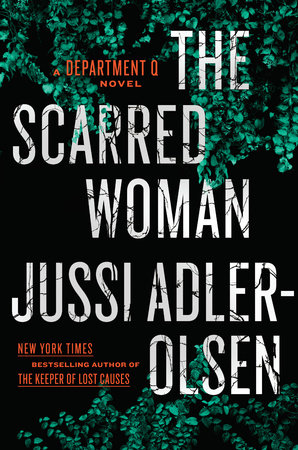
The Scarred Woman, by Jussi Adler-Olsen, was a fantastic page-turner of a book — just what I needed!
I'm familiar with the Danish Department Q series thanks to their dramatization (watch the first three movies on Netflix). Those films were such a satisfying, if dark, binge, that I couldn't refuse the offer of a review copy of a novel when it came my way. (Also, I was thrilled to learn there are books behind these films, of course there are.)
The titular scarred woman could refer to any of several women in the novel, all of them in their way both victim and perpetrator.
The women include some unfortunates who are receiving social assistance payments but also scamming the system; their case worker, recently diagnosed with breast cancer; and Rose, a police colleague who suffered a breakdown following the last Department Q case.
All this in a book that opens with a Nazi.
There's a good deal of coincidence going on in this novel. At any other time I might've rolled my eyes, but I think the book is saved by not taking itself too seriously. It's played matter-of-factly, even for laughs in some cases, that it's completely acceptable if not wholly believable.
I found it refreshing too that this novel isn't about Detective Carl Mørck; it focuses on the crimes at hand and the people involved in them.
I'm out of practice at reading crime novels, and I had some difficulty earlier this year in following the action of some (sci-fi) thrillers, so I hesitated to commit to reading this 480-page book, but it read like a breeze. Maybe more practiced readers might find it simplistic, but I found it clear without being overly obvious, well-paced without being weighed down by action, and having moral depth without getting lost in psychological detail.
I'm glad to have discovered this series and I definitely see myself turning to other Department Q novels in the cooling months ahead.
Excerpt.
Labels:
Jussi Adler-Olsen,
mystery
Wednesday, September 13, 2017
A bigger, much harder kind of pea
The first few years of Helena's life, I used to imagine her dying. All the time. It was exhausting. Not senseless, horrific deaths, exactly. Well, yes, that, but very possible senseless, horrific deaths.
In the beginning I thought they might be premonitions, but it didn't take long to realize they were warnings.
For example, pushing her stroller down the sidewalk, I'd imagine — very vividly, I might add, almost hallucinatorily, like a glimpse of an alternate parallel existence — a random car swerving up onto said sidewalk, putting us — most importantly, her — in mortal danger. I'd imagine throwing myself in front of her, or maneuvering the stroller out of the car's path. Or I'd glance away and she'd be face down in the wading pool. Or the approaching dog would turn out to be rabid and think of her as an easy meal. Or she might decide to put a pencil up her nose, all the way up her nose. I'd see blood, all over my flesh and blood, and my breath would catch in my chest, and I'd replay the instant, over and over — how could I save her?
Now, it wasn't "obsessive/compulsive" in the sense that it didn't affect how I lived my life (our lives). I still walked down the sidewalk, went to the wading pool, sat in the park, left her unattended (for seconds, minutes?) at a time. It's only effect was to make me hyper-vigilant. And that's a good thing. I was constantly rehearsing deadly scenarios and optimizing my responses. The hormones of new motherhood fed the ninja instinct. Ninja for mommies.
The older, more self-sufficient Helena got, the fewer and farther between my imaginings. But I still have them, these dark visions.
It took years to realize I wasn't alone in this experience. It's a hard thing to talk about without coming off as crazy, but I've heard other mothers talk about imagining the worst, and how they learned to use it as a tool for creating a safe environment. It's a safety mechanism regarding the child, but also, perhaps counterintuitively, a sanity mechanism for the mother self, to assure that you have considered all possibilities and are doing everything you can for a potentially endangered child. That you are a good mother.
This is the closest I come to understanding what Samanta Schweblin means by "rescue distance" — an algorithm involving the actual distance from one's child in some measure against all potential dangers in the vicinity (calculating number, distance, severity). Distancia de rescate is the original Spanish title of her first novel.
It's an intense reading experience, and creepy, but blessedly short. It reminds me most of The Other, by Thomas Tryon, possibly only because of the creepy children, but maybe also the vaguely rural setting, the hint of something occult.
The pacing is exquisite. The urgency is masterful.
There's not much I can say that wouldn't be considered a spoiler; however, I'd skimmed through a discussion of the book and didn't feel my experience was diminished by it. But if that kind of thing worries you, stop reading now.
The story (but not the book) really starts about 6 years previous to the current narration. A 3-year-old (or thereabouts) boy, David, appears to have been poisoned. His mother, Carla, takes him to the woman in the green house, and agrees to her conducting a migration of his soul into a healthy body, bringing an unknown spirit into the boy's body, something of each of the souls remaining in the other's body. Spread over two bodies, the poison could be vanquished.
Six years later, Carla relates this to Amanda who is vacationing with her small daughter Nina...
The novel is billed as eco-horror: the ecological implications are hinted at early on but are only manifestly clear relatively late in the story. It's also a story of maternal bonding.
In my initial reading, the supernatural factor is primary; that is, the nature of David and of the transmigration process is top of mind, ever present with every turn of the page. Knowing the original Spanish title, however, changes the thematic emphasis.
Riffing on a fever dream...
1. What are the worms? When do the worms start? Are these worms signalling decomposition of the body? Or do they come earlier, in the poison that bring death? Or I they related to soul migration? They come toward the end of David and Amanda's conversation, but too soon for bodily decomposition, I think. The exact moment of the worms is significant.
2. Is David — the leading, questioning David — real? Does anyone else ever really see David? Is he inside Amanda's head? If so, is he a voice conjured out of her delirium, or did his soul migrate there?
If he migrated there, how long has he been there? Was it after his poisoning, or after Amanda and Nina's poisoning?
3. If the original David's soul was split, who else lives/lived in David's body? Could it have been Amanda? That might explain her obsession with him (Not exactly an obsession: attraction to? She is drawn to him and the story of him. Is that only because of her proximity to him now?). Would that imply her own soul/body was previously weakened.
4. Did he or did he not have all his fingers when he was born? What Carla would give for that first David, an imagined David.
5. Nina speaks in the royal "we." David likes that. (I like it too.) The self is plural.
6. Why is Amanda even vacationing in this godforsaken place? Why did her husband not come with her? She claims he was to join them later, but perhaps she was running from him. Why do I think this?
7. Why are the men so absent? Except for fleetingly, in a dream, and at the end. They are so external, powerless in the face of all this ... motherness.
9. Does Carla really take Amanda to the clinic? Why do I feel Carla may have taken Amanda to the green house? "The edge of the neck of her white shirt is stained a light green. It's from the grass, right?" But no, there's a nurse, with blister packs.
10. What's with the dirty hands, dirty with mud? First David's, later Nina's. How is this an effect of migration?
11. David pushes Amanda forward. Forward in time? Just like he pushed the ducks, the dog, the horses. Pushed toward death? A spirit guide? Is he even alive?
12. Carla's gone at the end, her husband says so. Not there just at that moment, or gone for good? Where did she go?
13. The ropes. Amanda feels a rope emanating from her stomach joining her to Nina, but it's metaphorical, an umbilical cord of sorts. David is tied down with ropes while migrating — to make sure the body stays, only the spirit leaves. At the end, rope ties most everything together, except bodies or souls, maybe just representations of them. The rope is for hanging. But when it's finally slack, the rope is a fuse.
14. What is the important thing? Really important? Why is David pushing her toward it? What does Amanda need to understand? Listen to David's father. What does he say that's so important? What did I miss?
Reviews
The Guardian: Terrifying but brilliant
The Mookse and the Gripes
The New Yorker: The Sick Thrill of "Fever Dream"
NPR: Brief But Creepy, 'Fever Dream' Has A Poisonous Glow
The Washington Post: A haunting story by one of the best young Spanish-language writers
The rope between Helena and me was pulled to its fullest when we lost each other on a hike in a foreign country. The summer she was 12. We survived this. The rope is there and not there.
In the beginning I thought they might be premonitions, but it didn't take long to realize they were warnings.
For example, pushing her stroller down the sidewalk, I'd imagine — very vividly, I might add, almost hallucinatorily, like a glimpse of an alternate parallel existence — a random car swerving up onto said sidewalk, putting us — most importantly, her — in mortal danger. I'd imagine throwing myself in front of her, or maneuvering the stroller out of the car's path. Or I'd glance away and she'd be face down in the wading pool. Or the approaching dog would turn out to be rabid and think of her as an easy meal. Or she might decide to put a pencil up her nose, all the way up her nose. I'd see blood, all over my flesh and blood, and my breath would catch in my chest, and I'd replay the instant, over and over — how could I save her?
Now, it wasn't "obsessive/compulsive" in the sense that it didn't affect how I lived my life (our lives). I still walked down the sidewalk, went to the wading pool, sat in the park, left her unattended (for seconds, minutes?) at a time. It's only effect was to make me hyper-vigilant. And that's a good thing. I was constantly rehearsing deadly scenarios and optimizing my responses. The hormones of new motherhood fed the ninja instinct. Ninja for mommies.
The older, more self-sufficient Helena got, the fewer and farther between my imaginings. But I still have them, these dark visions.
It took years to realize I wasn't alone in this experience. It's a hard thing to talk about without coming off as crazy, but I've heard other mothers talk about imagining the worst, and how they learned to use it as a tool for creating a safe environment. It's a safety mechanism regarding the child, but also, perhaps counterintuitively, a sanity mechanism for the mother self, to assure that you have considered all possibilities and are doing everything you can for a potentially endangered child. That you are a good mother.
This is the closest I come to understanding what Samanta Schweblin means by "rescue distance" — an algorithm involving the actual distance from one's child in some measure against all potential dangers in the vicinity (calculating number, distance, severity). Distancia de rescate is the original Spanish title of her first novel.
Why do mothers do that?There's not much I can say about Fever Dream, by Samanta Schweblin, other than wow.
What?
Try to get out in front of anything that could happen — the rescue distance.
It's because sooner or later something terrible will happen.
It's an intense reading experience, and creepy, but blessedly short. It reminds me most of The Other, by Thomas Tryon, possibly only because of the creepy children, but maybe also the vaguely rural setting, the hint of something occult.
The pacing is exquisite. The urgency is masterful.
There's not much I can say that wouldn't be considered a spoiler; however, I'd skimmed through a discussion of the book and didn't feel my experience was diminished by it. But if that kind of thing worries you, stop reading now.
The story (but not the book) really starts about 6 years previous to the current narration. A 3-year-old (or thereabouts) boy, David, appears to have been poisoned. His mother, Carla, takes him to the woman in the green house, and agrees to her conducting a migration of his soul into a healthy body, bringing an unknown spirit into the boy's body, something of each of the souls remaining in the other's body. Spread over two bodies, the poison could be vanquished.
Six years later, Carla relates this to Amanda who is vacationing with her small daughter Nina...
The novel is billed as eco-horror: the ecological implications are hinted at early on but are only manifestly clear relatively late in the story. It's also a story of maternal bonding.
In my initial reading, the supernatural factor is primary; that is, the nature of David and of the transmigration process is top of mind, ever present with every turn of the page. Knowing the original Spanish title, however, changes the thematic emphasis.
Riffing on a fever dream...
1. What are the worms? When do the worms start? Are these worms signalling decomposition of the body? Or do they come earlier, in the poison that bring death? Or I they related to soul migration? They come toward the end of David and Amanda's conversation, but too soon for bodily decomposition, I think. The exact moment of the worms is significant.
2. Is David — the leading, questioning David — real? Does anyone else ever really see David? Is he inside Amanda's head? If so, is he a voice conjured out of her delirium, or did his soul migrate there?
If he migrated there, how long has he been there? Was it after his poisoning, or after Amanda and Nina's poisoning?
3. If the original David's soul was split, who else lives/lived in David's body? Could it have been Amanda? That might explain her obsession with him (Not exactly an obsession: attraction to? She is drawn to him and the story of him. Is that only because of her proximity to him now?). Would that imply her own soul/body was previously weakened.
4. Did he or did he not have all his fingers when he was born? What Carla would give for that first David, an imagined David.
5. Nina speaks in the royal "we." David likes that. (I like it too.) The self is plural.
6. Why is Amanda even vacationing in this godforsaken place? Why did her husband not come with her? She claims he was to join them later, but perhaps she was running from him. Why do I think this?
7. Why are the men so absent? Except for fleetingly, in a dream, and at the end. They are so external, powerless in the face of all this ... motherness.
My husband takes the can and turns it so I can see the label. It's a can of peas of a brand I don't buy, one I would never buy. They're a bigger, much harder kind of pea than what we eat, coarser and cheaper. A product I would never choose to feed my family with, and that Nina can't have found in our cupboards. On the table, at that early-morning hour, the can has an alarming presence. This is important, right?8. Did Carla orchestrate the poisoning? Certainly she had no control over whether Amanda came to call before leaving town, but it seems like she was looking, waiting, for an opening. She's killing them.
9. Does Carla really take Amanda to the clinic? Why do I feel Carla may have taken Amanda to the green house? "The edge of the neck of her white shirt is stained a light green. It's from the grass, right?" But no, there's a nurse, with blister packs.
10. What's with the dirty hands, dirty with mud? First David's, later Nina's. How is this an effect of migration?
11. David pushes Amanda forward. Forward in time? Just like he pushed the ducks, the dog, the horses. Pushed toward death? A spirit guide? Is he even alive?
12. Carla's gone at the end, her husband says so. Not there just at that moment, or gone for good? Where did she go?
13. The ropes. Amanda feels a rope emanating from her stomach joining her to Nina, but it's metaphorical, an umbilical cord of sorts. David is tied down with ropes while migrating — to make sure the body stays, only the spirit leaves. At the end, rope ties most everything together, except bodies or souls, maybe just representations of them. The rope is for hanging. But when it's finally slack, the rope is a fuse.
14. What is the important thing? Really important? Why is David pushing her toward it? What does Amanda need to understand? Listen to David's father. What does he say that's so important? What did I miss?
Reviews
The Guardian: Terrifying but brilliant
The Mookse and the Gripes
The New Yorker: The Sick Thrill of "Fever Dream"
NPR: Brief But Creepy, 'Fever Dream' Has A Poisonous Glow
The Washington Post: A haunting story by one of the best young Spanish-language writers
The rope between Helena and me was pulled to its fullest when we lost each other on a hike in a foreign country. The summer she was 12. We survived this. The rope is there and not there.
Labels:
Helena,
horror,
motherhood,
Samanta Schweblin,
Thomas Tryon
Monday, September 04, 2017
Uneasy about the easy
— from The Golden House, by Salman Rushdie.I am reminded of Theodor W. Adorno: "The highest form of morality is not to feel at home in your own home." Yes, to be uncomfortable with comfort, uneasy about the easy, to question the assumptions of what is usually, and happily, taken for granted, to make of oneself a challenge to what for most people is the space in which they feel free from challenges; yes! That is morality raised to a pitch at which it could almost be called heroism.
Theodor W. Adorno
I've spent years learning to be comfortable in my own home, to be in own skin. Reading this, then, was a bit of a slap in the face, not only that my behaviour is not moral, but that I have still further to go.
I'm not entirely sure what it means yet, but I'm thinking about it.
Do you feel at home in your own home? (What is your home?)
Labels:
philosophy,
Salman Rushdie
Thursday, August 31, 2017
Comedy and tragedy
I enjoyed Subtly Worded, by Teffi, and more so because of book club, but probably more for its value as a historical oddity than on its literary merits. This collection is career-spanning and chronologically ordered.
The stories featuring historical figures — Tolstoy and Rasputin — were fascinating to me (more essay than story?).
However, some of the stories made me roll my eyes at the obviousness of their twist endings. They were truly less than subtle. Other bookclubbers disagreed on this point. And there is indeed a cleverness in the way Teffi uses words and makes them central to her stories. The title story, for example, is about censorship — words and meaning and double-meaning. I might argue that these stories are about subtlety more than they exercise it.
Some of this material is satirical, other bits are just plain funny. She has a comedic sense of timing — knows when to keep it short and when to go long. She is a master at capturing ordinary speech.
The introduction states that shortly before her death, Teffi wrote, "An anecdote is funny when it's being told, but when someone lives it, it's a tragedy. And my life has been sheer anecdote, that is — a tragedy."
So why did Teffi fall off the literary map? Because she was a woman? And why is she back?
I can't quite put my finger on why I don't connect with most of Teffi's stories. Some are too light, others too ponderous. Some bookclubbers posited that as a woman, she may have felt compelled to write a certain way, to play into her role as socialite and play to expectations. More style than sincerity?
That said, I favoured a few standouts I wouldn't hesitate to recommend to anyone: "The Quiet Backwater," "Ernest with the Languages," and "The Dog (A Story from a Stranger)."
Reviews
Subtly Worded, and Other Stories by Teffi review – a traditional Russian form is given a good hiding
Compared to Chekhov, Colette and Now Sedaris: 'Subtly Worded' Brings Teffi to Non-Russian Readers
The stories featuring historical figures — Tolstoy and Rasputin — were fascinating to me (more essay than story?).
However, some of the stories made me roll my eyes at the obviousness of their twist endings. They were truly less than subtle. Other bookclubbers disagreed on this point. And there is indeed a cleverness in the way Teffi uses words and makes them central to her stories. The title story, for example, is about censorship — words and meaning and double-meaning. I might argue that these stories are about subtlety more than they exercise it.
Some of this material is satirical, other bits are just plain funny. She has a comedic sense of timing — knows when to keep it short and when to go long. She is a master at capturing ordinary speech.
The introduction states that shortly before her death, Teffi wrote, "An anecdote is funny when it's being told, but when someone lives it, it's a tragedy. And my life has been sheer anecdote, that is — a tragedy."
So why did Teffi fall off the literary map? Because she was a woman? And why is she back?
I can't quite put my finger on why I don't connect with most of Teffi's stories. Some are too light, others too ponderous. Some bookclubbers posited that as a woman, she may have felt compelled to write a certain way, to play into her role as socialite and play to expectations. More style than sincerity?
That said, I favoured a few standouts I wouldn't hesitate to recommend to anyone: "The Quiet Backwater," "Ernest with the Languages," and "The Dog (A Story from a Stranger)."
Reviews
Subtly Worded, and Other Stories by Teffi review – a traditional Russian form is given a good hiding
Compared to Chekhov, Colette and Now Sedaris: 'Subtly Worded' Brings Teffi to Non-Russian Readers
Labels:
bookclub,
short stories,
Teffi
Tuesday, August 29, 2017
Prufrocked
She... and here I rear back and halt myself, ashamed, prufrocked into a sudden pudeur, for, after all, how should I presume? Shall I say, I have known them all, I have seen her like a yellow fog rubbing her back against, rubbing her muzzle upon, shall I say, licking her tongue into the corners of this evening? Do I dare, and do I dare? And who am I, after all? I am not the prince. An attendant lord, deferential, glad to be of use. Almost, at times, the Fool... But, setting aside poetry, I'm too deeply in to stop now.— from The Golden House, by Salman Rushdie.
![]() |
| Source |
However, I'm only a quarter of the way in, and I'm worried about where Rushdie might be going with this tale with the makings of a presidential parable. We'll see where we end up.
But. Prufrocked! I sat up and paid attention!
I wrote a response to Alfred J. when I was 17.
[I can't find the damn poem. I can't find in anywhere. It's in a puke-beige duotang (not the boring-beige one), along with a weird essay I wrote on Pythagorean dualism. This is a thing I kept for 30 years. Or thought I kept. Did I lose it in the divorce? I mean, physically. Not like that story I lost on a bet. Did I throw it away in anger, or sheer drunken stupidity? Could I have been so careless? Maybe the poem's no good. Maybe I threw it out because it was no good, and I was so horrified by the poem's horribleness, I blocked the whole episode from my memory. Have I merely misplaced it? I grow old.)
Last week I met a boy who writes poetry. He devotes himself to it. He will be a writer. A poet.
It takes guts, being a poet.
Maybe I should've been a poet.
Labels:
poetry,
Salman Rushdie,
T.S. Eliot,
TS Eliot
Saturday, August 26, 2017
The ultimate shiver running up the ultimate spine
Propagating at a significant fraction of the speed of light, a frisson of alarm travelled the length of the Atlantic Space Elevator, like the ultimate shiver running up the ultimate spine.There's a lot going on in The Night Sessions, by Ken MacLeod. It's a police procedural. It's science fiction. It's an ecologically challenged future where religion has been eradicated from public discourse, the Faith Wars having culminated in the discharge of nuclear arms. There's a Third Covenant on the rise in Edinburgh.
And robots are attaining consciousness.
Detecting Hardcastle might or might not be difficult, but preventing that entity from accomplishing whatever it had planned was likely to be violent and, as far as Skulk2 was concerned, terminal. It had been thrown into this unenviable position by its original self, from which its sense of identity was diverging by the millisecond. Skulk2 was still Skulk, with all the original machine's emotions and loyalties, memories and reflections, but it found itself both baffled and despondent about the decision its past self had taken — that blithe disregard for a separate being that was, after all, as close to itself as it was possible to be. Some of that resentment begin to jaundice its feelings about Adam Ferguson. The man had been as casual as Skulk had been in sending his old friend on this probably suicidal mission.I read this book earlier this summer while in Edinburgh. That made for spectacular reading: wandering the wynds of the Old Town by day, and settling into our hotel to read about those same paths by night. Plus I learned a little about the Covenanters along the way, which definitely added to my understanding of the issues in the novel.
Remembering their conversation just before the copying, Skulk2 made a cold assessment of how much separate existence it could experience before it drifted so far from its original that would find the switch to self-sacrifice mode painful. This projection of a future potential state of mind was an absorbing exercise, and in itself intensified its self-awareness. The time, it discovered could be reckoned in minutes.
About two-thirds of the way through my interest waned a bit, partly because of the distractions of vacation, but also the story gets a little chaotic — there are just so many weighty issues in this 260-page novel that they start to suffocate a little. That said, I'd like to come back to this book someday.
Reviews
Los Angeles Review of Books: Taking the Future on Faith
It's here that the capabilities of the robots and their superiority to mere humans becomes clear. It isn't just their speed and versatility, or their ability to toggle their minds from one state to another, from self-preservation to self-sacrifice. Two different characters ask two different robots whether they are saved — whether they have backed up their memories and mental states. On one level, it's a trite pun; on another, it's the kind of science-fictional sentence that creates a new reality by collapsing the gap between metaphor and literal act. Robots can save themselves, and can be resurrected by downloading a copy into a new body. They are, essentially, physically immortal. And it's here, too, that we begin to realize that the conspiracy Ferguson has been so doggedly unraveling cloaks the true meaning of the Third Covenant, that the real story has been happening elsewhere, and that MacLeod has ruthlessly followed the logic of his intelligent, ambitious novel to a conclusion that’s truly world-changing.io9: Do Protestant Terrorist Robots Have Souls?
There is something brilliant in MacLeod's idea that when robots achieve human-style intelligence that they'll become as irrational as humans too.Strange Horizons: The Night Sessions by Ken MacLeod
See also the Complete Review for its comprehensive review round-up.
Labels:
Ken MacLeod,
mystery,
philosophy,
religion,
science fiction
Subscribe to:
Posts (Atom)