For this third and final part of Madame Bovary, I'm liking Emma significantly less.
Her expenditures really are over the top. But she is being blackmailed. He's seen them together and "she was afraid, imagining that he would talk. He was not so stupid" (p 241). It's hard to tell how much control she has. I mean, she's never been one to exert much self-control, but now her weaknesses are clearly being played to Monsieur Lheureux's financial advantage.
Favourite sentence: "The most halfhearted libertine has dreamed of sultans' wives; every notary carries within him the remains of a poet." (p 257)
Here it is again in French: Le plus médiocre libertin a rêvé des sultanes; chaque notaire porte en soi les débris d'un poête. Beautiful, no?
[I have it on good authority, based on thousands of transactions with hundreds of notaries, that this is bullshit. Not a shred of poetry in (most of) them. Yet somehow I suspect many of us wish it were true. A romantic notion to believe romantic souls are buried in clerks, yes? Flaubert certainly wished it of the notary he never was.]
I am disappointed in Emma. Happy for her in one way, but also wanting to slap her — she needs to get a grip on reality. She's pulled off her affair with Léon for almost a year! I almost wish she could pull it off for a lifetime, though it seems Léon would have none of that.
Léon is weak. He is just like Emma. This love has begun to bore him, tire him; he'll move on.
This business with the notary is fairly unpleasant (not the notary to whom Léon compares himself in my favourite sentence, above). Maître Guillaumin. Or maybe this is how his poetic debris materializes? It's just so infuriating a that a woman should fall from lover to slut as soon as another man lays eyes on her. Whatever choices she's made, Emma doesn't deserve this.
Monsieur Homais (he has his own website!) finally shows himself to be thoroughly despicable. (In my head I call him M Homard, and I picture him red and blustery and lobster-like.) It's Homais who set the whole ugly Hyppolyte incident in motion. But it's his treatment of the blind man where he is most cruel, in that moment where he makes him dance. For Homais he is a scientific curiosity, and a potential means of renown; for Homais the blind man has ceased to be a human being. For all his forward-thinking, as much as I admired his spirit and wit, he is a hypocrite, and perhaps the biggest villain of them all.
Emma goes to see Rodolphe. Is she prostituting herself? Objective description, moral ambiguity, difficult choices, blah, blah, blah; with this choice of words, Flaubert clearly condemns her.
I'm surprised the novel goes on so long after Emma's death. Poor Charles! He really did love her. And Berthe, the innocent, has a humble start in life. By addressing her as Mademoiselle Bovary, I think Flaubert intends us to glimpse what she might become.
**********
Thanks, Frances, for hosting this readalong. I'm glad to have read Madame Bovary this second time and as a woman of a certain age. I think I got it this time.
Saturday, October 30, 2010

Monday, October 25, 2010
Tokyo, in summer
Engulfed in the hot stench of the city, he found that the boundary between his inner and outer selves seemed to dissolve. The fetid air seeped in through his pores and soiled what was inside, while his simmering emotions leaked out of his body into the streets. In Tokyo, in summer, he felt threatened by the city, so it had always seemed better to avoid the whole season as much as possible, avoid the waves of withering heat that swept through the streets.
— from Out, by Natsuo Kirino.
About a hundred pages left to go. It's gritty and funny, peopled by a fascinating crew of (mostly) strong women who shoulder vast burdens.
No matter how it ends, I highly recommend it.
Thursday, October 21, 2010
Emma and Léon and Rodolphe
Part 2 of Madame Bovary elicited the following reactions.
The subtitle of Madame Bovary is "Provincial Ways," and after this was discussed last week, I was reminded that Middlemarch is subtitled "A Study of Provincial Life." Madame Bovary was published in 1856 and Middlemarch in 1871-72 (both first in serial form). I wonder how familiar George Eliot was with the former. They bear some striking similarities of theme. I'd say Madame Bovary is more a psychological novel and Middlemarch a sociological one, but each of them provides commentary on both levels. Dr Lydgate's wife, like Charles's, has social aspirations and contributes to their financial difficulties (although, Lydgate is a fully competent doctor). Mr Brooke is blustery like our pharmacist Homais is, but with a more political bent to his philosophizing. Then there's Dorothea's "scandalous" behaviour. (This off the top of my head; but I wonder if their similarities have been more fully assessed.) I'd love to know if Eliot ever wrote about Madame Bovary or acknowledged it as an influence.
**********
 This description (p 63) strikes me as very odd: "a small statue of the Virgin wearing a satin gown, coiffed in a tulle veil spangled with silver stars, and colored crimson on the cheeks like an idol from the Sandwich Islands." Not only is it, in my view, an odd way to dress the Virgin, it made me turn to look at the cover. Can I say? I really hate the cover of this book. The photo is creepy. (I like the font, though.)
So, Charles and Emma move to Yonville, and they bring a wet nurse, but there's no mention of a baby. Did she have the baby already? How much time has passed? Is she still pregnant? How pregnant? There's no mention of it, for pages and pages and pages, like it's a fairly insignificant event.
I'm still finding Emma sympathetic. Not very motherly, but I don't think it's unusual for that time period to be dismissive of children.
(The Homais children are rather out of the ordinary, always in the thick of things and under foot, but I do think it's the pharmacist who's the Enlightened, forward thinker; his children are being raised in an unconventional manner for the times.)
Léon. How bored he is! He and Emma are so much alike. Difference being, of course, that he's male, he can go off to Rouen any time he likes. He can call his mother for money, and leave for Paris. Emma can't. I wonder if we'll see him again.
Poor Emma. She did try to seek out spiritual guidance, but she wasn't taken very seriously, as if a woman of her position couldn't have any troubles.
Not sure what to make of her calling her child ugly (p 101). A bit harsh, but perhaps this is just a detached objective assessment of her child. Or else the comment comes as a reflection of her marriage or husband. I anticipate Emma being criticized for this statement, that she doesn't love her child, but I think it has nothing to do with that. (Besides, she doesn't even say it, she just thinks it.)
Uh-oh! Page 114. Rodolphe has designs on Emma. He'll ruin her. What a jerk!
The whole Hippolyte fiasco! I recall blaming Emma for this previously (and I think Isabelle Huppert's performance reinforced that reading). The potential increase in income from performing a noteworthy operation is a factor, but Emma is motivated also to do something for Charles, to nudge him toward being a being a man she could be proud of, and I see these as practical considerations, godd for the household, I don't think it's all about money.
Aurgh! Damn you, Lydia Davis! Huge spoiler in the note to page 175.
Regarding the narration: I think we've moved very much inside Emma's head now. An omniscient narrator, sure, but not an all-telling one. Is Emma self-absorbed? Well, that's what makes the story. We're not privy to the daily banalities, her managing the household (with the exception of a few key events), just like we don't know about Charles's comings and going, or the small talk over supper — any good writer skips over this stuff. The details Flaubert offers give a sense of realism that contributes to deluding the reader into a sense of completeness, when really the narration is very selective.
I feel Emma is a very much a victim as regards Rodolphe. His intentions are clear from the start, and he knows what buttons to push. I'm not saying Emma's not a willing participant, but it takes a character like Rodolphe to have made her willing.
Is Emma responsible for their financial problems? I want to defend her here, too. (Why am I taking sides like this?) She likes pretty things, Charles has never restrained her. (Most of America lives beyond its means; will you judge her for this?) When she's ill, he neglects his practice — arguably that's her fault, too, but it shows that money and sensible financial management aren't his first priority (he loves her!). Come to think of it, he's pretty passionless himself, doesn't feel strongly about much, he just doesn't see this as problematic, he'd be bored too if he just stopped to think about it.
Loving the pharmacist and the priest! Hilarious!
Ah, so here's Léon again, in Rouen. And Charles practically pushing Emma into Léon's arms. This won't end well.
Here ends Madame Bovary, Part 2.
The subtitle of Madame Bovary is "Provincial Ways," and after this was discussed last week, I was reminded that Middlemarch is subtitled "A Study of Provincial Life." Madame Bovary was published in 1856 and Middlemarch in 1871-72 (both first in serial form). I wonder how familiar George Eliot was with the former. They bear some striking similarities of theme. I'd say Madame Bovary is more a psychological novel and Middlemarch a sociological one, but each of them provides commentary on both levels. Dr Lydgate's wife, like Charles's, has social aspirations and contributes to their financial difficulties (although, Lydgate is a fully competent doctor). Mr Brooke is blustery like our pharmacist Homais is, but with a more political bent to his philosophizing. Then there's Dorothea's "scandalous" behaviour. (This off the top of my head; but I wonder if their similarities have been more fully assessed.) I'd love to know if Eliot ever wrote about Madame Bovary or acknowledged it as an influence.
**********

So, Charles and Emma move to Yonville, and they bring a wet nurse, but there's no mention of a baby. Did she have the baby already? How much time has passed? Is she still pregnant? How pregnant? There's no mention of it, for pages and pages and pages, like it's a fairly insignificant event.
She wanted a son; he would be strong and dark, she would call him Georges; and this idea of having a male child was a sort of hoped-for compensation for all her past helplessness. A man, at least, is free; he can explore every passion, every land, overcome obstacles, taste the most distant pleasures. But a woman is continually thwarted. Inert and pliant at the same time, she must struggle against both the softness of her flesh and subjection to the law. Her will, like the veil tied to her hat by a string, flutters with every breeze; there is always some desire luring her on, some convention holding her back.
I'm still finding Emma sympathetic. Not very motherly, but I don't think it's unusual for that time period to be dismissive of children.
(The Homais children are rather out of the ordinary, always in the thick of things and under foot, but I do think it's the pharmacist who's the Enlightened, forward thinker; his children are being raised in an unconventional manner for the times.)
Léon. How bored he is! He and Emma are so much alike. Difference being, of course, that he's male, he can go off to Rouen any time he likes. He can call his mother for money, and leave for Paris. Emma can't. I wonder if we'll see him again.
Poor Emma. She did try to seek out spiritual guidance, but she wasn't taken very seriously, as if a woman of her position couldn't have any troubles.
Not sure what to make of her calling her child ugly (p 101). A bit harsh, but perhaps this is just a detached objective assessment of her child. Or else the comment comes as a reflection of her marriage or husband. I anticipate Emma being criticized for this statement, that she doesn't love her child, but I think it has nothing to do with that. (Besides, she doesn't even say it, she just thinks it.)
Uh-oh! Page 114. Rodolphe has designs on Emma. He'll ruin her. What a jerk!
The whole Hippolyte fiasco! I recall blaming Emma for this previously (and I think Isabelle Huppert's performance reinforced that reading). The potential increase in income from performing a noteworthy operation is a factor, but Emma is motivated also to do something for Charles, to nudge him toward being a being a man she could be proud of, and I see these as practical considerations, godd for the household, I don't think it's all about money.
Aurgh! Damn you, Lydia Davis! Huge spoiler in the note to page 175.
Regarding the narration: I think we've moved very much inside Emma's head now. An omniscient narrator, sure, but not an all-telling one. Is Emma self-absorbed? Well, that's what makes the story. We're not privy to the daily banalities, her managing the household (with the exception of a few key events), just like we don't know about Charles's comings and going, or the small talk over supper — any good writer skips over this stuff. The details Flaubert offers give a sense of realism that contributes to deluding the reader into a sense of completeness, when really the narration is very selective.
I feel Emma is a very much a victim as regards Rodolphe. His intentions are clear from the start, and he knows what buttons to push. I'm not saying Emma's not a willing participant, but it takes a character like Rodolphe to have made her willing.
Is Emma responsible for their financial problems? I want to defend her here, too. (Why am I taking sides like this?) She likes pretty things, Charles has never restrained her. (Most of America lives beyond its means; will you judge her for this?) When she's ill, he neglects his practice — arguably that's her fault, too, but it shows that money and sensible financial management aren't his first priority (he loves her!). Come to think of it, he's pretty passionless himself, doesn't feel strongly about much, he just doesn't see this as problematic, he'd be bored too if he just stopped to think about it.
Loving the pharmacist and the priest! Hilarious!
Ah, so here's Léon again, in Rouen. And Charles practically pushing Emma into Léon's arms. This won't end well.
Here ends Madame Bovary, Part 2.
Tuesday, October 19, 2010
"There are things that very few portraits of women allow the viewer to discern"
The Wrong Blood, by Manuel de Lope, is set in Basque country during the Spanish Civil War and is ostensibly the tale of two women...
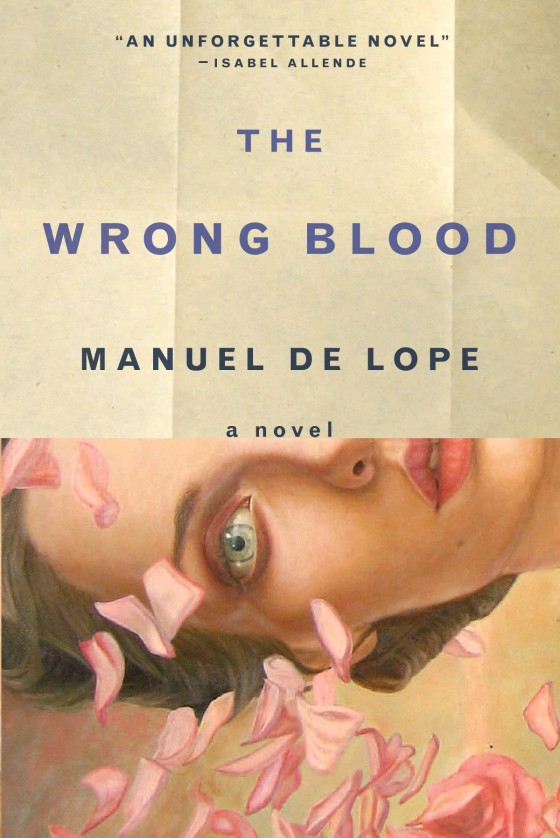 A rape victim:
And a bride:
I had a hard time settling into this book. The story jumps from one perspective to another, back in time, then forward to our present, and sometimes, as in María Antonia's burning the house down, into a what if. (Not that I have trouble with that sort of thing usually.) But I am glad I stuck with it.
I can't claim to have ever experienced anything near what these women went through, but something about the telling simply didn't ring true — too writerly, too male.
The novel for me is more effective with the stories of the men — the officer, the grandson, the neighbouring doctor — even while telling us so much less about them. These characters are told, without being explained, and I think they are richer for it.
For all this, the novel is lyrical and romantic and engrossing. Though I very early on had guessed what would be "the big reveal," I was compelled to see how it would be unveiled.
Favourite sentence: "There are men who subvert order because they carry a deep-seated, centrifugal inertia that destroys the space as well as the feelings around them." (Although, I'm not sure I agree.)
See this review.
In church, the priests taught the children such behavior, telling them that they had to be obedient, even in time of war, even though they could escape and disappear on the mountain with the cows after setting fire to the hayloft, and then, for decades to come, the house that had sheltered Etxarris's Bar would be nothing but a burnt patch, a few charred beams on ash-covered ground, and nobody except a very few people would know that María Antonia Etxarri had set the house on fire to save herself from being raped, but instead of doing that, remembering other reasons and other rains, María Antonia obediently mounted the stairs to the room, doing as she had been told, fearing only the barrage of blows she would get from her stepfather should peace ever come.
And a bride:
The bride smiled in a lost paradise of tulle and lace and orange blossoms. The photograph showed neither how much weeping she was to do nor how little she had wept until then, nor was there any visible sign of the two tears of emotion she had shed during the ceremony or of the sighs she would utter that same night, but there are things that very few portraits of women allow the viewer to discern.
I had a hard time settling into this book. The story jumps from one perspective to another, back in time, then forward to our present, and sometimes, as in María Antonia's burning the house down, into a what if. (Not that I have trouble with that sort of thing usually.) But I am glad I stuck with it.
I can't claim to have ever experienced anything near what these women went through, but something about the telling simply didn't ring true — too writerly, too male.
The novel for me is more effective with the stories of the men — the officer, the grandson, the neighbouring doctor — even while telling us so much less about them. These characters are told, without being explained, and I think they are richer for it.
For all this, the novel is lyrical and romantic and engrossing. Though I very early on had guessed what would be "the big reveal," I was compelled to see how it would be unveiled.
Favourite sentence: "There are men who subvert order because they carry a deep-seated, centrifugal inertia that destroys the space as well as the feelings around them." (Although, I'm not sure I agree.)
See this review.
Thursday, October 14, 2010
Charles and Emma
Really, I don't remember a thing about Madame Bovary. Something about adultery. I remember being bored by it when I read it 22 years ago. I don't remember whether I admired Emma, despised or pitied her. I don't know which of those I'm supposed to do.
Well, it's very readable. (Except for the seemingly random italics — very distracting.) I don't know if that's a function of Lydia Davis's translation, or maybe just because over the years I've learned to read better (or I'm more tolerant, or more discerning). At any rate, it's not boring. I was really afraid it would be very boring. It's not.
[What's the deal with first communion? Was it different back in the day, or in France? Charles is 12 when he begins his studies, and his parents are waiting till after his first communion before sending him off. Later at the wedding, a girl of 14 or 16 is wearing her communion dress, lengthened for the occasion. I wouldn't've given it much thought but for that Davis includes a note about children usually aged about 7 being prepared for this sacrament. The French text is clearly "première communion" but it sounds like confirmation might be what's meant. Either way I think Davis's note is lacking.]
Charles seems like a nice enough fellow. A bit, mmm, unambitious, maybe, but harmless, nice. Oh, but Charles totally loves her!
Emma seems hard to reach, hard to know, through her placid exterior.
Aïe! The first wife's wedding bouquet still in the bedroom! How thoughtless! This must be a sign.
Emma was ruined by romances, and the idea of grand gestures. (That's a weird passage, the shift to second person, "And you were there, too, you sultans...")
I love this sentence: "Charles's conversation was as flat as a sidewalk, and everyone's ideas walked along it in their ordinary clothes, without inspiring emotion, or laughter, or reverie." (Mind, sidewalks can be most interesting.)
Oh, she's not happy, is she? Bored, and attracted to shiny things. But I think there's a bit more to it than that, some kind of void she needs to fill. I do like her, and condemn her, and pity her.
Here ends Madame Bovary, Part 1.
Well, it's very readable. (Except for the seemingly random italics — very distracting.) I don't know if that's a function of Lydia Davis's translation, or maybe just because over the years I've learned to read better (or I'm more tolerant, or more discerning). At any rate, it's not boring. I was really afraid it would be very boring. It's not.
[What's the deal with first communion? Was it different back in the day, or in France? Charles is 12 when he begins his studies, and his parents are waiting till after his first communion before sending him off. Later at the wedding, a girl of 14 or 16 is wearing her communion dress, lengthened for the occasion. I wouldn't've given it much thought but for that Davis includes a note about children usually aged about 7 being prepared for this sacrament. The French text is clearly "première communion" but it sounds like confirmation might be what's meant. Either way I think Davis's note is lacking.]
Charles seems like a nice enough fellow. A bit, mmm, unambitious, maybe, but harmless, nice. Oh, but Charles totally loves her!
Emma seems hard to reach, hard to know, through her placid exterior.
Aïe! The first wife's wedding bouquet still in the bedroom! How thoughtless! This must be a sign.
Before her marriage, she had believed that what she was experiencing was love; but since the happiness that should have resulted from that love had not come, she thought she must have been mistaken. And Emma tried to find out just what was meant, in life, by the words "bliss," "passion," and "intoxication," which had seemed so beautiful to her in books.
Emma was ruined by romances, and the idea of grand gestures. (That's a weird passage, the shift to second person, "And you were there, too, you sultans...")
I love this sentence: "Charles's conversation was as flat as a sidewalk, and everyone's ideas walked along it in their ordinary clothes, without inspiring emotion, or laughter, or reverie." (Mind, sidewalks can be most interesting.)
Oh, she's not happy, is she? Bored, and attracted to shiny things. But I think there's a bit more to it than that, some kind of void she needs to fill. I do like her, and condemn her, and pity her.
Here ends Madame Bovary, Part 1.
A long journey through time and space
Monsieur Monde sighed, gazing at his glass of beer. He noticed that his companion's fingers were clenched on her handbag. And he seemed to have to make a long journey through time and space to find the simple, commonplace words that he uttered at last, which blended with the banality of the setting:
"Shall we take the nine o'clock train?"
She said nothing, but sat still; the fingers clutching the crocodile-skin bag relaxed. She lit a fresh cigarette, and it was later on, about seven o'clock, when the brasseries were full of customers drinking their apéritifs, that they went out, as grave and glum as a real married couple.

— from Monsieur Monde Vanishes, by Georges Simenon.
Wednesday, October 06, 2010
Octobre reading
(Or, French books by guys mostly named Georges.)
Madame Bovary, Gustave Flaubert
A readalong brought to you by Frances (Nonsuch Book), with posting on Parts 1, 2, and 3 on October 14, 21, and 28.
The delectable new translation by Lydia Davis everyone's talking about makes it hard to resist. I first read Madame Bovary some 20+ years ago. I didn't care much for it. I'm counting on my being a much wiser woman now to get something more out of it. (I'll be travelling this weekend and leaving the hardcover behind, but I have the original French loaded up on my ereader, in case I'm feeling ambitiously French.)
A Void, Georges Perec
Richard (Caravan de recuerdos) hosts this shared read, discussions taking place between October 29 and November 7.
I've read this one previously as well, back when it was first made available in English, at a time when I was fascinated with things Oulipo and also toying with the idea of pursuing further studies, and some kind of career, in problems with translation (which I never did). The book's conceit is that it is written without the letter "e," the most frequently occurring letter in French and also English). Now how do you translate that? (The Spanish translation has no "a.") I read it then as a puzzle; I'll read it now with, hopefully, appreciation for plot and character, which I've since learned that Perec can in fact do rather well.
Monsieur Monde Vanishes, Georges Simenon
I've been saving this. Having loved Simenon's Strangers in the House recently, I thought another roman dur would be perfect for my coming weekend getaway. The kid and I are flying to DC to visit with my sister for a Canadian Thanksgiving away. Even though it's a short flight, I've given excessively careful consideration to which book it is I want to have on hand when we're told to turn off all electronic devices. This is it.
(For Helena I picked out something called Lunch Lady and the Cyborg Substitute, cuz, well, cyborgs! and lunch! Note: this book is not French. It's by a guy called Jarret J Krosoczka.)
So. Monsieur Monde walks out on his life, according to the back cover, and apart from the fact that I have a fascination with people who do this (I mean, real people actually do this!; it's not just in stories, you know, where he says he's going out to get a pack of smokes and that's the last you hear of him!), the why and how of their doing it, I've spent every day of October, and most of September, thinking about running away (mostly because of my stupid job). Plus it's cold and raining a lot, so it feels right.
Yet another couple of French books
I finished The Story of the Eye, by Georges Bataille, and I'm within a few pages of the end of Roberte Ce Soir and The Revocation of the Edict of Nantes, by Pierre Klossowski (acquired during a thankfully short-lived phase of exploring obscure writers whose surnames begin with the letter "k," in some misguided desire to one day be considered one of them).
I can't say I actually recommend either of them — they're not exactly entertaining in any conventional sense. But. The Story of the Eye is an interesting complement to Tom McCarthy's C, the whole sex-death-grieving-dissociation thing. And there's a lot to dissect in Klossowki with regard to sex and gender politics; it's quite philosophical and written in a somewhat dry and academic, but playful, tone, and it could be worth careful study if you have the time or inclination, of which for the time being I have neither.
Madame Bovary, Gustave Flaubert
A readalong brought to you by Frances (Nonsuch Book), with posting on Parts 1, 2, and 3 on October 14, 21, and 28.
The delectable new translation by Lydia Davis everyone's talking about makes it hard to resist. I first read Madame Bovary some 20+ years ago. I didn't care much for it. I'm counting on my being a much wiser woman now to get something more out of it. (I'll be travelling this weekend and leaving the hardcover behind, but I have the original French loaded up on my ereader, in case I'm feeling ambitiously French.)
A Void, Georges Perec
Richard (Caravan de recuerdos) hosts this shared read, discussions taking place between October 29 and November 7.
I've read this one previously as well, back when it was first made available in English, at a time when I was fascinated with things Oulipo and also toying with the idea of pursuing further studies, and some kind of career, in problems with translation (which I never did). The book's conceit is that it is written without the letter "e," the most frequently occurring letter in French and also English). Now how do you translate that? (The Spanish translation has no "a.") I read it then as a puzzle; I'll read it now with, hopefully, appreciation for plot and character, which I've since learned that Perec can in fact do rather well.
Monsieur Monde Vanishes, Georges Simenon
I've been saving this. Having loved Simenon's Strangers in the House recently, I thought another roman dur would be perfect for my coming weekend getaway. The kid and I are flying to DC to visit with my sister for a Canadian Thanksgiving away. Even though it's a short flight, I've given excessively careful consideration to which book it is I want to have on hand when we're told to turn off all electronic devices. This is it.
(For Helena I picked out something called Lunch Lady and the Cyborg Substitute, cuz, well, cyborgs! and lunch! Note: this book is not French. It's by a guy called Jarret J Krosoczka.)
So. Monsieur Monde walks out on his life, according to the back cover, and apart from the fact that I have a fascination with people who do this (I mean, real people actually do this!; it's not just in stories, you know, where he says he's going out to get a pack of smokes and that's the last you hear of him!), the why and how of their doing it, I've spent every day of October, and most of September, thinking about running away (mostly because of my stupid job). Plus it's cold and raining a lot, so it feels right.
Yet another couple of French books
I finished The Story of the Eye, by Georges Bataille, and I'm within a few pages of the end of Roberte Ce Soir and The Revocation of the Edict of Nantes, by Pierre Klossowski (acquired during a thankfully short-lived phase of exploring obscure writers whose surnames begin with the letter "k," in some misguided desire to one day be considered one of them).
I can't say I actually recommend either of them — they're not exactly entertaining in any conventional sense. But. The Story of the Eye is an interesting complement to Tom McCarthy's C, the whole sex-death-grieving-dissociation thing. And there's a lot to dissect in Klossowki with regard to sex and gender politics; it's quite philosophical and written in a somewhat dry and academic, but playful, tone, and it could be worth careful study if you have the time or inclination, of which for the time being I have neither.
Sunday, October 03, 2010
Remaindered thoughts
Why is it that some of the best books are often the hardest to write about? It must be that flush of first love with a book, the recognition of myself in the other (or is it the other way round?). I'm giddy with emotion, can't articulate much beyond, "I just so LLOOOVVE this book!" — certainly nothing meaningful.
 So, it's all about this guy who suffered an accident, the details of which are never made clear, and basically he's left with gaps in his memory, but worse, this leaves him a shell of his former self. Something essential, something you can't quite put your finger on, is out of whack. But, also! He comes into a pile of money because of this accident, and he uses it to recreate (or create, really) scenarios from possibly his past, or maybe his imagination, but the thing is, the scenarios aren't important in themselves (well, they are, but), it's more the feeling they instill, the sense of authenticity, so the details of scenarios are important only insofar as they help further that.
Anyway, it's brilliant! (There's that flush flooding back. Really, what else is there to say about this book.)
You can read about this book all over the place, so I won't bore you with particulars. I first heard of this book through the 2008 Tournament of Books. (Careful what you read there! Some commentary has spoilers.) Interesting also is the publication history of this book, the fact that it was first published by an "art publisher" (so Remainder was recognized as "art" before it was seen as a marketable commodity by "regular" publishers?).
What gets me about this book is not just the obsession of his little hobby, it's the sense of addiction. They go hand in hand, of course; the pursuit of the addiction becomes obsessive, and then the pursuit itself becomes an object of addiction. But I think they're separate things, and McCarthy knows that. Obsessive behaviour is something you do because you have to, you feel you need to, you don't necessarily derive any pleasure from it, quite the opposite often, but addiction is after a particular high. Remainder's main character is in search of authenticity, that feeling of being real, and if you're of the sort of disposition wherein you think about those sorts of things (and I think I am) then you realize that feeling is really pretty rare. It's not about about power and control, strictly speaking; it's what those things can bring you. This became pretty clear to me in the characterization of the manager he hires to direct his affairs. This guy felt a thrill in managing these complex logistics and pulling them off successfully. I mean, I can almost relate to that, when things are crazy at work and you can actually make all the pieces fit together, there's the rush of the busy-ness of it all and immense satisfaction when it all comes together. It's not about being a workaholic, or being obsessive about the details per se; it's not lovng your work, or whatever, exactly; it's knowing you're good at what you do, doing it, and getting off on it. (Umm, I'm probably projecting here; I don't know that any of that's actully in the novel exactly.)
Maybe because I don't have obsessive behaviours, clinically speaking, or addictions of the intrusive-to-one's-daily-functioning variety, much as I enjoy food and alcohol and sex and chocolate, because I'm not consumed by my career and I don't live for the adrenaline rush of a regular physical workout (hah!), maybe because none of those things do it for me, maybe I'm realistic about the thrill of my first love and jumping out of an airplane and as much as I'd like to relive those things, I know I can't, I can't go back, it wouldn't be the same, I'm not compelled to try, maybe because there's nothing else to occupy the position of that which must be pursued at all costs, this idea of going after authenticity, all that is real and true, actually seems pretty reasonable to me. I mean, if you're going to be addicted to something, that's the thing. And that's where it gets pretty fucked up, because the more you pursue it, the more removed from it you actually become.
Anyway, pretty weird, troublesome book. Very, very good.
Excerpt.
So here I am, a couple months after having read Tom McCarthy's Remainder (of which I'd acquired a remaindered copy); the first flush has subsided, but I still want to say something about it. (Part of me wants to rush downstairs and pull the book off the shelf in my bedroom — it's unusual that I write about a book without having it by my side — but that would feel less authentic. I want this to be true to my recollection of it, not dried up by objective evidence.)
 So, it's all about this guy who suffered an accident, the details of which are never made clear, and basically he's left with gaps in his memory, but worse, this leaves him a shell of his former self. Something essential, something you can't quite put your finger on, is out of whack. But, also! He comes into a pile of money because of this accident, and he uses it to recreate (or create, really) scenarios from possibly his past, or maybe his imagination, but the thing is, the scenarios aren't important in themselves (well, they are, but), it's more the feeling they instill, the sense of authenticity, so the details of scenarios are important only insofar as they help further that.
Anyway, it's brilliant! (There's that flush flooding back. Really, what else is there to say about this book.)
You can read about this book all over the place, so I won't bore you with particulars. I first heard of this book through the 2008 Tournament of Books. (Careful what you read there! Some commentary has spoilers.) Interesting also is the publication history of this book, the fact that it was first published by an "art publisher" (so Remainder was recognized as "art" before it was seen as a marketable commodity by "regular" publishers?).
What gets me about this book is not just the obsession of his little hobby, it's the sense of addiction. They go hand in hand, of course; the pursuit of the addiction becomes obsessive, and then the pursuit itself becomes an object of addiction. But I think they're separate things, and McCarthy knows that. Obsessive behaviour is something you do because you have to, you feel you need to, you don't necessarily derive any pleasure from it, quite the opposite often, but addiction is after a particular high. Remainder's main character is in search of authenticity, that feeling of being real, and if you're of the sort of disposition wherein you think about those sorts of things (and I think I am) then you realize that feeling is really pretty rare. It's not about about power and control, strictly speaking; it's what those things can bring you. This became pretty clear to me in the characterization of the manager he hires to direct his affairs. This guy felt a thrill in managing these complex logistics and pulling them off successfully. I mean, I can almost relate to that, when things are crazy at work and you can actually make all the pieces fit together, there's the rush of the busy-ness of it all and immense satisfaction when it all comes together. It's not about being a workaholic, or being obsessive about the details per se; it's not lovng your work, or whatever, exactly; it's knowing you're good at what you do, doing it, and getting off on it. (Umm, I'm probably projecting here; I don't know that any of that's actully in the novel exactly.)
Maybe because I don't have obsessive behaviours, clinically speaking, or addictions of the intrusive-to-one's-daily-functioning variety, much as I enjoy food and alcohol and sex and chocolate, because I'm not consumed by my career and I don't live for the adrenaline rush of a regular physical workout (hah!), maybe because none of those things do it for me, maybe I'm realistic about the thrill of my first love and jumping out of an airplane and as much as I'd like to relive those things, I know I can't, I can't go back, it wouldn't be the same, I'm not compelled to try, maybe because there's nothing else to occupy the position of that which must be pursued at all costs, this idea of going after authenticity, all that is real and true, actually seems pretty reasonable to me. I mean, if you're going to be addicted to something, that's the thing. And that's where it gets pretty fucked up, because the more you pursue it, the more removed from it you actually become.
Anyway, pretty weird, troublesome book. Very, very good.
Excerpt.
Thursday, September 30, 2010
Discovering Simenon
I must've read some Simenon, way back when, I'm sure I did, at least one Maigret book, and the more I think about it, I think I recall I read something in high school French class, something abridged or in graphic novel form, I learned the word clochard.
But I couldn't've seen any great appeal in it. Certainly, nothing's compelled me to pick up a Maigret story in the last 25 years.
 New York Review Books, though, has a way of making me lust for books I've never heard of, authors I'd dismissed. By my count, they've published 8 books by Simenon to date, none of them featuring Maigret, all of them sounding bleak and psychological and fascinating.
Finally I gave in to temptation and ordered myself a couple, just to see. The first arrived last last week, and once I'd made up my mind to set other books aside, I couldn't put it down.
(I was surprised to see it had a glossy cover, setting it apart from the trademark look of NYRB Classics. I've since learned he's the only author to have this treatment (and also usually with last name only) because "the series editor wanted a "none more black" feeling for those covers.")
The Strangers in the House, by Georges Simenon, is indeed bleak and psychological and fascinating. The language is deeply evocative, the setting is oppressive, the story is surprising. Throughout, Simenon is the perfect host, full of charm and always in control. No character is minor. It strikes me as, if I may, very French.
(There's a lot in this book that reminds me of Fred Vargas: the charm, the philosophizing, the wry observations, the character quirks.)
The story is this: Loursat is a lawyer who's pretty much stayed holed up in room, drinking, for the last 18 years, since his wife left him. One night he hears a noise, and it awakens something in him. It's not a noise he should be hearing in his house — it's a gunshot, it's a murder. So Loursat comes to learn about his daughter's goings-on, her crowd, and the secret life that persisted under his own roof.
What's beautiful is watching Loursat wake up from his drunken stupor, climb out of hole, and live again. He finds he has a reason to after all, and it may be as much to shake up this small town as it is out of love for his daughter.
My second Simenon arrived in yesterday's mail. I hope to save it for when I'm travelling next weekend, but I don't know if I can hold out that long.
But I couldn't've seen any great appeal in it. Certainly, nothing's compelled me to pick up a Maigret story in the last 25 years.
Finally I gave in to temptation and ordered myself a couple, just to see. The first arrived last last week, and once I'd made up my mind to set other books aside, I couldn't put it down.
(I was surprised to see it had a glossy cover, setting it apart from the trademark look of NYRB Classics. I've since learned he's the only author to have this treatment (and also usually with last name only) because "the series editor wanted a "none more black" feeling for those covers.")
The Strangers in the House, by Georges Simenon, is indeed bleak and psychological and fascinating. The language is deeply evocative, the setting is oppressive, the story is surprising. Throughout, Simenon is the perfect host, full of charm and always in control. No character is minor. It strikes me as, if I may, very French.
Rossigart was no doubt at that moment telephoning to Mme Dossin and the latter was no doubt reclining on a sofa draped in muslins that were probably mauve. She'd be looking distinguished of course. Looking distinguished and being in delicate health combined to provide her with a full-time occupation, leaving her perhaps just sufficient energy to arrange a few flowers in a vase.
(There's a lot in this book that reminds me of Fred Vargas: the charm, the philosophizing, the wry observations, the character quirks.)
The story is this: Loursat is a lawyer who's pretty much stayed holed up in room, drinking, for the last 18 years, since his wife left him. One night he hears a noise, and it awakens something in him. It's not a noise he should be hearing in his house — it's a gunshot, it's a murder. So Loursat comes to learn about his daughter's goings-on, her crowd, and the secret life that persisted under his own roof.
What's beautiful is watching Loursat wake up from his drunken stupor, climb out of hole, and live again. He finds he has a reason to after all, and it may be as much to shake up this small town as it is out of love for his daughter.
My second Simenon arrived in yesterday's mail. I hope to save it for when I'm travelling next weekend, but I don't know if I can hold out that long.
Wednesday, September 29, 2010
Amazing things my daughter says #23,834
I'm having a hard time at work these days, and as a result I'm finding it hard to feel present in almost anything else I do (certainly blogging). The kid, though, does an amazing job of keeping me grounded.
I'm looking through Helena's homework assignments for the rest of the week, and I mention tomorrow's, she doesn't need to do it yet, but maybe she should think about it, think about how to approach it, what topic to choose to make it easier.
"It's not good to choose what's easy, Mom. You won't learn anything that way."
Thanks, kid.
(It would've been easier to do it today, but I guess we'll learn more if we do it tomorrow.)
I'm looking through Helena's homework assignments for the rest of the week, and I mention tomorrow's, she doesn't need to do it yet, but maybe she should think about it, think about how to approach it, what topic to choose to make it easier.
"It's not good to choose what's easy, Mom. You won't learn anything that way."
Thanks, kid.
(It would've been easier to do it today, but I guess we'll learn more if we do it tomorrow.)
Life in Russian
My Life as a Russian Novel, a memoir by Emmanuel Carrère, recounts the author's attempt to film a documentary in the Russian village of Kotelnich, about nothing in particular. "The Hotel Vyatka [...] is one of those places familiar to travelers in Russia, where not only does nothing work (heating, television, elevator, all kaput), but you get the feeling that nothing has ever worked, not even on the first day." You get the feeling that the whole of Kotelnich is much the same.
 Life is, as we all know, what happens while you're busy trying to make a documentary about something else entirely. Somehow, Carrère's book (and his film, apparently, too) managed to capture something of it.
She threw us out, but as we were putting on our coats, determined not to hang around any longer, she forgot about having thrown us out and wanted us to drink some more, talk, wanted to show me the curtains. She'd taken the curtains — with a design of red and green circles on a white background — from Sasha's and her daughter's apartment, curtains streaked with blood and brains. Galina had boiled them several times, so that most of the stains were gone, but not all, and she traces with a fingertip the outline of the brownish spots, more visible in the lamplight, and she draws the lamp closer so that I may see them. Look, Emmanuel, look, she says tenderly. It's the blood of my daughter and my grandson. Every time I draw the curtains, which protect my eyes from the moon and the streetlights outside, it's the blood of my daughter and grandson.
Life does happen in Kotelnich, but it's hard to nail it down. Fortunately for us, Carrère doesn't force his film in one direction or another; he keeps waiting for something to grab him by the throat, and if you wait long enough, it kind of makes itself.
But there are two particularly fascinating aspects of this book. One is Carrère's reflections on his relationship to the Russian language, which he spoke as a child — his comfort level, how his fluency depends on mood and circumstance, that language is clearly more than academic and the problem of immersion is more than linguistic.
The other is his dissection of his relationship with the woman he loves and who for the most part is in Paris, while he is not. I previously read his erotic open letter to Sophie as a standalone piece, as originally intended, and found it, well, pretty erotic. In the fuller context of his domestic drama, however, it becomes a little uncomfortable, and you see that his intent was perhaps misguided.
They say Carrère is best known for The Adversary, which I have not read. But I did read Class Trip, which I don't remember, and The Mustache, which I loved, along with its movie adaptation. You don't need to be familiar with Carrère's other work to be swept up in this memoir. The story is in the telling.
Reviews
The Washington Post
The Complete Review
Saturday, September 25, 2010
Kennscht mi noch?
C, by Tom McCarthy, is a very demanding, very rewarding novel. It took me a couple weeks to read it (and more than another week to work up the courage to write something about it) — it demands your time and attention. If you want entertainment, I encourage you to read the other Booker Prize nominee I read earlier this year. That said, I think C (or at least aspects of it) will stay with me for a lifetime.
What it reminds me of
As I progressed through the novel, I was reminded of each of the following books to varying degrees and for quite possibly very superficial — but meaningful-to-me wrt the conversations my books have with each other (and me) — reasons:
I love all these books (well, maybe the Barnes not so much, but my point stands). I found it a strange sensation to be recalling them, or certain parts of them, while reading C, and so strongly too. I doubt that McCarthy had it in mind to emulate any of these. My point, though, is that there's something about McCarthy that feels intensely familiar to me. He speaks to me. He taps into those same moods or ideas that have captured me before.
What the C stands for
I'm not sure I like the idea that it can represent so many things: Carrefax, communication, Cairo, caul, crash, copper, connectivity, cocaine (with a C even placed in shop windows to indicate its availability). So many vague associations make it feel more like a cop-out of a title. There is a strong indication, relatively late in the book, that carbon is it. I hope McCarthy's the kind of writer who'd say, yes, C is for something in particular, yes, carbon. The basis of all life after all.
What it's about
This is what I get out of it: Situating yourself in time and space. Grounding yourself, even. Despite the fact that there's nothing to really ground yourself to. This whole world is one big dummy chamber.
I loved Remainder, and I admit to at first being someone disappointed to find that C was nothing like it. Only, that turned out not to be the case at all. The whole authenticity question is huge (to my mind), but it's not concerned with just some random guy; it's the whole state of our being, all humanity.
(Of all the books C reminds me of, the closest in theme and in tone is clearly Michaels' Winter Vault.
What I like about it
I love the wordplay. There is a lot of humour. There are some mind-bending meta-moments of awareness. I love the giant Monopoly-like game the children play, that grows from a board, to the grounds, into something purely abstract, extending over the ether. I love passages like this one:
[I marvel over this phenomenon, how everything looks smaller when you go back. Somehow, a place, a house or a whole city shrinks as your experience expands. Plainly, it's actually physically smaller, but there's more to it in one's perception of a place. It changes how you interact with your space. It can take days to shake.]
 Nice packaging!
Certainly nice enough to elicit a response from the designer guys around the office. They utter, "Nice," and "Neat," and pick it up and turn it over. And very excitedly I say, "I know! Check this out," and I open it up to exhibit the flaps, on which the text runs, gasp!, vertically, oriented perpendicular to the usual. And the page margins — the text starts a bit high on the page. I found this a bit distracting first — like why isn't this sort of thing standardized? — but I got over it. Anyway, neat how such little nothings can make you feel like you have something in your hands.
The Casual Optimist has a wonderful interview with the jacket designer, Peter Mendelsund, about how it came to be it and what it means and why it works.
Honestly, I find the cover kind of unsettling, but Mendelsund has me sold on what a perfect fit it is for the book. Also, reading the interview makes me feel pretty stupid, as a reader, as other levels of C are brought to light that I had no idea even existed.
What's so avant-garde about it
I have no idea. If anyone can explain this to me, why McCarthy and this book are being touted as the future of literature, please do. Don't get me wrong — I like it (a lot, even), I just don't see how any of this is new, or cutting-edge. Did you see my list of what it reminds me of? Others have done this before. There's a surreal ending that I can't quite place in terms of influence, or what it reminds me of — in fact, it's a good deal more "filmic" than literary (David Cronenberg's Naked Lunch?) — but that's all of, what?, 8 pages. The book's reputation can't fairly rest on that. Anti-realist anti-novel? (But it is realist (very much of the time), isn't it?) I can appreciate C's being Important, but how is it so out of the ordinary?
How about that ending?!
Can I say? [Possible spoiler alert.] What an immense release it was to find Sophie on the scene at the end! I mean, the whole book, since that first section, she was just hovering between the words, and I was certain she would make an appearance, or make herself felt, I mean in the sense that Serge would address the fact of her, as a memory or a story to tell someone, I kept waiting, she was always somehow present, with Tania, deep in the earth, in the air, with Cécile, at London parties, and at the seance. I think the writing's pretty awesome, that McCarthy could make her presence so palpable even though she's so absent, which makes the climax all so bloody climactic. Wow.
See also
— Surplus Matter: a site dedicated to the work of Tom McCarthy
— International Necronautical Society
Excerpt.
What it reminds me of
As I progressed through the novel, I was reminded of each of the following books to varying degrees and for quite possibly very superficial — but meaningful-to-me wrt the conversations my books have with each other (and me) — reasons:
- AS Byatt, The Children's Book, for the time period, the focus on children's life in an atypical adult world, their games, the staging of a play riddled with symbolism;
- Thomas Mann, The Magic Mountain (which I haven't finished reading, but), for the sanatorium setting, of course, but also a morbid fascination with all manner of effluvia, and there's this scene with the x-ray (although where Hans sees his mortality and his eventual inanimate state, Serge sees something organic and primordial), and also, a humorous but enigmatic tone, trying to figure out the workings of the place;
- this tone segues very nicely into that section that reminds me of EE Cummings, The Enormous Room, what with the war experience, and the maneuvers, the barracks, prison, the sense of camaraderie and loss;
- Richard Powers, The Gold Bug Variations, for how the text gets scientifically physical and metaphysical, and sentences like "The restlessness, he comes to realise, is in truth an attempt to achieve its opposite: stasis." — something still and deep;
- even Julian Barnes, Arthur & George, for the spiritualist aspect;
- José Carlos Somoza, ZigZag, because of the idea of being able to tap the residual energy of Christ on the cross, to be able to see it, hear it;
- Anne Michaels, The Winter Vault, for the Egyptian setting, similar concerns regarding authenticity;
- Franz Kafka, The Metamorphosis, for obvious reasons.
I love all these books (well, maybe the Barnes not so much, but my point stands). I found it a strange sensation to be recalling them, or certain parts of them, while reading C, and so strongly too. I doubt that McCarthy had it in mind to emulate any of these. My point, though, is that there's something about McCarthy that feels intensely familiar to me. He speaks to me. He taps into those same moods or ideas that have captured me before.
What the C stands for
I'm not sure I like the idea that it can represent so many things: Carrefax, communication, Cairo, caul, crash, copper, connectivity, cocaine (with a C even placed in shop windows to indicate its availability). So many vague associations make it feel more like a cop-out of a title. There is a strong indication, relatively late in the book, that carbon is it. I hope McCarthy's the kind of writer who'd say, yes, C is for something in particular, yes, carbon. The basis of all life after all.
What it's about
This is what I get out of it: Situating yourself in time and space. Grounding yourself, even. Despite the fact that there's nothing to really ground yourself to. This whole world is one big dummy chamber.
I loved Remainder, and I admit to at first being someone disappointed to find that C was nothing like it. Only, that turned out not to be the case at all. The whole authenticity question is huge (to my mind), but it's not concerned with just some random guy; it's the whole state of our being, all humanity.
(Of all the books C reminds me of, the closest in theme and in tone is clearly Michaels' Winter Vault.
What I like about it
I love the wordplay. There is a lot of humour. There are some mind-bending meta-moments of awareness. I love the giant Monopoly-like game the children play, that grows from a board, to the grounds, into something purely abstract, extending over the ether. I love passages like this one:
Versoie seems smaller. Its proportions are the same: the surface area of the house's side-wall in relation to that of the Maze Garden above which it rises, or the width of the maze's paved path in relation to the garden's lawn; the height of the Crypt Park's obelisk-topped columns, or the sightline above these into the park itself afforded by attic window — all these are correct. But, taken as a whole, they seem to have shrunk. The left-swerving passage from the house's from door to the Low Lawn, then through the Lime Garden with its beehives and, beyond these, past the green slime-topped trough-pond towards the long, conker-tree-lined avenue that skirts the Apple Orchard as it heads towards the spinning sheds and Bodner's garden — a passage each of whose sections used to comprise a world, expansive beyond comprehension, filled with organic density and volume, with the possibilities of what might take place in it, riven with enclaves and proclivities every one of which itself comprised a world within the world, on to infinity — now seems like a small, inconsequential circuit: a transceiver loop or well-worn route round a familiar parade ground. It's as though, in Serge's absence, the whole estate had, by some sleight of hand, been substituted by a model, one into which he's now been reinserted, oversize, cumbersome and gauche...
Versoie seems smaller, and the world seems smaller, seems like a model of the world. It's not just that the distance between, say, here and Lydium has shrunk (and done so almost exponentially thanks to the motor car his father's purchased and now lets him drive whenever he feels like an outing), but, beyond that, that the inventory of potential experiences — situations in which he might find himself, conversations and interactions he might undergo — has dwindled so low that they could be itemised on a single sheet of paper. The exchanges he has in shops or in the post office, the movements and gestures these involve, seem so limited, so mapped out in advance, as to be predetermined — as though they'd already happened and were simply being re-enacted by two or more people who'd agreed to maintain the farcical pretence that this was something new and exciting. He's taken to walking out on the charade halfway through: stepping into, for example, the cheese shop, responding to the usual questions about how his parents or the Day School pupils are, agreeing how nice it is to be back after serving his country so bravely, admitting that the weather isn't quite doing what might be expected of it at this time of year, and so on — then, just as the shopkeeper shifts his stance above the rows of Lancashires and Stiltons and asks him what he'll have, turning round and pushing the door open, leaving its ting! hanging in the air behind him with the ruptured conversation. He once did this on three premises in a row — neighbouring ones: newsagent, baker, fishmonger — not out of maliciousness but simply to let it form a box around him which he could then step out of...
[I marvel over this phenomenon, how everything looks smaller when you go back. Somehow, a place, a house or a whole city shrinks as your experience expands. Plainly, it's actually physically smaller, but there's more to it in one's perception of a place. It changes how you interact with your space. It can take days to shake.]

Certainly nice enough to elicit a response from the designer guys around the office. They utter, "Nice," and "Neat," and pick it up and turn it over. And very excitedly I say, "I know! Check this out," and I open it up to exhibit the flaps, on which the text runs, gasp!, vertically, oriented perpendicular to the usual. And the page margins — the text starts a bit high on the page. I found this a bit distracting first — like why isn't this sort of thing standardized? — but I got over it. Anyway, neat how such little nothings can make you feel like you have something in your hands.
The Casual Optimist has a wonderful interview with the jacket designer, Peter Mendelsund, about how it came to be it and what it means and why it works.
Honestly, I find the cover kind of unsettling, but Mendelsund has me sold on what a perfect fit it is for the book. Also, reading the interview makes me feel pretty stupid, as a reader, as other levels of C are brought to light that I had no idea even existed.
What's so avant-garde about it
I have no idea. If anyone can explain this to me, why McCarthy and this book are being touted as the future of literature, please do. Don't get me wrong — I like it (a lot, even), I just don't see how any of this is new, or cutting-edge. Did you see my list of what it reminds me of? Others have done this before. There's a surreal ending that I can't quite place in terms of influence, or what it reminds me of — in fact, it's a good deal more "filmic" than literary (David Cronenberg's Naked Lunch?) — but that's all of, what?, 8 pages. The book's reputation can't fairly rest on that. Anti-realist anti-novel? (But it is realist (very much of the time), isn't it?) I can appreciate C's being Important, but how is it so out of the ordinary?
How about that ending?!
Can I say? [Possible spoiler alert.] What an immense release it was to find Sophie on the scene at the end! I mean, the whole book, since that first section, she was just hovering between the words, and I was certain she would make an appearance, or make herself felt, I mean in the sense that Serge would address the fact of her, as a memory or a story to tell someone, I kept waiting, she was always somehow present, with Tania, deep in the earth, in the air, with Cécile, at London parties, and at the seance. I think the writing's pretty awesome, that McCarthy could make her presence so palpable even though she's so absent, which makes the climax all so bloody climactic. Wow.
See also
— Surplus Matter: a site dedicated to the work of Tom McCarthy
— International Necronautical Society
Excerpt.
Friday, September 24, 2010
Wednesday, September 15, 2010
Two social documents
I recently read The Bell Jar, by Sylvia Plath (originally published under a pseudonym), and I have to admit, I'm a bit mystified why so many people (well, mostly anonymous-to-me online readers, grown women who read it when they were moody teenagers) think of this book so fondly.
I didn't know anything about The Bell Jar, except that it was the only novel Plath wrote. (The Biblioracle suggested it to me months ago, and I thought, huh, there's a gap in my literary education.) Talk of it never seemed to address the novel itself, but rather was steeped in the "romantic" circumstances of Plath's life and suicide.
 It's often described as chronicling Esther Greenwood's descent into depression, which I think is a bit false; there is no descent into madness — the depression is always there. It's not a gradual progression, nor does it appear to be due to a particular trigger. Esther's just wired that way. And in that way, I think it's a pretty accurate portrayal of what I understand clinical depression to be. Also, the account of the experience of undergoing electroshock treatment is fascinating.
The first portion of the book tells of Esther's adventures in New York City. They're kind of crazy, not in a psychologically abnormal way, but in a wild-life-of-college-girls-let-loose-in-the-big-city way, and this is fairly comic and entertaining. The tone is quite similar to that in a couple other books I've read lately: Elaine Dundy's Dud Avocado and Rona Jaffe's Best of Everything (more on this in a bit).
And then Esther starts trying to kill herself. This is where the novel stops working for me, because I just can't connect with this character. I take this as a fairly sure sign that I don't have clinical depression, but it also makes me question how good is this novel as a novel. Forget its worth as a sociohistorical document, insight into Plath's biography, the breaking of taboos regarding mental illness, for there's no doubt the novel has great value in this regard. It just leaves me cold. And a good novel makes me feel for who peoples them, whether or not I have anything in common with them. With Esther I feel a kind of blankness (and maybe this is the point? that this depression, the suicidal ideation, is really unknowable unless you're in it?).
I'm now also seriously worried about all the young women who relate to this book. Really?
For all this, The Bell Jar is a quick (less than 200 pages) and relatively entertaining read, not depressing at all. Esther's voice is light and chatty; it's not the "poetry" I was expecting, but there are some wonderful, sometimes startling, descriptions:
There's a throwaway line in the opening pages: "last week I cut the plastic starfish off the sunglasses case for the baby to play with." Later, when Esther's steeped in her illness, I questioned whether I'd read that line at all, or if I'd understood it correctly, and I wonder now how much it contributes to the attitude I'd formed toward the rest of the book, that Esther will survive this, everything's going to be all right.
But as far as depicting the recklessness of the young American woman of the 1950s, The Dud Avocado (though set a few years later) conveys something more meaningful to me, with more comedy and tragedy, and in a much stronger, fresher, more distinctive voice.
The Best of Everything, by Rona Jaffe, is another fascinating sociohistorical document, much more accessible, and in my opinion, an all-round better novel.
 I've only recently started watching Mad Men, and at the beginning of episode 6 (Babylon) of season 1, Don Draper is in bed with this novel as Betty is chattering about the movie adaptation and whether Joan Crawford's looks are holding up. The beauty of the ereader is such that minutes after the episode finished, I myself was reading The Best of Everything in bed. (I'd be reading Leon Uris's Exodus now too if it were available as an ebook.)
No doubt Don was reading it to complement the advice of the review in the New York Post: "Any employer reading these pages will make a mental note to check up on what the girls in his office do after lunch, and with whom."
It follows the lives of a handful of women, most of whom work in a publishing office, and offers a glimpse into the workings thereof. While it might be said to focus on their romantic adventures, it's a lot more complicated than that. Office politics, gender politics, career ambition, the pressure to marry. These women have a lot to deal with, and Jaffe dispenses a fair measure of philosophical wisdom in her commentary:
(And a tragedy that turned out to be!)
Anyway, The Best of Everything is a novel that had me up late at night and snatching coffeebreaks at work just to see what happens next. It even made me cry. It had seemed to me that the only way to close off the story would be either in utter devastation or else with an unrealistically fairy-tale finish, but Jaffe surprises in offering up a perfect ending. It's completely hopeful that a balance can be struck between career and family, and that a woman's independence, whether sexual or financial, can be asserted. Sadly, I think this novel is still very relevant today.
If you're one of the many who love The Bell Jar, I'd love to hear why! Then go read The Best of Everything.
I didn't know anything about The Bell Jar, except that it was the only novel Plath wrote. (The Biblioracle suggested it to me months ago, and I thought, huh, there's a gap in my literary education.) Talk of it never seemed to address the novel itself, but rather was steeped in the "romantic" circumstances of Plath's life and suicide.

The first portion of the book tells of Esther's adventures in New York City. They're kind of crazy, not in a psychologically abnormal way, but in a wild-life-of-college-girls-let-loose-in-the-big-city way, and this is fairly comic and entertaining. The tone is quite similar to that in a couple other books I've read lately: Elaine Dundy's Dud Avocado and Rona Jaffe's Best of Everything (more on this in a bit).
And then Esther starts trying to kill herself. This is where the novel stops working for me, because I just can't connect with this character. I take this as a fairly sure sign that I don't have clinical depression, but it also makes me question how good is this novel as a novel. Forget its worth as a sociohistorical document, insight into Plath's biography, the breaking of taboos regarding mental illness, for there's no doubt the novel has great value in this regard. It just leaves me cold. And a good novel makes me feel for who peoples them, whether or not I have anything in common with them. With Esther I feel a kind of blankness (and maybe this is the point? that this depression, the suicidal ideation, is really unknowable unless you're in it?).
I'm now also seriously worried about all the young women who relate to this book. Really?
For all this, The Bell Jar is a quick (less than 200 pages) and relatively entertaining read, not depressing at all. Esther's voice is light and chatty; it's not the "poetry" I was expecting, but there are some wonderful, sometimes startling, descriptions:
That was another thing — the rest of us had starched cotton summer nighties and quilted housecoats, or maybe terry-towel robes that doubled as beachcoats, but Doreen wore these full-length nylon and lace jobs you could half see through, and dressing-gowns the colour of sin, that stuck to her by some kind of electricity. She had an interesting, slightly sweaty smell that reminded me of those scallopy leaves of sweet fern you break off and crush between your fingers for the musk of them.
There's a throwaway line in the opening pages: "last week I cut the plastic starfish off the sunglasses case for the baby to play with." Later, when Esther's steeped in her illness, I questioned whether I'd read that line at all, or if I'd understood it correctly, and I wonder now how much it contributes to the attitude I'd formed toward the rest of the book, that Esther will survive this, everything's going to be all right.
But as far as depicting the recklessness of the young American woman of the 1950s, The Dud Avocado (though set a few years later) conveys something more meaningful to me, with more comedy and tragedy, and in a much stronger, fresher, more distinctive voice.
The Best of Everything, by Rona Jaffe, is another fascinating sociohistorical document, much more accessible, and in my opinion, an all-round better novel.

No doubt Don was reading it to complement the advice of the review in the New York Post: "Any employer reading these pages will make a mental note to check up on what the girls in his office do after lunch, and with whom."
It follows the lives of a handful of women, most of whom work in a publishing office, and offers a glimpse into the workings thereof. While it might be said to focus on their romantic adventures, it's a lot more complicated than that. Office politics, gender politics, career ambition, the pressure to marry. These women have a lot to deal with, and Jaffe dispenses a fair measure of philosophical wisdom in her commentary:
Change in a person's character structure is slow and almost imperceptible, and although many people look back and say, This was the day that changed my life, they are never wholly right. The day you choose one college instead of another, or decide not to go to college at all, the day you take one job instead of another because you cannot wait, the day you meet someone you later love — all are days that lead to change, but none of them are decisive because the choice itself is the unconscious product of days that have gone before. So when April Morrison, looking back, said, "The day of the Fabian office party in 1952 was the day that changed my life," she was wrong. The day she cut her hair because she wanted to look like Caroline Bender, the day she saw her first movie and dreamed of New York — all were days that changed her life, and if it had not been for all of them she would never have become involved with Dexter Key.
(And a tragedy that turned out to be!)
Anyway, The Best of Everything is a novel that had me up late at night and snatching coffeebreaks at work just to see what happens next. It even made me cry. It had seemed to me that the only way to close off the story would be either in utter devastation or else with an unrealistically fairy-tale finish, but Jaffe surprises in offering up a perfect ending. It's completely hopeful that a balance can be struck between career and family, and that a woman's independence, whether sexual or financial, can be asserted. Sadly, I think this novel is still very relevant today.
If you're one of the many who love The Bell Jar, I'd love to hear why! Then go read The Best of Everything.
Teaching America how to read
"Do you realize there are towns in America where there are no libraries at all? Not even a bookstore! The only place the people in those small towns can get a book is at the drugstore. And what do they read? Our books."
"My heavens," she said.
"We are responsible for the changing literary taste of America," he went on. "People have to learn to crawl before they can walk. First they won't read anything but the most obvious kind of lurid adventure stories. Then we sneak in a good book or two. We train them. Eventually all our books will be as good or better than the best so-called literary hard-cover books. Do you think all hard-cover books are good literature just because they cost four dollars? Most of them stink."
She smiled a little at his vehemence and took a few healthy gulps at her drink. It made her feel more confident and finished it off.
"It's our books, with our sexy covers, and our low cost, and our mass distribution that are teaching America how to read. Let people who don't know anything say Derby Books are trash. They'll see."

— from The Best of Everything, by Rona Jaffe.
Rona Jaffe in the early 1950s worked at Fawcett Publications for Gold Medal Books, innovators of the paperback original.
Monday, September 13, 2010
Wednesday, September 08, 2010
The hat
She loved the hat. She had to have the hat, the hat's so cool, would I buy her the hat? It was always the hat, from the moment she laid eyes on it.
I thought I'd dissuaded her (the hat is silly and frivolous!), but evidently Helena came away with something very different from those conversations. Anyway, I finally caved. We went back for the hat. We made a special trip for the hat.
Now the hat is becoming her trademark.
She's growing up to be a regular clotheshorse.

I thought I'd dissuaded her (the hat is silly and frivolous!), but evidently Helena came away with something very different from those conversations. Anyway, I finally caved. We went back for the hat. We made a special trip for the hat.
She's growing up to be a regular clotheshorse.

Saturday, September 04, 2010
This is happening right now
The scene occurs about a hundred years ago:
— from C, by Tom McCarthy.
Tonight, as on most nights, he starts out local, sweeping from two hundred and fifty to four hundred metres. It's the usual traffic: CQ signals from experimental wireless stations in Masedown and Eliry, tapping out their call signs and then slipping into Q-code once another bug's responded. [...] This is happening right now: an RXer in Lydium who calls himself "Wireworm" is tapping out his thoughts about the Postmaster General's plans to charge one guinea per station for all amateurs.
"...tht bedsteads n gas pipes cn b used as rcving aerials is well-kn0n I mslf hv don this," Wireworm's boasting, "als0 I cn trn pian0 wire in2 tuning coil fashion dtctrs from wshing s0da n a needle mst I obtain lcnses 4 ths wll we gt inspctrs chcking r pots n pans 2 C tht they confrm 2 rglatns I sgst cmpaign cvil ds0bdns agnst such impsitions..."
Transcribing his clicks, Serge senses that Wireworm's not so young: no operator under twenty would bother to tap out the whole word "fashion."
— from C, by Tom McCarthy.
Tuesday, August 31, 2010
Tintin, the beginning
Helena at the start of the summer spent some time at her grandmother's house. When we picked her up, she was more than proud to show off the pile of Tintin books she'd read. She had to tell me all about them.
And at that moment we resolved to work our way through the lot of them (in French). We borrowed a few volumes from my mother-in-law and set off.
Helena was reading them in a somewhat haphazard order, but I decided to start at the beginning: Tintin au Congo.
(It turns out that this is in fact the second Tintin volume, after Tintin au pays de soviets, which story was originally serialized and has the distinction of never having been colourized. Anyway, Congo is in the #1 position on the back cover, where all the volumes (minus the Soviets) are pictured in order.)
Every time I settled down to read Tintin, Helena would join me. This meant she would want to tell me what happened, tell me all her favourite parts; even better, she would want to read it aloud to me, and so we'd have to start again from the beginning. We made several such starts on several rainy evenings. Progress was slow. On the up side, Helena's French vocabulary and pronunciation is much better than mine, so it was quite a boon to have her by my side. I managed to finish the book before summer's end by "sneaking" a page or two at a time after Helena's bedtime.
(Helena made it through just one additional Tintin story this summer. They're more involving, I guess, when you're sitting in the nook by the treasure trove of them at grandma's house.)

But thank you, Tintin, for turning my daughter into something of a reader.
And at that moment we resolved to work our way through the lot of them (in French). We borrowed a few volumes from my mother-in-law and set off.
Helena was reading them in a somewhat haphazard order, but I decided to start at the beginning: Tintin au Congo.
(It turns out that this is in fact the second Tintin volume, after Tintin au pays de soviets, which story was originally serialized and has the distinction of never having been colourized. Anyway, Congo is in the #1 position on the back cover, where all the volumes (minus the Soviets) are pictured in order.)
Every time I settled down to read Tintin, Helena would join me. This meant she would want to tell me what happened, tell me all her favourite parts; even better, she would want to read it aloud to me, and so we'd have to start again from the beginning. We made several such starts on several rainy evenings. Progress was slow. On the up side, Helena's French vocabulary and pronunciation is much better than mine, so it was quite a boon to have her by my side. I managed to finish the book before summer's end by "sneaking" a page or two at a time after Helena's bedtime.
(Helena made it through just one additional Tintin story this summer. They're more involving, I guess, when you're sitting in the nook by the treasure trove of them at grandma's house.)

Tintin's never held any particular appeal for me, but there's no denying he's well loved by a great number of people the world over. The plot of Tintin au Congo wanders all over, but there's a great sense of adventure and it's much funnier than I expected it to be, in a gentle kind of way. I fully intend to read them all, eventually, if only to know what it is my daughter's talking about.
Monday, August 30, 2010
Through the wardrobe
Yesterday Helena and I went to see The Chronicles of Narnia: The Exhibition.
 You can't really consider this post a plug, because, well, the exhibit ended yesterday. And on the whole, the exhibit was pretty lame (even the catapult was out of order), and admission prices were outrageously high. Also, this was not about Narnia as an imaginary land, or about the Narnia books (although a small stack of books in various language was on display); make no mistake about it: this exhibition is about the movie.
On the other hand, as far as Helena's concerned (and, yes, me too), it was worth every penny to be able to step through the carved wardrobe doors and brush past a pile of fur coats to step out into a pine forest where snow blew down around us. The moment was magical (even though it came via Disney).
Other highlights included sitting on a replica of the White Witch's throne (just because); touching the ice wall, which was painfully cold (the accompanying plaque was trying to impart something about climate change); and lifting a (safely encased) sword, just as a taste of what hard work it is, going to battle.
 You can't really consider this post a plug, because, well, the exhibit ended yesterday. And on the whole, the exhibit was pretty lame (even the catapult was out of order), and admission prices were outrageously high. Also, this was not about Narnia as an imaginary land, or about the Narnia books (although a small stack of books in various language was on display); make no mistake about it: this exhibition is about the movie.
One space was devoted to The Lion, The Witch, and the Wardrobe, and a smaller room focused on Prince Caspian. Throughout, a great number of monitors played clips from these films.
If the show ever comes to your town, I can't say I recommend seeing it, unless you're a big fan of the movie, or deeply interested in costume and set design, or are deeply bored and don't know what to do with your money.
On the other hand, as far as Helena's concerned (and, yes, me too), it was worth every penny to be able to step through the carved wardrobe doors and brush past a pile of fur coats to step out into a pine forest where snow blew down around us. The moment was magical (even though it came via Disney).
Other highlights included sitting on a replica of the White Witch's throne (just because); touching the ice wall, which was painfully cold (the accompanying plaque was trying to impart something about climate change); and lifting a (safely encased) sword, just as a taste of what hard work it is, going to battle.
Subscribe to:
Posts (Atom)
