Showing posts with label reading challenge. Show all posts

Saturday, June 28, 2014

A suitable book

"No one ever talks to anyone in our family, we just exchange brilliances."
A Suitable Boy, by Vikram Seth, is a terrific book, with sympathetic characters and set during a fascinating historical period. At about 2000 pages, it took me a little less than six months to read (while life went on, and yes, I've been reading other books during that whole time).
She was used to rereading her letters a dozen times, examining for days from every possible angle some remark that someone had made to someone else about something that someone had though that someone had almost done.

Mostly it's a story about Lata, and her family's attempts to find her a suitable boy to marry. Much of the rest of the time it's about her extended family and their acquaintances. And all these domestic scenes — romantic troubles, and financial worries, and career choices — are interspersed with chronicles of the legal and procedural difficulties of recently independent, post-Partition India.

In this way it's similar in structure to War and Peace. And yes, I did skim through some of the technicalities regarding land ownwership, just as I'd skimmed through some of Tolstoy's battlefield descriptions. Not because they're not interesting. But at some point it's too much, it becomes numbing.

But, never mind. This is a minor quibble. Because mostly, until it's too much, it's very interesting.

The physical and emotional centre of War and Peace, I always felt, is Natasha's dance, where she assumes her Russianness. Also the hunt scene, the connection to the land on which Russia is built. I find it interesting that similar scenes should occur in A Suitable Boy. There is a dance, only it's a tango; Lata throws off some of her Indianness to embrace modernity. Arguably she remains of a traditional mindset, but I think this scenes sees her come into her own, be in herself. The wolf hunt has none of Tolstoy's majesty; it's pathetic, but also significant in terms of the people's relationship to the land.

Seth's writing is simply lovely.
Mrs. Rupa Mehra was confirmed in her opinion that Meenakshi was extremely odd. To steel yourself against mangoes showed a degree of iciness that was almost inhuman.
It's funny and emotional. There's music and Shakespeare, love and death, shoe factories and Hindu festivals.
It's as if he didn't exist, thought Maan — as if he's in purdah. I've heard of him but I've never seen Him — like the women of the family. I suppose they exist as well. Or perhaps they don't. Perhaps all women are just a rumour.
Jo Walton wrote a great review on Tor.com, and made this interesting observation:
Seth is writing for an anglophone audience but he doesn't hold your hand and explain everything. Nor does he throw you in at the deep end to sink. There's a very well done structure of explanation that will feel very familiar to a science fiction reader. He sometimes explains things, but he doesn't keep on doing it, and he sometimes just gives enough context that you can work it out. The whole way he uses exposition and incluing is very smooth and very much like what we're used to in genre. India in 1950 isn't as unfamiliar a world as Arrakis or Annares, except where it's weirder and even less familiar.

Also cricket and literature ("He's just a writer, he knows nothing at all about literature."). And tragedy, personal and national. The political campaign trail. Family secrets. Near-murder.

It has a lot.
Along one wall of the bus, the following message was painted in a murderous scarlet" Do not travel when drunk or with a loaded gun. But it said nothing about goats, and there were several in the bus.
Several actual historical events are woven into the narrative, for example, the 1954 Kumbh Mela stampede as well as religious riots and various political goings-on.
Mahesh Kapoor did not know either the Hindi or the English names of the birds and flowers that surrounded him, but perhaps in his present state of mind he enjoyed the garden more truly for that. It was his only refuge, and a nameless, wordless one, with birdsong its only sound — and it was dominated, when he closed his eyes, by the least intellectualizable sense — that of scent.
I'm glad to have read it. Yet, I couldn't help wishing it was a little bit shorter. (I might've preferred to read in one intensely immersive burst, rather than pace it over an extended period for the sake of a readalong with others.) Still, I miss it, and I'll be looking for the sequel. Publication of A Suitable Girl is currently slated for 2016.

Saturday, November 16, 2013

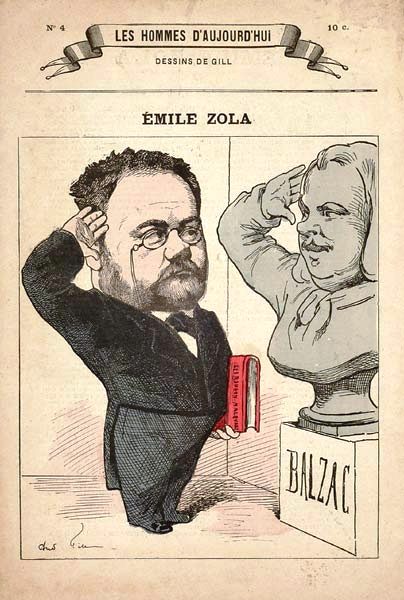
The Zola project

I am enthralled by The Paradise. This television series pushes all the right buttons for me, though I can't identify them all. Music is one positive factor, and the beautiful people are another. For some reason I find the department store setting fascinating. Exquisite production value, fine acting, etc., but why I should be so enamored of this program while others leave me cold (ahem, Downton Abbey) is due to some ineffable je ne sais quoi.

(I'm watching on PBS Masterpiece Theater and we're nearing the end of season 1, but I've just discovered that most of the series is available on YouTube. I expect I'll be binging on season 2 before Christmas.)

The Paradise is based on Émile Zola's Au Bonheur des Dames, the eleventh novel in his 20-volume Rougon-Macquart series. The television program has transposed the story from Paris to somewhere in northeast England. Of course, this leaves me wondering how much else has been changed. And what better way to find out than to read the source material for myself?

Meanwhile, my other half has been reading up on L'Assommoir, another novel in that series, after we were speculating about the origin of the name of a local bar that goes by that appellation. And he's become somewhat obsessed with Zola's concept.

The Rougon-Macquart cycle follows the life of a family during the Second French Empire. It includes a couple of Zola's best known works: Nana (which I in fact read, about 25 years ago) and Germinal, and lo they are interconnected.

In Différences entre Balzac et moi, Zola noted:
In one word, his work wants to be the mirror of the contemporary society. My work, mine, will be something else entirely. The scope will be narrower. I don't want to describe the contemporary society, but a single family, showing how the race is modified by the environment. (...) My big task is to be strictly naturalist, strictly physiologist.

The challenge then, for me and my other: to read the whole Rougon-Macquart cycle. Also, to read it in French. (This may take years.)

I will be following Zola's own recommended reading order with the following exception: I will pick up Au Bonheur des Dames first. The fact that I have some familiarity now with the story should help ease me into the language. Plus, I want all my pressing questions answered.

Sunday, September 08, 2013

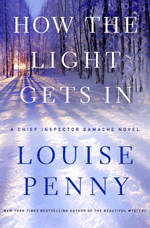
How the light gets in

I spent the better part of the weekend in bed reading Louise Penny's How the Light Gets In. Most of the other part of the weekend I spent curled up on the sofa or at the kitchen table reading Louise Penny's How the Light Gets In.

I have been reading this series of Chief Inspector Gamache novels out of order. So while some readers gush about the overarching story development, I'm not qualified to comment — I've been exposed to several pieces, but I'm still not seeing the full picture.

However, I'm here to tell you that this novel stands perfectly well on its own. An appreciation of the magical village of Three Pines and its eccentric inhabitants would no doubt be enhanced by having read one or two other novels set here, but I think that would be true no matter what order you read them in.

The case Gamache is on in How the Lights Gets In is related to the death of a quintuplet and delves into a fictionalized historical past inspired by the real-life Dionne Quintuplets. It raises some interesting questions about living life under public scrutiny, the life of celebrity, public versus private, the fabrication of reality for public consumption, the branding and commodification of people.

What non-Quebec readers may not be aware of (and certainly there's been no mention of it in the reviews I've read) is how much the rest of the novel, those supplementary plots that belong to the series-spanning story arc of corruption at high levels, is also based in fact.

This novel starts in the Ville-Marie Tunnel of Montreal. As Audrey drives through, she fears that it, and the city above, may crash down on top of her.

Anyone who lives in Montreal could not but recall the collapse of said tunnel two summers ago. Miraculously no one was hurt, but everyone was afraid.

It is one of the events that led to the establishment of the Charbonneau Commission, an ongoing inquiry into corruption with regard to public construction contracts, implicating organized crime and the mayoralty of Montreal (and other players).

I'd love to know from other readers to what extent you find this aspect of the story — regarding collusion among the powers that be in the Ministry of Transportation and other government departments — believable.

The story of the quintuplet is certainly interesting enough, but it's not as compelling as some of Penny's earlier mysteries. It's thoroughly overshadowed by the other events of the book. The corruption on the force and the mystery as to how far it spreads is by far the stronger storyline in this novel, and I say this without complete knowledge of all that's come before. That is, the novice Penny reader should start with a different book.

Now that Penny is garnering an international reputation, I wish she'd have a little more local recognition for her insightful depiction of life in Montreal and environs.

There's something so perfectly cozy about these cozy mysteries, especially at this time of year. I can see myself reading through the rest of Penny's back catalogue before Christmas. And I'm inspired to get out to the Eastern Townships for a little visit...

(Check out what peril other readers are imbibing this season.)

Monday, September 05, 2011

RIP VI

It's been a few years since I followed along with Carl's annual autumnal Halloween-mood-based challenge, Readers Imbibing Peril (RIP). The goal is to celebrate books that might be classified in the following genres: Mystery. Suspense. Thriller. Dark fantasy. Gothic. Horror. Supernatural.

I'm pretty noncommittal with respect to reading goals, but sometimes it just feels right.

Having just come off 5000 pages of political romance, I'm looking to switch gears and clear my way through some of the books that inadvertently got set aside. As it happens, a number of them fit the above-mentioned categories.

A Trick of the Light, Louise Penny. Mystery (of the cozy variety). I was drawn to this book by the Montreal backdrop.

The Train, Simenon. Psychological suspense. Because I think Simenon's amazing.

The End of the World in Breslau, Marek Krajewski. Noir mystery thriller. I read the first of this series a few months ago and was struck by the unique setting — 1930s Nazi-run Wrocław.

Eyes to See. Joseph Nassise. Creepy supernatural suspense horror thriller. This one's a review copy. Heck, I'll give anything a try. And the cover looks pretty demonic.

And this might be the year I pick up Shirley Jackson's classic, The Haunting of Hill House.

Monday, March 31, 2008

Bestowing a robe of honour

Being the 1st-quarter progress report as it regards my attempt to meet the reading challenge I signed on for.

The book: The Adventures of Amir Hamza: Lord of the Auspicious Planetary Conjunction, by Ghalive Lahnavi and Abdullah Bilgrami.

The beginning.

A favourite sentence: "The following night it suddenly snowed so hard and became so bitingly cold that tongues froze inside people's mouths."

An extended excerpt.

Where I'm at: page 250, more than a quarter of the way through and nearing the end of Book One. I hadn't read from this tome in weeks, if not longer, till this weekend. Its physical size has a lot to do with this: I wouldn't dream of carrying this book with me on my daily commute, and the rest follows. Simply: I pick up, and then read to finish, much smaller books instead.

Intent to finish: absolute and reinvigorated. Robes of honour! Tricksters spiking the wine! The tales are messianically magical and the language is exquisite.

The might of the reed is tested by the narrative's power, and the vigor of the swashbucklers of colorful accounts is now manifested in the arena of the page.

Saturday, January 12, 2008

Big books

A challenge to sink my teeth into: Chunkster Challenge 2008.

I wasn't able to meet my own self-designed standards last year, but I better know my limitations for it, and I'm willing to play by more relaxed rules this time: 4 books of >450 pages, read between January 1 and December 20. (Hosted by So Many Books, So Little Time. Sign up before March 1!)

Ahem. My candidates:

1. Currently reading: The Adventures of Amir Hamza: Lord of the Auspicious Planetary Conjunction, by Ghalib Lakhnavi and Abdullah Bilgrami (948 pages, including notes). This is the first book I started reading this year; I'm on page 162.

2. Up soon: The Last Cavalier: Being the Adventures of Count Sainte-Hermine in the Age of Napoleon, by Alexandre Dumas (751 pages, including appendix), received recently. I've read a bit of the introduction, and it's hard not to find the existence of this manuscript a little suspicious. Of course, this increases my enthusiasm for reading it — I'm determined to prove it's a fake.

3. The book I couldn't finish last year: Infinite Jest, by David Foster Wallace (1079 pages, including footnotes). I'll try again. Really. I left off at page 85. I may or may not revisit those first bits.

4. Something else. Maybe The Brothers Karamazov. Or maybe this is Pynchon's year. Maybe.

(Via.)