I enjoyed Subtly Worded, by Teffi, and more so because of book club, but probably more for its value as a historical oddity than on its literary merits. This collection is career-spanning and chronologically ordered.
The stories featuring historical figures — Tolstoy and Rasputin — were fascinating to me (more essay than story?).
However, some of the stories made me roll my eyes at the obviousness of their twist endings. They were truly less than subtle. Other bookclubbers disagreed on this point. And there is indeed a cleverness in the way Teffi uses words and makes them central to her stories. The title story, for example, is about censorship — words and meaning and double-meaning. I might argue that these stories are about subtlety more than they exercise it.
Some of this material is satirical, other bits are just plain funny. She has a comedic sense of timing — knows when to keep it short and when to go long. She is a master at capturing ordinary speech.
The introduction states that shortly before her death, Teffi wrote, "An anecdote is funny when it's being told, but when someone lives it, it's a tragedy. And my life has been sheer anecdote, that is — a tragedy."
So why did Teffi fall off the literary map? Because she was a woman? And why is she back?
I can't quite put my finger on why I don't connect with most of Teffi's stories. Some are too light, others too ponderous. Some bookclubbers posited that as a woman, she may have felt compelled to write a certain way, to play into her role as socialite and play to expectations. More style than sincerity?
That said, I favoured a few standouts I wouldn't hesitate to recommend to anyone: "The Quiet Backwater," "Ernest with the Languages," and "The Dog (A Story from a Stranger)."
Reviews
Subtly Worded, and Other Stories by Teffi review – a traditional Russian form is given a good hiding
Compared to Chekhov, Colette and Now Sedaris: 'Subtly Worded' Brings Teffi to Non-Russian Readers
Thursday, August 31, 2017
Comedy and tragedy
Labels:
bookclub,
short stories,
Teffi
Tuesday, August 29, 2017
Prufrocked
She... and here I rear back and halt myself, ashamed, prufrocked into a sudden pudeur, for, after all, how should I presume? Shall I say, I have known them all, I have seen her like a yellow fog rubbing her back against, rubbing her muzzle upon, shall I say, licking her tongue into the corners of this evening? Do I dare, and do I dare? And who am I, after all? I am not the prince. An attendant lord, deferential, glad to be of use. Almost, at times, the Fool... But, setting aside poetry, I'm too deeply in to stop now.— from The Golden House, by Salman Rushdie.
![]() |
| Source |
However, I'm only a quarter of the way in, and I'm worried about where Rushdie might be going with this tale with the makings of a presidential parable. We'll see where we end up.
But. Prufrocked! I sat up and paid attention!
I wrote a response to Alfred J. when I was 17.
[I can't find the damn poem. I can't find in anywhere. It's in a puke-beige duotang (not the boring-beige one), along with a weird essay I wrote on Pythagorean dualism. This is a thing I kept for 30 years. Or thought I kept. Did I lose it in the divorce? I mean, physically. Not like that story I lost on a bet. Did I throw it away in anger, or sheer drunken stupidity? Could I have been so careless? Maybe the poem's no good. Maybe I threw it out because it was no good, and I was so horrified by the poem's horribleness, I blocked the whole episode from my memory. Have I merely misplaced it? I grow old.)
Last week I met a boy who writes poetry. He devotes himself to it. He will be a writer. A poet.
It takes guts, being a poet.
Maybe I should've been a poet.
Labels:
poetry,
Salman Rushdie,
T.S. Eliot,
TS Eliot
Saturday, August 26, 2017
The ultimate shiver running up the ultimate spine
Propagating at a significant fraction of the speed of light, a frisson of alarm travelled the length of the Atlantic Space Elevator, like the ultimate shiver running up the ultimate spine.There's a lot going on in The Night Sessions, by Ken MacLeod. It's a police procedural. It's science fiction. It's an ecologically challenged future where religion has been eradicated from public discourse, the Faith Wars having culminated in the discharge of nuclear arms. There's a Third Covenant on the rise in Edinburgh.
And robots are attaining consciousness.
Detecting Hardcastle might or might not be difficult, but preventing that entity from accomplishing whatever it had planned was likely to be violent and, as far as Skulk2 was concerned, terminal. It had been thrown into this unenviable position by its original self, from which its sense of identity was diverging by the millisecond. Skulk2 was still Skulk, with all the original machine's emotions and loyalties, memories and reflections, but it found itself both baffled and despondent about the decision its past self had taken — that blithe disregard for a separate being that was, after all, as close to itself as it was possible to be. Some of that resentment begin to jaundice its feelings about Adam Ferguson. The man had been as casual as Skulk had been in sending his old friend on this probably suicidal mission.I read this book earlier this summer while in Edinburgh. That made for spectacular reading: wandering the wynds of the Old Town by day, and settling into our hotel to read about those same paths by night. Plus I learned a little about the Covenanters along the way, which definitely added to my understanding of the issues in the novel.
Remembering their conversation just before the copying, Skulk2 made a cold assessment of how much separate existence it could experience before it drifted so far from its original that would find the switch to self-sacrifice mode painful. This projection of a future potential state of mind was an absorbing exercise, and in itself intensified its self-awareness. The time, it discovered could be reckoned in minutes.
About two-thirds of the way through my interest waned a bit, partly because of the distractions of vacation, but also the story gets a little chaotic — there are just so many weighty issues in this 260-page novel that they start to suffocate a little. That said, I'd like to come back to this book someday.
Reviews
Los Angeles Review of Books: Taking the Future on Faith
It's here that the capabilities of the robots and their superiority to mere humans becomes clear. It isn't just their speed and versatility, or their ability to toggle their minds from one state to another, from self-preservation to self-sacrifice. Two different characters ask two different robots whether they are saved — whether they have backed up their memories and mental states. On one level, it's a trite pun; on another, it's the kind of science-fictional sentence that creates a new reality by collapsing the gap between metaphor and literal act. Robots can save themselves, and can be resurrected by downloading a copy into a new body. They are, essentially, physically immortal. And it's here, too, that we begin to realize that the conspiracy Ferguson has been so doggedly unraveling cloaks the true meaning of the Third Covenant, that the real story has been happening elsewhere, and that MacLeod has ruthlessly followed the logic of his intelligent, ambitious novel to a conclusion that’s truly world-changing.io9: Do Protestant Terrorist Robots Have Souls?
There is something brilliant in MacLeod's idea that when robots achieve human-style intelligence that they'll become as irrational as humans too.Strange Horizons: The Night Sessions by Ken MacLeod
See also the Complete Review for its comprehensive review round-up.
Labels:
Ken MacLeod,
mystery,
philosophy,
religion,
science fiction
Monday, August 21, 2017
Art is not a mirror but a hammer
I googled "written on the body" and down that rabbit hole I discovered Shirin Neshat.
Shirin Neshat is an Iranian-born visual artist.
See NPR: Artist Shirin Neshat Captures Iran's Sharp Contrasts In Black And White.
(Art is not a mirror but a hammer.)
Shirin Neshat is an Iranian-born visual artist.
See NPR: Artist Shirin Neshat Captures Iran's Sharp Contrasts In Black And White.
(Art is not a mirror but a hammer.)
Labels:
art,
Shirin Neshat
Sunday, August 20, 2017
Apocalyptic body song
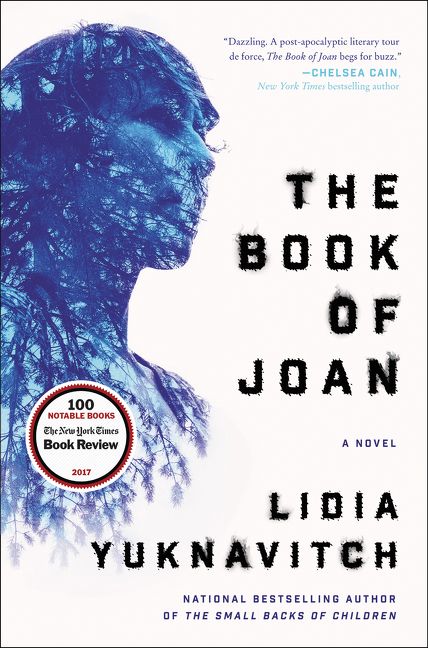
"There is no self and other," she said, laughing into the mouth of death, the blue light at her temple gleaming laser-like into the sky and surrounding air, the song in her head crescendoing in tidal waves and reverberating in the bones of every man, woman, and child around her, her armies plunging and rising as if carried by apocalyptic body song.It's been a while since I read The Book of Joan, but I think I still have things to say about it.
And when she rested her body down upon the dirt, arms spread, legs spread, face down, there was a breach to history as well as evolution.
And the sky lit with fire, half from the weapons of his attack, half from her summoning of the earth and all its calderas — war and decreation all at once, a seeming impossibility.
It was not an easy read for me. Overly literary, almost poetic. That's not always a bad thing. Usually I would blame myself for not connecting with a book. For some reason, this time, I am perfectly comfortable in not taking the blame. Another time, another place, I imagine I would feel similarly, just that I might explain it away differently.
I mean, "apocalyptic body song." Come on.
While the turns of phrase are sometimes beautiful, they took me out of the story rather than propel me along by fleshing it out.
That said, there's an awful lot to think about here. The trajectory on which our planet is headed, ecologically, politically, maybe morally. "We are what happens when the seemingly unthinkable celebrity rises to power." Resources. "Reproduction wasn't what we mourned. We mourned the carnal." The nature of love, gender, energy, power, narrative. "I wonder sometimes if that's why grafting was born. It restores us to the evidence of a body." Physicality and magicality. "The physical world seemed only a membrane between humans and the speed and hum of information." Rebellion.
In 2049 there is a space station colony where live — if you can call it that — Earth's last survivors, among whom 49-year-old Christine, soon to be "aged out" and thus having nothing to lose, grafts the story of Joan onto her body. "What is the word for her body?"
[It's hard not to think that I would be aged out soon, too.]
[It's hard not to think of Jeanette Winterson's Written on the Body. It's been eons since I read it, I don't remember it, but I'm going to go out on a limb and say these novels share some themes and theory.]
Two things have always ruptured up and through hegemony: art and bodies. That is how art has preserved its toehold in our universe. Where there was poverty, there was also a painting someone stared at until it filled them with grateful treas. Where there was genocide, there was a song that refused to quiet. Where a planet was forsaken, there was someone telling a story with their last breath, and someone else carrying it like DNA, or star junk. Hidden matter.Reviews
![]() |
| Shirin Neshat. Divine Rebellion, 2012. |
Now is a fine time for tales of women's resistance, which, above all else, is what The Book of Joan has on offer. Lidia Yuknavitch mines literary and political history for impressive, timely heroines based on the iconic Joan of Arc and her contemporary Christine de Pizan, the only chronicler to write during Joan’s lifetime. Yuknavitch grafts these findings onto layers of material drawn equally from contemporary critical theory, our dire political and ecological realities, and an array of speculative fiction ranging from Shakespeare's The Tempest to Philip K. Dick's Do Androids Dream of Electric Sheep? In the convoluted folds and counterfolds of her narrative, Yuknavitch binds these various strains together with the fates of an Earth that has not quite survived eco-catastrophe and a parasitic sky realm, CIEL, ruled over by Jean de Men, a sadistic and egotistical television-billionaire-become-dictator: "His is a journey from opportunistic showman, to worshipped celebrity, to billionaire, to fascistic power monger," a rise made possible by the "acquiescence" of the powerful and wealthy.The Rumpus: "A Full-Throated Cry from a Clarion"
In The Book of Joan, the last members of the human race, having "ascended" to a colony in space after a violent event, have lost their sexual organs in a devolutionary process. Insects and reptiles populate the station where these semi-humans orbit a dead Earth; the bugs and lizards are neither animal nor synthetic, but something between. The relationship of Joan, around whom the book revolves, to her companion Leone, is not sexual or platonic but something else. Everything in the novel is both-and, not either-or.Tor.com: "Bodies in Space"
When you center a story in the body, particularly the female body, you're going to have to grapple with ideas of autonomy, consent, life and death. We like the female body when it is wet, unless that wet is urine or period blood. We like the female body when it is DTF, not as much when it is Down To Eat or Down To Fight or, Ishtar save us, Down To Think. As the book twists and turns and changes shape it becomes far less the familiar story of a young girl leading a war, or becoming a nation's sacrificial lamb, and becomes much more about women having control over what is done to their bodies. It also mediates long and hard on those people who want to assert their desire on other people, animals, or the Earth itself.
**********
I can't imagine whom I would recommend this book to. The beauty is all gone now — but the vastness remains, and I can almost feel beauty just under the surface of things. It hurts to look at it.
Sunday, August 13, 2017
What did they do?
"Who's that you're talking to? Who is it you're calling to the table?"— from "The Quiet Backwater," in Subtly Worded, by Teffi.
"Why you, Granny. And you, Grandpa."
"Then that's what you should say. There was a woman who called everyone to dinner with the words: 'Come and sit yourselves down.' But she didn't say, 'Let the baptized souls come and sit themselves down.' So anyone who felt like it came to dinner: they crawled out from on top of the stove, from behind the stove, from the sleeping shelf, from the bench and from under the bench, all the unseen and unheard, all the unknown and undreamt of. Great big eyes peering, great big teeth clacking. 'You called us,' they said. 'Now feed us.' But what could she do? She could hardly feed such a crowd."
"What happened? What did they all do?" asked the girl, goggle-eyed.
"What do you think?"
"What?"
"Well, they did what they do."
"What did they do?"
"They all did what they had to do."
"But what was it they had to do, Granny?"
"Ask too many questions — there's no knowing who'll answer."
I'm reading this because I'm interested — I've been hearing about Teffi — but also for the Reading Across Borders Book Club, which will be discussing the book Wednesday, August 23, at 7, at Librairie Drawn & Quarterly.
See also Ten Things You Didn't Know about Teffi.
Labels:
bookclub,
short stories,
Teffi
Thursday, August 10, 2017
Downstairs neighbour
![]() |
| When a door closes, a window opens. |
He smiles hello as I cross the courtyard to get to the stairs. I live on the second level.
He's married, two kids, but almost always outside on his own with a drink, smoking or vaping. Maybe even waiting for me, I begin to fantasize. Always acknowledges me, with a nod or sometimes even, Bon soir. An affair certainly would be convenient.
My key turns the lock, but the door sticks. It's been getting worse the last few days, must be the humidity. Oh, but it's really sticking this time. I bang on the door to get my daughter's attention, maybe if she pulls from the inside...
Mon voisin, meanwhile, is sitting downstairs, enjoying the evening air and his glass of wine. He can't not hear me; we'd see each other if we were looking.
The door is definitely not opening. I instruct my daughter to open the window, I punch the screen out from its frame. I pass my bag of groceries through first. Thank goodness for the bench outside, it'll give me a leg up.
My daughter is embarrassed for me. It's all so ridiculous.
Once inside, I still can't open the door.
I wonder if the neighbour looked up my skirt.
True story.
Monday, August 07, 2017
Misfit
I'm still trying to wrap my head around Lidia Yuknavitch's The Book of Joan. I thought I didn't like it much — I want to say it's overwritten and self-indulgent. But I'm still thinking about this book, and I still haven't decided how I feel about it. So that's something.
I'll write more about it soon, but in the meantime, here's a TED Talk Yuknavitch delivered last year.
Even at the moment of your failure, right then, you are beautiful. You don't know it yet, but you have the ability to reinvent yourself endlessly. That's your beauty.
Labels:
Lidia Yuknavitch,
writing
Thursday, August 03, 2017
What do we mean by love anymore?
I've been thinking a lot about love lately.
Here's an explication of the idea of love:
Electric Love • Time Lapse from Android Jones on Vimeo.
I've been thinking about love, because I'm wondering if I'm missing some. I might agree that it's a selfish impulse.
I have a few chapters to go to finish The Book of Joan — the days of this summer are long and full. On some level, the book seems to be saying that we have evolved past the narrative of love (or, we will have by the time of the novel's not-too-distant future setting). Love is not to have, it's to be. Yet it laments the private and personal.
How will this love story end?
Here's an explication of the idea of love:
What do we mean by love anymore? Love is not the story we were told. Though we wanted so badly for it to hold, the fairy tales and myths, the seamless trajectories, the sewn shapes of desire thwarted by obstacles we could heroically battle, the broken heart, the love lost the love lorn the love torn the love won, the world coming back alive in a hard-earned nearly impossible kiss. Love of God love of country love for another. Erotic love familial love the love of a mother for her children platonic love brotherly love. Lesbian love and homosexual love and all the arms and legs of other love. Transgressive love too — the dips and curves of our drives given secret sanctuary alongside happy bright young couplings and sanctioned marriages producing healthy offspring.— from The Book of Joan, by Lidia Yuknavitch.
Oh love.
Why couldn't you be real?
It isn't that love dies. It's that we storied it poorly. We tried too hard to contain it and make it something to have and to hold.
Love was never meant to be less than electrical impulse and the energy of matter, but that was no small thing. The Earth's heartbeat or pulse or telluric current, no small thing. The stuff of life itself. Life in the universe, cosmic or as small as an atom. But we wanted it to be ours. Between us. For us. We made it small and private so that we'd be above all other living things. We made it a word, and then a story, and then a reason to care more about ourselves than anything else on the planet. Our reasons to love more important than any others.
The stars were never there for us — we are not the reason for the night sky.
The stars are us.
We made love stories up so we could believe the night sky was not so vast, so unbearably vast, that we barely matter.
Electric Love • Time Lapse from Android Jones on Vimeo.
I've been thinking about love, because I'm wondering if I'm missing some. I might agree that it's a selfish impulse.
I have a few chapters to go to finish The Book of Joan — the days of this summer are long and full. On some level, the book seems to be saying that we have evolved past the narrative of love (or, we will have by the time of the novel's not-too-distant future setting). Love is not to have, it's to be. Yet it laments the private and personal.
How will this love story end?
Labels:
Lidia Yuknavitch,
love,
science fiction
Monday, July 24, 2017
To surrender to the crucible
To be human the film suggested, was to step into the full flurry and motion of all humanity: to bear the weight of circumstances without flinching, to surrender to the crucible — to admit that history was not something in the past but something you consciously step into. Living a life meant knowing you might be killed instantly, like one who wanders into the path of a runaway train. It was the first time I felt a sense of messianic time, of life that was not limited to the story of a lone human being detached from the cosmos.— from The Book of Joan, by Lidia Yuknavitch.
When I came out of the theater, I said to my mother, "It's like we're stars in space. It's like space is the theater and we are the bits of stardust and everything everywhere is the story."
The film is not named, but surely it is Doctor Zhivago that is described. I can't say I feel the same way about this film as Yuknavitch's narrator does, but I remember having a similar epiphany (for me the film was Wings of Desire).
This book is not even a little bit what I expected it to be.
Messianic time.
Labels:
dystopia,
Lidia Yuknavitch,
science fiction
Sunday, July 23, 2017
Today I read the saddest poem
Today I read the saddest poem, flipping through journals at the magazine shop. It brought tears to my eyes. I stopped breathing, and my heart stopped for an instant too.
It was so sad, I had to buy this summer reading issue of Tin House. You can't read something that sad and just put it back on the rack. Plus, there's an octopus on the cover.
The poem is "Dusk" by Tracy K Smith, just recently named US Poet Laureate. Justly so.
"Dusk" starts like this:
It was so sad, I had to buy this summer reading issue of Tin House. You can't read something that sad and just put it back on the rack. Plus, there's an octopus on the cover.
The poem is "Dusk" by Tracy K Smith, just recently named US Poet Laureate. Justly so.
"Dusk" starts like this:
What woke to war in me those yearsI came home and told my daughter I'd read the saddest poem, about having a teenage daughter, and she asked me if I needed a hug and I said yes.
When my daughter had first grown into
A solid self-centered self? I'd watch her
Sit at the table — well, not quite sit,
More like stand on one leg while
The other knee hovered just over the chair.
She wouldn't lower herself, as if
There might be a fire, or a great black
Blizzard of waves let loose in the kitchen,
And she'd need to make her escape.
I thought I’d have more time! I thought
My body would have taken longer going
About the inevitable feat of repelling her,
Labels:
poetry,
Tracy K Smith
Thursday, July 13, 2017
She can talk back to me, though not too much
My vacation reading went off the rails pretty early on. The book I was reading in Edinburgh was set in Edinburgh, but as soon as we settled into the train ride south, a restlessness overcame me. The books I'd brought with me were laid aside, and I picked up other reading material along the way. My London stay was defined by Tim Parks's Calm. On the last day in London I came across Tove Jansson's Letters from Klara, which seemed would make for perfect seaside reading.
(The cover image and the French flaps made this book irresistible to me.)
Letters from Klara is a volume of short stories originally published in 1991, appearing now in English translation for the first time.
Jansson is probably best known for the Moomin books (did you know there's a Moomin Shop at Covent Garden?), but NYRB has been steadily reissuing her adult fiction over the last several years.
The thirteen stories in this volume transcend time; one barely notices the absence of modern technology and the reliance on post or telegram. But they feel shrouded in nostalgia. I read these stories between naps, on the beach and on a plane, allowing each story to breathe, but one could easily devour this volume in one sitting.
These stories are mostly character portraits. They might be interpreted as reflections on a life lived; more than one story alludes to switching careers, how difficult it would be to start over. I feel scolded for both taking matters too seriously and not seriously enough.
On several occasions I found myself talking back at the book and exclaiming in disbelief ("What a bitch!"). People do some nasty things in these stories.
Other people are not we expect or remember them to be.
Above all these stories demonstrate how impossible it is to understand each other and how inscrutable our motivations are. Everyone operates by their own unique internal logic.
But they are sweet and bittersweet.
I think when I have a daughter, I'll teach her to whistle. It could be useful to whistle to each other in case we lost track of each other in the woods. If she doesn't answer, then I'll know she wants to be left alone. If she goes out in The Dinghy, I won't row after her and bring her home if it starts to blow. I won't make her pick blueberries, but she can pick mushrooms because that's fun. My daughter can wear any old trousers she wants to, and she can talk back to me, though not too much. She will look like me but prettier. Autumn is coming, so I won't write any more today.
Labels:
Moomins,
short stories,
Tove Jansson
Tuesday, July 11, 2017
An abstract music of galactic desolation
Electronic music had just begun to appear at that time — Pierre Schaeffer, Klaus Schulze — an abstract music of galactic desolation that enraptured me. I wanted Karin to hear it too, but I should never have played that record. I explained that this was a new thing they were experimenting with. "Now just listen to this," I said. "It's like the pulsing of the spheres in space. Don't you think?"— from "My Friend Karin" in Letters from Klara, by Tove Jansson.
"Quiet," said Karin. "I'm listening."
We listened together. The room seemed to throb electronically. Karin had gone pale and sat utterly motionless.
I jumped up to turn off the music but Karin yelled, "Don't! This is important to me!"
I should have remembered this was the moment when Dante descended into the Underworld and was met by the cries of the lost souls.
"I know," Karin said. "This is it. Now comes the voice of God."
And it came. How could she have known!? A deep, sorrowful bass that cut through the music with incomprehensible words and vanished into the galaxy amidst vibrations that finally lost themselves in silence.
"Forgive me..." I said. "You understand, this is a new kind of music they've just invented."
"No," said Karin calmly, "it has always existed. The lost souls are with us always, I know them. It's like a grey wave — any time, any place, on the street, on the train — obliterating everything. They cry for help and we sink in sin, theirs and our own. Can you play it again?"
But I didn't want to.
Sometime in the 80s, my brother discovered Klaus Schulze, and it was much like the times he discovered Kraftwerk and Beethoven. He rushed into the house, headed straight for the stereo, repositioned the speakers so the sound would roll over the dining table. Late for supper, again.
This was before trance music, before rave culture. This is how he would share with us his newest, his latest, religion. "Listen to this. Can you hear that? You can hear... Don't you get it?!"
Labels:
music,
religion,
Tove Jansson
Saturday, July 08, 2017
Still life
One aspect of Vipassana still bothered him, indeed had come to bother him more and more, to the point where he was now ready to stop meditating. "What does it mean, " he asked, "when they say the thoughts are not my thoughts? What can that mean? How can the thoughts not be my thoughts?"I don't like Tim Parks.
I attended an event several years ago where he was reading, and I overheard him saying things — not publicly, but to an individual — that rubbed me the wrong way. He struck me as a man of tremendous ego. On this basis, I have refused to read his novels, and I read his columns in the New York Review of Books aggressively and antagonistically — I love to hate them and find fault with them wherever I can.
All of which makes it particularly puzzling that I should be drawn to pick up Calm, and that I should find it so satisfying.
There I was, restless and wandering the gift shops of the Tate Modern, and there were lined up all the pretty Vintage Minis, and I suddenly had to have one, I had to have a pretty little book as a souvenir, a book that was Art, and Modern, and Summer, and Britain.
And I picked them up, one by one, to see what they were about. These are slim volumes that excerpt previously published work.
But this vacation was not about love, desire, or drinking, not even motherhood or summer. I almost left with that itch to buy a book unscratched, when Calm caught my eye. Striped shades of purple. Calm. An antidote to my restlessness. By an author I dislike. A paradox like a zen koan. My own little book of calm.
(Weirdly, Calm is the book repeatedly recommended to me by the "which Vintage Mini do you need in your life?" quiz, even when I switch up my responses.)
Calm is an extract from Teach Us to Sit Still, in which the sceptical Parks attends a Buddhist meditation retreat.
Why did I think I could learn something about calm, achieve some kind of calm, via the reflections of an aging white male academic? His pains are not my pains, physical or emotional. His teachings cannot be my lessons.
Attachment with aversion was a new idea to me. But I sensed at once what he meant. It was like when I read an author I despised because I despised him, because I enjoyed thinking what a scandal it was that this man was a celebrity. Or when I kept complaining about a colleague at the university because my identity was intensified by my opposition to him. Or when I listened to the radio outside Ruggero's study in order to loathe it. Did I attach to pain in the same way? Scratching sores. Was it possible that this grand showdown with myself that I had planned and been denied actually had to do with the pain I was now experiencing? The showdown was taking place without my realising it was the showdown.I may not have learned anything, but I found a calm satisfaction in this book. Something about the relationship between the ineffable and the tangible, inner and outer, stillness and life. Thematically in keeping with what had brought me to this book, the Giacometti exhibition I'd viewed at the Tate Modern — the problem of achieving maximal expression through a minimum of means.
Calm lends itself well to introspection, examining how we think about thought and how we transform wordlessness into words. Parks's reflections only confirm how vast his ego is, but I admire his honesty. And as much as I enjoyed this read, I confess I don't intend to read any more Parks ever.
Labels:
art,
philosophy,
Tim Parks
Sunday, July 02, 2017
Book space
Spotted underground:
I suppose storage services have been around for some time, but this ad brings a fresh perspective. My daughter is convinced I am in need of such services.
Wednesday, June 28, 2017
The power of place
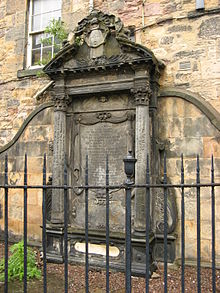
— from The Night Sessions, by Ken MacLeod.Skulk turned right onto the Mile, up for a couple of hundred metres and then left, onto the George IV Bridge above the dark chasm of the Cowgate. At this time tomorrow it would be crowded, rain or no rain, but tonight it was almost empty, Thursday's revellers mostly behind the doors of the clubs. The machine stalked between the two big libraries to the top of Candlemaker Row, into the alley of Greyfriars and up and over the gate into Greyfriars Kirkyard. It paced past the church towards the Flodden Wall, and paused at the corner where the path turned towards the Covenanters' Prison.
Somewhere at the back of the roofless mausoleum of Thomas Potter (Nuper Mercator Edinburgis) a pebble shifted. A long shape lifted itself from the ground.
This may not strike you as a particularly powerful passage, but it chilled me to the bone.
Not hours beforehand I'd walked the same route, stopped for some takeaway, then turned down Candlemaker Row to loop round to my hotel on Cowgate. I lay there in that chasm, recalling the stories our ghoulish tour guide told us of the ghosts in the graveyard.
I am grateful, too, for the history lesson, as Covenanters are deeply relevant to MacLeod's novel.
This turned out to be a most fortuitous choice of reading material while visiting Edinburgh.
Labels:
Ken MacLeod,
mystery,
religion,
science fiction
Wednesday, June 14, 2017
London on fire
From the entry concerning the secrets of St. Bartholomew's the Greater, featuring bad puns and briny floods and heralded as a rare survivor:
Secret London: An Unusual Guide is as fantastic as the other book in this series I perused before traveling to Venice.
I'll be in London in about two weeks' time, and I know I won't be visiting very many of these "unusual" places (maybe a couple: the traffic light tree? the Monument?), but just knowing they exist — both the secrets and the guidebooks — brings me irrational joy.
Very little of early medieval London remains intact today, because Londoners, like the unwise Little Pig, built houses of wood, and the city burned down in 1077, 1087, 1132, 1136, 1203, 1212, 1220 and 1227. Almost anything left intact from these was destroyed in the Great Fire of 1666.Maybe you don't think that's very funny; then, to hell with you.
Secret London: An Unusual Guide is as fantastic as the other book in this series I perused before traveling to Venice.
I'll be in London in about two weeks' time, and I know I won't be visiting very many of these "unusual" places (maybe a couple: the traffic light tree? the Monument?), but just knowing they exist — both the secrets and the guidebooks — brings me irrational joy.
Thursday, June 08, 2017
Somerset Maugham meets death metal
Juhan was wearing skinny black jeans, a black T-shirt, and a massive black leather jacket with jangly silver zippers, which hung from his shoulders like the wings of a pterodactyl. In appearance, it was as if Somerset Maugham had, in the final years of his life, decided to take up death metal.— from Europe in Winter, by Dave Hutchinson.
Can you picture it? Might Somerset Maugham ever have taken up death metal? I'd like to think so.
Labels:
Dave Hutchinson,
W Somerset Maugham
Monday, June 05, 2017
Shitty, shitty rain
I wasn't really interested in reading a series starring yet another clichéd troubled-yet-sensitive, hard-drinking detective. But I'm vacationing in Edinburgh in a few weeks' time, and I was told the city features strongly in Rankin's Inspector Rebus novels, like a character in its own right, so it seemed appropriate to read one, to set the mood for my holiday.
There's a lightness to the writing, great humour and wit, that makes it very engaging, despite the grimness of the plot. I was halfway through when I realized the novel hadn't devoted much time at all to the actual mystery of the serial killer. And that's fine — the story certainly didn't bog down in the details of police procedure. I'm curious to see how subsequent Rebus novels play out, now that the groundwork for his character has been established.
Edinburgh rain was like a judgement. It soaked into the bones, into the structures of the buildings, into the memories of the tourists. It lingered for days, splashing up from puddles by the roadside, breaking up marriages, chilling, killing, omnipresent. The typical postcard home from an Edinburgh boarding-house: "Edinburgh is lovely. The people rather reserved. Saw the Castle yesterday, and the Scott Monument. It's a very small city, almost a town really. You could fit it inside New York and never notice it. Weather could be better."— from Knots and Crosses, by Ian Rankin
Weather could be better. The art of euphemism. Shitty, shitty rain.
Photo by Steffani Cameron.
I wasn't really interested in reading a series starring yet another clichéd troubled-yet-sensitive, hard-drinking detective. But I'm vacationing in Edinburgh in a few weeks' time, and I was told the city features strongly in Rankin's Inspector Rebus novels, like a character in its own right, so it seemed appropriate to read one, to set the mood for my holiday.
There's a lightness to the writing, great humour and wit, that makes it very engaging, despite the grimness of the plot. I was halfway through when I realized the novel hadn't devoted much time at all to the actual mystery of the serial killer. And that's fine — the story certainly didn't bog down in the details of police procedure. I'm curious to see how subsequent Rebus novels play out, now that the groundwork for his character has been established.
Edinburgh slept on, as it had slept for hundreds of years. There were ghosts in the cobble alleys and on the twisting stairways of the Old Town tenements, but they were Enlightenment ghosts, articulate and deferential.I'm sold on Edinburgh — its Jekyll-and-Hyde nature and rain like judgement.
Labels:
Ian Rankin,
mystery
Sunday, June 04, 2017
Does this book make me look fat?
13 Ways of Looking at a Fat Girl, by Mona Awad, is a breezy read that becomes profoundly sad the instant you step back from it.
The novel consists of 13 stories, each of which could stand independently, chronicling Elizabeth's life, from fat teen to gym-going, food-weighing, unhappy obsessive. She sheds a lot of weight, but loses friends, her mother, and her marriage along the way. She tries on new names along with new bodies, each new identity a new relationship with her body: Lizzie, Elizabeth, Beth, Liz. (And it's her husband's fault when he can't keep up with her preference.)
Many reviews stress how much more this book is about than body image: friendship, loneliness, a girl's relationship with her mother, blah, blah, blah, what it means to be human. Well, no. Everyone of those facets is firmly based in Lizzie's relationship to her body.
Awad doesn't make any overt social commentary; all the criticisms of Lizzie come from within herself, with the occasional boost from her mother. I hate to think that there are women out there who live like she does, but I don't doubt it's true. Also, I couldn't help but feel a twinge of guilt for not addressing weight loss more concertedly, and for being relatively happy.
These are tight, well-written stories. Go ahead, read them. No, I don't mean anything by that; you look great.
Reviews
Globe and Mail
The Rumpus
Washington Post
Labels:
Mona Awad,
short stories
Subscribe to:
Posts (Atom)