Showing posts with label Laurie Anderson. Show all posts

Sunday, May 13, 2018

Disembodiment

The Particles of Existence exhibition at Phi Centre wants you to discover the universe at a non-human scale. Chalkroom is the star of the show.

Chalkroom is an immersive installation created by multimedia artist Laurie Anderson and mixed media artist Hsin-Chien Huang.


Anderson discusses the work:
The reason it's "Chalkroom" is it has a certain tactility and it's a made-by-hand kind of thing — it's the opposite of what virtual reality usually is, which is distant and very synthetic. So this is gritty and drippy, and filled with dust and dirt.
I plan on going back to experience the other "rooms" of Chalkroom to find some of the other stories hidden within. On at Phi Centre until August 18.

About
Faena Aleph
New York Times
Open Culture

Saturday, October 29, 2016

A diagram of woe

Noble people don't do things for the money, they simply have money, and that's what allows them to be noble. They don't really have to think about it much; they sprout benevolent acts the way trees sprout leaves.
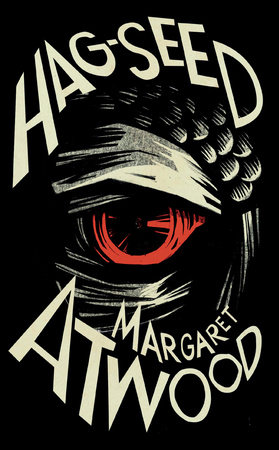
So says Felix's figment daughter Miranda of her father, who's staging The Tempest at a local correctional facility and casting himself as Prospero. Hag-Seed, like The Tempest which it retells, is about vengeance, that most noble of acts.

I'm an Atwood fan from way back — 30 years now. I'm more familiar with Atwood than I am with Shakespeare. Sure, I like Shakespeare as much as anyone does — I acknowledge his genius even if I don't always recognize it. But Atwood never fails to disappoint. Noble Atwood sprouting devourable fiction.

The reviews of Margaret Atwood's Hag-Seed: The Tempest Retold are quite boring in their consistent and unsurprising praise for her wit and overall skill. There is nothing, absolutely nothing, to find fault with. That may not sound much like praise; more like the absence of criticism. It's a relatively compact, near-perfect novel.

So I'm not sure what I can offer you by way of review. I give you this.

You don't need to know anything about The Tempest to enjoy Atwood's Hag-Seed.
I don't know The Tempest. I always assumed it must be cool, based on it being quoted by Laurie Anderson in Blue Lagoon; oh, and by Eliot in The Wasteland. I did see Peter Greenaway's Prospero's Books, but, visually and aurally stunning as it was, it can't be said that I understood it. I suspect that knowledge of Shakespeare's original would give the reader an added layer or two of appreciation, but it's not a prerequisite for reading this book.

I now want to see The Tempest staged.
More specifically, I want to see Atwood's version of The Tempest staged, just as she outlines the direction in this novel. A cloak of the pelts of stuffed animals, heads and all, nightmarified Disney princess puppets, rap musical numbers. Sounds awesome. (A couple reviews nitpick that Atwood's rhymes are substandard. I didn't find them out of place.)

Atwood is a master of language.
One character is described as "a diagram of woe." I love that. Her passages may not be liltingly beautiful, but they are crafted to great effect.
There's a click. The door unlocks and he walks into the warmth, and that unique smell. Unfresh paint, faint mildew, unloved food eaten in boredom, and the smell of dejection, the shoulders slumping down, the head bowed, the body caving in upon itself. A meagre smell. Onion farts. Cold naked feet, damp towels, motherless years. The smell of misery, lying over everyone within like an enchantment. But for brief moments he knows he can unbind that spell.
Atwood is a skilled storyteller.
While reading Station Eleven, by Emily St. John Mandel, I kept thinking how much it felt like a Margaret Atwood novel, just missing some unpindownable something that would make it great and lasting. So it was interesting to read Atwood so shortly afterwards. Both novels cover the production of Shakespeare. I know it's not fair to compare them — these books set out to do very different things. But I keep trying to figure out, what is it in Station Eleven that reminds me so much of Atwood, and why it falls short of Atwood. Atwood's Hag-Seed is clearly focused and controlled. Maybe this: maybe Station Eleven is trying to be bigger than it needs to be; Hag-Seed is only as big as it needs to be and is careful not to let anything else in.

This book teaches me a new way of reading.
Hag-Seed is a lesson in how to read critically, and this evolves quite naturally out of the context, is never didactic. Felix teaches the prisoners how to read — really read — The Tempest: what do the words mean, what do they really mean, what do they say about the characters who speak them, what is the nature of these characters, human or otherwise, what makes them who they are, why do they do what they do. What happens to them when the play is done? Felix asks his actors to imagine their characters' lives after Shakespeare leaves off. What happens after can inform what happened before. I'm not overly interested in close reading, I read novels for fun, but I think the best works of literature inspire these questions anyway, leading readers to run away with their thoughts. Shakespeare does it. Atwood too.

Atwood on rewriting The Tempest in The Guardian:
The last three words Prospero says are "Set me free." But free from what? In what has he been imprisoned?

Saturday, July 03, 2010

Brave new jazz

Last night, we took in a show at the Festival International de Jazz de Montréal: John Zorn with Laurie Anderson and Lou Reed. Arguably, Lou Reed is the most recognized name in this trio, but it's actually the other two whose music I'm more familiar with.

Laurie Anderson holds a special place in my musical development. It was a thrill for my teenage-self to realize playing violin (which I did) didn't restrict you to Vivaldi. I saw her in concert back around 1989, and that was a "performance."

As for John Zorn, saxophone god, I stumbled upon the first of his Masada albums in 1994 (it was playing in the record store; I asked what it was, bought it on the spot), and I continue to regard it as my desert-island pick. We saw his Acoustic Masada at the festival a few years ago, and it was one of the most spectacular concerts, of any musical genre, I've ever seen, in terms of intensity and vitality.

Lou Reed? I don't know much about Lou Reed. Walk on the Wild Side. Sweet Jane. That thing in the Wim Wenders movie.

What to expect from this show? I didn't expect Zorn to be playing Velvet Underground tunes, Anderson to interpret Masada, or Reed to be singing Home of the Brave. (I admit I was a bit nervous, actually, having heard about Anderson and Reed's recent gig in Australia that was audible only to dogs.) I jokingly tweeted that this combination was something akin to, in lit terms, interleaving the pages of Julio Cortázar, William S Burroughs, and Nelson Algren. I think I'm not far off. It's a brave new animal I heard, growling its way into existence. (I learned after the fact that it was all improv.)

Preshow press conference with Anderson and Reed: This is really interesting, actually — I just listened to it — wrt Anderson's relationship to technology and approach to art in general. She talks about what you hear, as a violinist, happening right next to your ear, the grinding, the overtones and harmonics, how the synths are a way to bring that to the whole audience, to lay bare the machinery of the music. (But, no, Lou, there was no rock and roll.)

Reed contributed, I think, very little to the show, and compared with the others on stage, he seemed not invested in the music, not fully present. (He's also old, and not very mobile.)

Musically, Reed laid down a floor of sound, a kind of throbbing static, a loud white noise, over which Anderson and Zorn stomped and frolicked. Four guitars were onstage — he switched between a couple of them and put a few notes on sustain, but there was very little discernible guitar playing. For one piece his attention was entirely on the reddish panel in front of him — some kind of equalizer? synthesizer? sound board? but I couldn't see any knobs, keys, levers. It looked like he was operating it like a touch pad.

Two pieces in came the booing, "Play some music!"; Zorn suggested to those audience members who don't like to "get the fuck outta here." Allegedly, many people did.

[I couldn't help thinking that this was the perfect soundtrack to my current read (China Miéville's Kraken) — the squelch and roar of the end of the world through which strains this near-angelic tinkling, like delicate glass.]

It felt like being at the centre of a wet sponge — there's a heaviness, but with all these porous spaces teasing you through a labyrinth toward light and air.

Anderson and Zorn traded off between (some semblance of) rhythm and melody. Cacaphony at times, but ordered — Anderson kept time with her feet, Zorn slapped is sax.

I couldn't tell you what kind of violin Anderson was playing, how it differs from the traditional instrument (apart from being electric). What struck me, though, is that despite her musical evolution and reputation for avant-gardism, her playing was decidedly more traditional than ever; that is, although there were instances of her sliding her hand over the fingerboard from the left, and that sound when you play on the wrong side of the bridge, the execution of this improv was fully grounded in basic, traditional bowing and fingering techniques. And this to me was a nice surprise — to hear the strains of something almost Vivaldi-like issuing up through something completely modern. This music isn't just new, it comes out of what came before.

Zorn is delightful. He plays (and I credit this description to J-F) like a kid who just got a new toy, determined to squeeze every ounce of life out of it, run it through its paces, try to break it. The man's a genius.

The main criticism levelled in the review in the local newspaper (in which they get the photo caption wrong) is that the show was short, barely over an hour.

I choose to believe this was not in response to the hostile reception. What Zorn does is extremely physically demanding. (Can anyone play saxophone for more than an hour? Can anyone play saxophone the way John Zorn does for more than an hour?) The Masada show of a few years ago was of similar length. Simply, the show had reached its (physical, but no doubt also emotional) limit.

I don't feel equipped to describe music, let alone jazz. I don't know jazz beyond knowing what I like. This was undeniably experimental. Was it music? I think so. Was it art? Definitely. Not for everyone, but I'd do it again.

Monday, July 21, 2008

Such stuff as dreams are made on

It was Laurie Anderson I became acquainted with first. "Those are pearls that were his eyes."

Years later, I learned a few things from Peter Greenaway.

This summer, Repercussion Theatre presents Shakespeare's The Tempest.

In Montreal's parks, July 22 through August 17 (choose your language). See you there.