Friday, January 02, 2015

She cried that night

Stanisław Barańczak — poet, dissident, and translator — died last week. Here's a poem I found, translated by the poet himself with Clare Cavanagh.
She Cried That Night, but Not for Him to Hear

She cried that night, but not for him to hear.
In fact her crying wasn't why he woke.
It was some other sound; that much was clear.

And this half-waking shame. No trace of tears
all day, and still at night she works to choke
the sobs; she cries, but not for him to hear.

And all those other nights: she lay so near
but he had only caught the breeze's joke,
the branch that tapped the roof. That much was clear.

The outside dark revolved in its own sphere:
no wind, no window pane, no creaking oak
had said: "She's crying, not for you to hear."

Untouchable are those tangibly dear,
so close, they're closed, too far to reach and stroke
a quaking shoulder-blade. This much is clear.

And he did not reach out — for shame, for fear
of spoiling the tears' tenderness that spoke:
"Go back to sleep. What woke you isn't here.
It was the wind outside, indifferent, clear."
I quite love this poem already. It resonates with me because... it resonates.

But here's the poem in Polish.
Płakała w nocy, ale nie jej płacz go zbudził

Płakała w nocy, ale nie jej płacz go zbudził.
Nie był płaczem dla niego, chociaż mógł być o nim.
To był wiatr, dygot szyby, obce sprawom ludzi.

I półprzytomny wstyd: że ona tak się trudzi,
to, co tłumione, czyniąc podwójnie tłumionym
przez to, że w nocy płacze. Nie jej płacz go zbudził:

ile więc było wcześniej nocy, gdy nie zwrócił
uwagi — gdy skrzyp drewna, trzepiąca o komin
gałąź, wiatr, dygot szyby związek z prawdą ludzi

negowały staranniej: ich szmer gasł, nim wrzucił
do skrzynki bezsenności rzeczowy anonim:
"Płakała w nocy, chociaż nie jej płacz cię zbudził"?

Na wyciągnięcie ręki — ci dotkliwie drudzy,
niedotykalnie drodzy ze swoim "Śpij, pomiń
snem tę wilgoć poduszki, nocne prawo ludzi".

I nie wyciągnął ręki. Zakłóciłby, zbrudził
toporniejszą tkliwością jej tkliwość: "Zapomnij.
Płakałam w nocy, ale nie mój płacz cię zbudził.
To był wiatr, dygot szyby, obce sprawom ludzi".
The first stanza of the translation is, to me, strikingly different from the original. While everything else essentially matches up, the opening sets a very different tone.

More literally, it'd be something like this...
She cried that night, but it's not her crying that woke him.
She wasn't crying for him, but it might've been about him.
It was the wind, a rattling window pane, other people's odd business.
So while the official translation maintains the rhyme, rhythm, matter-of-factness of the original, it turns on generality. There is something altogether more pointed and tragic about the original. She might be crying about him.

I've always enjoyed comparing poems in translation, and I marvel at the translators' feat. It demands emotional precision more than technical exactitude.

But to my ear, this English translation is a very different poem.

Where is the damp pillow? A person's right to sleep at night?

Thursday, January 01, 2015

Full of things that have never been

And now let us believe in a long year that is given to us, new, untouched, full of things that have never been, full of work that has never been done, full of tasks, claims, and demands; and let us see that we learn to take it without letting fall too much of what it has to bestow upon those who demand of it necessary, serious and great things.
— from Rainer Maria Rilke, in a letter to Clara Rilke, January 1, 1907.

Hear me, world. I demand necessary, serious, and great things.

Tuesday, December 30, 2014

Holding the universe together

The most beautiful sentences...
She wasn't doing a thing that I could see, except standing there leaning on the balcony railing, holding the universe together.
— from "A Girl I Knew," by J.D. Salinger.

That used to be me, I was that girl. But my universe has crumbled apart. Someone else holds his universe together now.

Monday, December 29, 2014

That showy dark crack running down the middle of a life

I spent some hours at the bookstore this afternoon, wanting something but not finding anything that satisfied. I picked up Donna Tartt's The Secret History, but then I put I put it back down again. It starts this way:
Does such a thing as "the fatal flaw," that showy dark crack running down the middle of a life, exist outside literature? I used to think it didn't. Now I think it does.
Me too. I didn't think it existed. But now I do.

The narrator believes his flaw to be "a morbid longing for the picturesque." I think that's fairly benign.

I'm not convinced how showy the crack is, but sadly, I have little trouble identifying flaws — gaping voids — in others. I have much less insight into my own shortcomings.

Monday, December 22, 2014

Stillness

Much-needed stillness these days...
The amount of data humanity will collect while you're reading this book is five times greater than the amount that exists in the Library of Congress. Anyone reading this book will take in as much information today as Shakespeare took in over a lifetime. Researchers in the new field of interruption science have found that it takes an average of twenty-five minutes to recover from a phone call. Yet such interruptions come every eleven minutes — which means we're never caught up with our lives.
— from The Art of Stillness: Adventures in Going Nowhere, by Pico Iyer.


"Finding what feels like real life, that changeless and inarguable something behind all our shifting thoughts, is less a discovery than a recollection."

Friday, December 19, 2014

Where are they going?

Back in November I read Satantango, by László Krasznahorkai, and I'll even write about it someday. My challenge these days is to find an 8-hour block of time so that I can watch Bela Tarr's film adaptation of it, uninterrupted.

While trying to find my way into novel, I found some clips of the film. Nothing much happens, in any of them. Yet the clips are oddly compelling. I need to see how the nothingness resolves. I need to watch the full movie.


Where are they going? They look like they're going somewhere. That's quite the wind. Do they have far to go? They look like they're in a hurry. They must be in a hurry to get to wherever they're going. But the street's not passing fast enough beneath their feet. Where is everybody anyway? Maybe they're just leaving this place. But, no, they're going somewhere. Will they get there? Is that where everybody is?


So where is she going? And why is she carrying a dead cat? (Is it a real dead cat?) Will the rain ever let up? Oh, thank gawd, the rain is letting up. And it's daylight too. That's a lot of walking. The landscape has changed; she's making progress. But what's wrong with her? Why is the cat dead? Does she even know where she's going? Will she ever get there? She must be tired. Doesn't anybody care that she's been out all night? Where is everybody? Is she going someplace, or just leaving someplace behind? Where?

It's so much nothing. But something's going to happen, isn't it?

Where are they going?

Tuesday, December 16, 2014

A presentiment of indistinct terrors

"Yesterday their childhood came to an end." Yesterday, their mother dismissed their governess, pregnant with their cousin's child. The governess was so happy in love, but lately she's been sad. The girls overheard that there was a baby; they think that's why she's sad — the governess in another life somewhere had to leave behind her baby to come work for them. Well, not quite. And then the governess is gone, and the circumstances of her departure are a little ambiguous even, but this is not her story.
That afternoon they grow many years older. And only when they are alone in the darkness of their room in the evening do childish fears surface in them, the fear of loneliness, of images of dead people, as well as a presentiment of indistinct terrors. [...] They still dare not talk feely. But now the younger girl at last burst into tears, and her elder sister joins her, sobbing wildly. They weep, closely entwined, warm tears rolling down their faces hesitantly at first, then falling faster, hugging one another breast to breast, shaking as they share their sobs. They are united in pain, a single weeping body in the darkness. They are not crying for the governess now, or for the parents who are lost to them; they are shaken by a sudden horror and fear of the unknown world lying ahead of them, after the first terrifying glimpse that they had of it today. They are afraid of the life ahead of them into which they will now pass, dark and menacing like a gloomy forest though which they must go. Their confused fears become dimmer, almost dreamlike, their sobbing is softer and softer. Their breath mingles gently now, as their tears mingled before. And so at last they fall asleep.
— from "The Governess," in The Collected Stories of Stefan Zweig, by Stefan Zweig.

Do you remember crying yourself to sleep? Was it like that, puberty? Some inkling of the mysteries of love, a sexual awakening of a sort. The dark and menacing forest of fairy tales.

I rather think it must be like that. In a phenomenon like childbirth, the memory of the pain of it disintegrates over time as it yields to a greater thing. But Zweig and the intensity of my daughter's emotions these days (she is 12; the girls in the story, 12 and 13) convince me of its reality.

Zweig writes love well — the blooming of it, the tragedy of it, the awareness and secrecy of it. In one story ("A Summer Novella"), one character suggests to another that he is telling "a story like your German novelists, that's to say with lyrical fancies, broad, sentimental, tedious," and it is taken as a criticism. Indeed, I am seeing Zweig falter when he paints broader landscapes, whole villages in historical context. But when Zweig writes of the personal and intimate, I think he is "German" (without the tedium), and he is magnificent.

About the stories.

Wednesday, December 10, 2014

Colouring mandalas

Here's an unusual book I received for review: Coloring Animal Mandalas, by Wendy Piersall. Yes, it's a colouring book. How does one review a colouring book?

Colouring is one of my favourite things these days. Sit down at the kitchen table, throw some Netflix up on the laptop, lay out my materials in front of me, empty my mind.

I use felt tips and pencils, sometimes both within the same picture. I think I prefer pencils; I like the idea of felt tips, but I'm better with pencils. The fish at left, that's pencils.

This book smartly presents images on one side of the page as ink can and will leak through. I tend to insert a loose leaf behind whatever I'm working on as a safeguard anyway (plus, scrap paper for testing colours). If your ink is wet enough, or your pencil aggressive enough, the ink from the printed lines may smudge into your colour a bit (get to know your materials to avoid messes).

Mandalas are fantastic for colouring, it turns out; the repetition makes for a very calming experience. The animal theme keeps it interesting. Check out this time-lapse promo for the book.


Colouring as a pastime for adults is gaining respect. Now we call it anti-stress art therapy. I'm here to tell you it works. And a nice book with a set of fancy pens or pencils makes an excellent Christmas gift!

Consider:

Monday, December 08, 2014

The book bears witness

"The book has survived the same human disaster over and over again. Think about it. You've got a society where people tolerate difference, like Spain in the Convivencia, and everything's humming along: creative, prosperous. Then somehow this fear, this hate, this need to demonize 'the other' — it just sort of rears up and smashes the whole society. Inquisition, Nazis, extremist Serb nationalists . . . same old, same old. It seems to me the book, at this point, bears witness to all that."
People of the Book, by Geraldine Brooks, was a terrific palate cleanser of a book. A book lover's book. About book lovers. And one book in particular.
Why had an illuminator working in Spain, for a Jewish client, in the manner of a European Christian, have used an Iranian paintbrush?
The story concerns a book conservationist who's called in to work on a famous manuscript, the Sarajeveo Haggadah — an actual artifact, the history surrounding which inspired Brooks' novelization. It gets a bit meta, with the rare book expert explaining in an article about the conservation project:
I wanted to give a sense of the people of the book, the different hands that had made it, used it, protected it. I wanted it to be a gripping narrative, even suspenseful. So I wrote and rewrote certain sections of historical background to use as seasoning between the discussion of technical issues.
Because of course, that's exactly how the novel is structured. We follow a trail of forensic clues into the imagined past lives of the book.

This short PBS video summarizes the haggadah's history, including the forensic evidence that helps decipher its past, showcases the gorgeous illuminations, and features commentary from Geraldine Brooks.

The novel offers up a few other interesting things:
  • A line from a poem — "As Kingfishers Catch Fire," by Gerard Manley Hopkins: "Whát I dó is me: for that I came." I'll be mulling over this poem for days to come.
  • Some discussion of the nature of art, and the sinfulness of figurative depictions.
  • The coexistence of Judaism, Christianity, and Islam, though sadly usually fraught with tensions, and worse.
This to say it was a gently thought-provoking read, not too mentally taxing, thoroughly entertaining.

Sunday, November 30, 2014

A brief history of melancholy


[via]

I apologize (to the cosmos) for my recent lack of presence. I have things to write about, but no time for writing. Melancholy has little to do with it, though there's some of that today. Sigh.

Wednesday, November 26, 2014

Novembernebel

"The season in which we were born is peculiarly akin to us, and we to it. [...] For really, in my experience, there is a sympathetic relation between ourselves and the season that produced us. Its return brings something that confirms and strengthens, that renews our lives."
— from The Black Swan, by Thomas Mann.

That's how I feel about November.

I have been taking German classes now for eight weeks. I have learned how to count, how to conjugate, and how to conduct a stilted and limited conversation in a very specific, unrealistic scenario.

I have learned also that German is much stranger than I'd ever imagined. For example, the verb takes second position in a sentence. Weiso? So the addition of a sentence adverb therefore changes everything.

I still cannot read Rilke.

The compounding of nouns, however, has its own kind of poetry. Like "der Kugelschreiber" — the pen, a bullet for writing. And "der Fernseher" — the television, for watching at a distance.

I love the fact of Novembernebel, that November has its own kind of fog.

The assignment in lesson 4 was to describe a scenario in a train using the vocabulary learned to date. Here is the story I wrote:
Der Zug
Robert Walser, Stefan Zweig, und Thomas Mann fahren nach Berlin. Sie spielen Karten für kurze Zeit. Robert schläft. Stefan schreibt eine Fabel. Thomas weint. Sie arbeiten zu viel.

Monday, November 24, 2014

Strange things did happen here

We took the girl out this weekend to celebrate her 12th birthday with a few friends: a movie matinee and then wood-fired pizza. Hunger games, indeed.


Yes, we saw Mockingjay, and we loved it. Only we saw it in French, so really we saw La Révolte. (I admit I dozed off a couple times, but that was just the French short-circuiting my brain.) Because: Revolution!

One of the best things about the movie is the song, the anthem for the revolution.
Are you, are you
Coming to the tree
Where I told you to run, so we'd both be free.
Strange things did happen here
No stranger would it be
If we met up at midnight in the hanging tree.
It sounds like an old folk song, but it's not. Turns out, Suzanne Collins wrote the lyrics, and it was set to music specifically for the film.

Not having read the books, I was particularly interested to learn how the song was woven into the story for deeper significances. (See What Is the Origin of Mockingjay’s Haunting Song, "The Hanging Tree"? for more background.)

Tuesday, November 18, 2014

Variations on themes

I've always liked the short poem "This is Just to Say" by Williams Carlos Williams. Kenneth Koch parodied the poem in "Variations on a Theme by William Carlos Williams."

The Art of Poetry MOOC led by Robert Pinsky this week looked at Kidding and Tribute, and it inspired me to write a variation of my own...
Variation on a Theme by Kenneth Koch

I found the poem you wrote
and left on the table
which you probably meant to send to your publisher

I put my own name on it
and mailed it out
So much better than anything I could ever write

Sunday, November 16, 2014

A series of seemingly meaningless human movements

He understood, just in time, that the best he could do was to use his memory to fend off the sinister, underhanded process of decay, trusting in the fact that since all that mason might build, carpenter might construct, woman might stitch, indeed all that men and women had brought forth with bitter tears was bound to turn to an undifferentiated, runny, underground, mysteriously ordained mush, his memory would remain lively and clear, right until his organs surrendered and "conformed to the contract whereby their business affairs were wound up," that is to say until his bones and flesh fell prey to the vultures hovering over death and decay. He decided to watch everything very carefully and to record it constantly, all with the aim of not missing the smallest detail, because he realized with a shock that to ignore the apparently insignificant was to admit that one was condemned to sit defenceless on the parapet connecting the rising and falling members of the bridge between chaos event and comprehensible order. However apparently insignificant the event, whether it be the ring of tobacco ash surrounding the table, the direction from which the wild geese first appeared, or a series of seemingly meaningless human movements, he couldn't afford to take his eyes off it and must note it all down, since only by doing so could he hope not to vanish one day and fall a silent captive to the infernal arrangement whereby the world decomposes but is at the same time constantly in the process of self-construction. It was not, however, enough to remember things conscientiously: that "was insufficient in itself," not up to the task: one had to compile and comprehend such signs as still remained in order to discover the means whereby the perfectly maintained memory's sphere of influence might be extended and sustained over a period. The best course then, thought the doctor during his visit to the mill, would be "to reduce to a minimum such events as would tend to increase the number of things I have to keep an eye on," and that very night, having told the useless Horgos girl to clear off home, informing her he longer required her services, he set up his observation post by the window and began planning the elements of a system that some people might consider insane.
— from Satantango, by László Krasznahorkai.

I'm having a difficult time with this book, not least because it doesn't have paragraph breaks and so does not lend itself to being read on one's daily commute, and I find I read the same page several times over, which contributes to the overall effect, I suppose, quite possibly just as intended. I don't entirely dislike the experience. And there are bits of this book that are strangely compelling.

Like this doctor character here. I assume these are quotes from his notebook. Very formal. He's pretty insane, just sitting there amid decay (the old estate), taking notes, indirectly recording the decay.

Thursday, November 13, 2014

All edges erased

Stories are as slippery as seasons; it's beyond my power to make either stand still. I try to tell them the same way, but each telling leads to small changes; something added to the structure, a change of pace, a tweak of testimonies, all of them make circles in our minds.
This is kind of wow. Creepy, elegant, thoughtful, feminist, weird. Unsettling.

The Beauty. Think collective noun, hive mind, like The Silence, or Borg.

The Beauty, by Aliya Whiteley, is the book I want to give all my friends for Christmas. (Except it may put a slight damper on the holiday spirit.) (But isn't that cover gorgeous?)

It starts off with a postapocalyptic scenario — a bunch of people have fled the city to return to Nature. They live communally, live off the land. Only, all the women are dying off. They are dying of the yellow fungus that grows out of them. And when they die, the same fungus grows out of their graves. Things get a bit weird from there. The Beauty arrive.
When he told me about his journey, that was how he finished it — he fitted there. I find this to be the strangest of expressions — how does one fit in to other people, all edges erased, making a seamless life from the sharp corners of discontent I don't find anything that fits in such a way. Certainly not in nature. Nothing real is meant to tessellate like a triangle, top-bottom bottom-top. The sheep will never munch the grass in straight lines.
This book is short and compelling. The sound of it is mythic and important. And it sounds gorgeous.

It's about beauty, to an extent, and what we find beautiful. And how that changes according to experience. And what we do to what we find beautiful, how we take it for our own. It's about gender roles, and how we fall into them. Also, an individual's place and role within a society. Nevermind the function that society serves. And also it's about the nature and power of storytelling.
Did my mother hum to me when I was little? Did she touch me, hold me, fill me with her noise and her thoughts? This loneliness I feel is of the womb, born by women. I was sixteen when they all died and I thought I understood this loss, but it comes to me that I didn't know what women gave to the world. It wasn't about their lips, their eyes or the gentle quality of their voices. It was about the way that all men are a part of them. And now we are part of nothing.
The Beauty do all the hard work for the men, so the men become reliant and weak. Who controls whom?

Does it depict change, or is it the same old? Is it bleak or hopeful? Feminist? Cynical? Yes, yes, yes, yes.

Reviews
BookCunt
By Lulu with Love

See also
The Story Behind The Beauty
For the first few thousand words I worried that I couldn’t write persuasively in a male voice, but then the story kicked in and I realised that Nathan isn’t exactly a man.

Tuesday, November 11, 2014

Harmony between one's life and one's innate moral convictions

Harmony between body and soul is certainly a good and necessary thing, and you are proud and happy because Nature, your beloved Nature, has granted it to you in a way that is almost miraculous. But harmony between one's life and one's innate moral convictions is, in the end, even more necessary, and where it is disrupted the only result can be emotional disruption, and that means unhappiness. Don't you feel that this is true?

— from The Black Swan, by Thomas Mann.

Saturday, November 08, 2014

"Matter is made up of a whole lot of nothing"

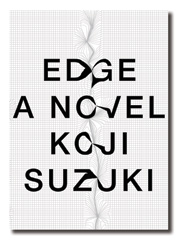
Edge, by Koji Suzuki, is billed as quantum horror. That is, it's horror derived from quantum physics. Or maybe it's that you don't know if it's really horror till you open the book and look inside.

The story is set in our now. It has some science-y stuff going on, but also a hint of supernatural. I don't think it quite qualifies as science fiction. Also, it's not post-apocalyptic dystopia; nothing post about it — this is how the apocalypse unfolds.

It starts with people disappearing, suddenly and inexplicably, there one minute gone the next. And math starts going wrong; pi and other "constants" and equations just aren't stable anymore.

Saeko starts investigating a set of disappearances. Ever since her own father disappeared 18 years previously, she's been rather obsessed with these types of occurrences. Not to mention having all kinds of daddy issues.

Saeko's father imparted to her all sorts of knowledge, along with a general wonder about the universe. Sadly, Suzuki flashes back on their time together, and the father's speeches are used as massive info dumps. How dreadfully boring, I thought; so glad he disappeared, I wouldn't be able to stand him another day. Maybe I was a little jaded after having just read an elegant and eloquent nonfiction treatment of similar issues, but I think Suzuki could give his readers a little more credit — no need for him to talk down to his readers the way Saeko's father evidently did to her.

But there's some food for deep thought buried in there: "The odds for the string of coincidences necessary to create our universe were basically nil." And, "matter is made up of a whole lot of nothing." "The real mystery is, why does the universe have any structure at all?"

So math and physics suddenly going all wonky is, I think, a fantastic concept. And a journalistic investigation into the strange disappearances could make for a good story too. But mash them together? And throw in a handful of coincidences, some supernatural-type visions, two-dimensional characters, and an appearance by the devil? I'm kind of glad that [spoiler alert] the world ends — having it go on just wouldn't make sense. Taken on their own, there are a couple deliciously creepy scenes and other interesting setups, but the book doesn't hang together for me.

Reviews

Thursday, November 06, 2014

The art of poetry

The eight-week Art of Poetry massive open online course (MOOC) conducted by former United States Poet Laureate Robert Pinsky is headed into the final phases. The course is terrific. It draws on the Favorite Poem Project, a program Pinsky founded to celebrate, document, and encourage the role of poetry in people's lives.

The course material explores the difficulty, freedom, and form of poetry while considering its relationship to music, courtship, and humour, among other themes. Most of the material is presented via videos, either of Pinsky on his own or leading a discussion group. There are some supplementary readings, and discussion forums in which to continue the exploration of these and related subjects.

(This is first course I participate in that is on the edx platform. The navigation took a little getting used, and I still feel that it's easy to miss certain sections of the course material. The forums are active, but not particularly well-organized or easy to find your way around; Coursera really sets the standard for this.)

But the heart of the course is the personal anthology that each student is required to compile. By the end of the course, I will have annotated twelve poems with reflections and analysis, notes on why they speak to me.

The task was rather daunting — where do I even find poems? But it turns out I've been collecting poetry all along on this very blog.

Now I have a notebook for the poems I find. I write the poems into it by hand. This is an insanely pleasant experience. Like saying a poem out loud and letting it roll around your mouth, writing it out, guiding the pen to make the marks that mean those words, makes it something tangible, something you can feel.

I think it forces a more intense reflection on the poem, the sound and shape of it, how the pieces fit together. I will absolutely be maintaining my poetry journal beyond this course.

To date this is one of the most rewarding MOOCs I've participated in.

Monday, November 03, 2014

One of the most amazing people on Earth

I have a slight obsession with reviews of an unreliable biography about an obscure (at least to most Westerners) Russian countercultural dissident antihero with unpalatable politics written by a man who, if the other works of his I've read are any indication, examines the external world primarily as a means of examining himself.

According to Matt Taibi, "Edward Limonov is one of the most amazing people on Earth, the author of a few truly great books, a man who has lived a fuller life than any 10 of your most interesting friends combined."

Limonov: The Outrageous Adventures of the Radical Soviet Poet Who Became a Bum in New York, a Sensation in France, and a Political Antihero in Russia, a fictional biography by Emmanuel Carrère.

Matt Taibi, NPR:
Carrere wonders: What could Limonov be thinking? "Does it amuse him," he writes, "the outlaw, the mad dog, to play the virtuous Democrat?" He spends the rest of the book trying to answer the question: Is this last part the act? Or was it the earlier part?

Carrere struggles with that theme throughout, and in the end toys with a horrifying surprise conclusion: Limonov is above all else a failure.
Julian Barnes, The Guardian:
The conformist loves the transgressor, the bourgeois loves the punk, the careful man the adventurer; while the Parisian intellectual (see Sartre and "Saint Genet") typically loves the intransigent despiser of all that Parisian intellectuals stand for. Some, if not all of these themes play out in Limonov. [...]

Why, then, is he interesting? Flaubert, asked to justify his interest in Nero and the Marquis de Sade, replied, "These monsters explain history to us." Limonov is not a monster, though would perhaps like to think himself one; he is a philosophical punk, a chancer, a blood-and-soil patriot who imagined himself a cleansing political force. Carrère, reflecting on his subject's escapades, decides that:

He sees himself as a hero; you might call him a scumbag; I suspend my judgment on the matter. But ... I thought to myself, his romantic, dangerous life says something. Not just about him, Limonov, not just about Russia, but about everything that's happened since the end of the second world war.
José Teodoro, National Post:
Of course a writer wants to write about a writer who, to such an extraordinary degree, writes his life into being, writing always with audacity, always for maximum drama and dynamism, always working to ensure that he’s at the nucleus of the narrative.
M.A. Orthofer, The Complete Review:
Carrère doesn't see himself in Limonov, but he sees them as kindred writing spirits, obsessed with themselves and presenting themselves in their writing. Significantly, Limonov has also lived the life that was closed to Carrère, because of his ultra-bourgeois background and limited experience. Carrère has a writer-crush on this buffoon who has 'lived' so much.
Rachel Donadio in The New York Times:
Some critics have found Limonov too flattering a portrait, though Mr. Carrère says he finds Mr. Limonov's politics unpalatable. "We are not on the same side of the barricades," he said, adding that Mr. Limonov told him, "If I were in power, I would send you to the gulag."
Michael Dirda, The Washington Post:
The book interweaves a social and political history of post-Stalinist Russia, chunks of Carrère's autobiography and a hodgepodge of reflections on art, sex, ambition, the punk aesthetic, fascism, mysticism and old age.
Interview.
Excerpt.

Sunday, November 02, 2014

Sunday reading: Ursula K. Le Guin

Two terrific pieces in Brain Pickings, originating with Ursula K. LeGuin's The Wave in the Mind: Talks and Essays on the Writer, the Reader, and the Imagination:
Maria Popova has selected some brilliant passages, many of which are laugh-out-loud funny. (I read a passage to my other half, and not ten seconds later I'm nudging him again, Listen to this.)

"On Being a Man" actually addresses a few topics — gender and sex, aging and spectator sports:
And another thing. Ernest Hemingway would have died rather than get old. And he did. He shot himself. A short sentence. Anything rather than a long sentence, a life sentence. Death sentences are short and very, very manly. Life sentences aren't. They go on and on, all full of syntax and qualifying clauses and confusing references and getting old.
"On Aging and What Beauty Really Means" also covers cats and dogs, dance and space-time.
Cats know exactly where they begin and end. When they walk slowly out the door that you are holding open for them, and pause, leaving their tail just an inch or two inside the door, they know it. They know you have to keep holding the door open. That is why their tail is there. It is a cat's way of maintaining a relationship.
I expect I'll have downloaded Le Guin's book of essays before the hour is out... (not to mention digging out those as yet unread novels of hers).