Showing posts with label language. Show all posts

Wednesday, October 23, 2019

A poet is not somebody who has great thoughts

English teaching at school is, unfortunately, obsessed with what a poet thought, as though that were of any interest to anyone. Rather than being taught about how a poem is phrased, schoolchildren are asked to write essays on what William Blake thought about the Tiger; despite the fact that William Blake was a nutjob whose opinions, in a civilised society, would be of no interest to anybody apart from his parole officer. A poet is not somebody who has great thoughts. That is the menial duty of the philosopher. A poet is somebody who expresses his thoughts, however commonplace they may be, exquisitely. That is the one and only difference between the poet and everybody else.
— from The Elements of Eloquence, by Mark Forsyth.

Thursday, October 17, 2019

Blessed is he who leaves

This is why tyrants of all stripes, infernal servants, have such deep-seated hatred for the nomads — this is why they persecute the Gypsies and the Jews, and why they force all free peoples to settle, assigning the addresses that serve as our sentences.

What they want is to create a frozen order, to falsify time's passage. They want for the days to repeat themselves, unchanging, they want to build a big machine where every creature will be forced to take its place and carry out false actions. Institutions and offices, stamps, newsletters, a hierarchy, and ranks, degrees, applications and rejections, passports, numbers, cards, election results, sales and amassing points, collecting, exchanging some things for others.

What they want is to pin down the world with the aid of barcodes, labelling all things, letting it be known that everything is a commodity, that this is how much it will cost you. Let this new foreign language be illegible to humans, let it be read exclusively by automatons, machines. That way by night, in their great underground shops, they can organize readings of their own barcoded poetry.

Move. Get going. Blessed is he who leaves.
– from Flights, by Olga Tokarczuk.

Last weekend I saw Memory Is Our Homeland, a documentary film charting the story of Polish refugees during World War II. This film covered the journey of Poles through Siberia and Iran to Africa. My mother's story is similar, though it veered east to India.


I've always known this story as part of my family history. It's a personal narrative. What this film helped me understand was its broader political significance. Most people don't know the history of the Soviet invasion of Poland and the deportation of Poles by Soviets, because the Soviet government wanted to keep it quiet. How tightly that government (no doubt with a little help from the British) controlled the release of images once Poles were allowed to mobilize. How they propagandized their involvement in the

It's still a bit puzzling to me how it was determined who left and who stayed. (Which was privilege and which was punishment?) Did some people not hear the news in the street? Did they miss the train?

Flipping through Tokarczuk's Flights in recent days reinforces my interpretation of events. They were homeless, even while the tyrants directed their trajectory. The tyrants redrew the borders. It's no wonder people chose not to return, for it would be to a different geography, land they'd never known, under the tyrants' control.

(It's eerie how Tokarczuk reflects many of the issues of home and identity and belonging and memory, as if these attitudes are embedded in the Polish psyche, the cultural subconscious.)
Far from home, at a video rental shop, rummaging around the shelves, I swear in Polish. And suddenly an average-sized woman who looks to be about fifty years old stops beside me and awkwardly says in my language:

"Is that Polish? Do you speak Polish? Hello."

Here, alas, her stock of Polish sentences is at an end.

And now she tells me in English that she came here when she was seventeen, with her parents; here she shows off with the Polish word for "mummy". Much to my dismay she then begins to cry, indicating her arm, her forearm, and talks about blood, that this is where her whole soul is, that her blood is Polish. This hapless gesture reminds me of an addict's gesture — her index finger showing veins, the place to stick a neeedle in. She says she married a Hungarian and forgot her Polish. She squeezes my shoulder and leaves, disappearing between shelves labelled "Drama" and "Action".

It's hard for me to believe that you could forget the language thanks to which the maps of the world were drawn. She must have simply mislaid it somewhere. Maybe it lies wadded up and dusty in a drawer of bras and knickers, squeezed into a corner like sexy thongs acquired once in a fit of enthusiasm that there was never really an occasion to wear.
To what extent are you your language?

If you can't speak Polish, are you still Polish? If you haven't been to Poland in 80 years, are you still Polish? If the only land you knew as Poland is no longer Polish territory, are you still Polish? Yes.

Monday, May 27, 2019

She said it apodictically

Apodicticity
She said it apodictically, without directly addressing anyone, so that one was faced with the alternative of either saying nothing, of ignoring the remark and going past her without saying a word, or of taking up the topic, and it made me angry every time.
If you perceive that I have adopted an apodictic tone, it is because I am so taken with this word (new to me) and must orchestrate circumstances such that I may use it, not because I have taken a stance of apodicticity as if it were a moral imperative.

It sparks in me a new interest in the novel I earlier in the day proclaimed to be boring. When I came across My Year of Love, by Paul Nizon, in the shop last autumn, it seemed a literary imperative that I read it, and understand it. It would be the perfect male counterpoint to the emotional landscape backgrounding my own year of love experienced from my decidedly female perspective. It could offer a steady Swiss neutrality, something reasonable and potentially bland (wholly unlike my Swiss lover).

I've been reading it for days, but it seems I was merely turning the pages. Now this word has turned me around, it has me turning back the pages to find a city of certainties kept secret from me.

Monday, May 20, 2019

Changing the consistency of the air around her

Another woman was already standing in my favorite spot by the rusty tracks. Her long coat had a high collar that resembled the gills of a tropical fish. On her head she wore ornaments that looked somehow extraterrestrial. Perhaps she was a singer who'd fled from the stage of an opera with futuristic sets. What could be the reason for her having hurried here without removing her makeup and changing clothes? She was older than I was, and had something extraordinary about her. Her presence even seemed to be changing the consistency of the air around her. The clear form of her lips held her flesh together like overripe fruit, and the two ends sometimes dipped down slightly, as if they were remembering a bitter taste. The woman's spine described a straight line of justice not dependent on any existing law. Each time I blinked, her body dissolved for two seconds into colorful micro-grains.

The darkness around us thickened. The woman gave me a dutiful nod, as if the two of us had an understanding. My heart began to pound violently. It was up to me to take action. Today was the chosen day. I had a vague memory of our having arrived at our agreement in a dream, though the specific terms of the the agreement were unknown to me. Suddenly the woman lay down on the tracks and pressed her face to one of the ties. I ran to her, took her by the shoulder and tried to roll her over, but she was as immovable as the spire of a temple whose root is buried in the earth. I thought I heard the sound of a train approaching from a distance — this was impossible though. There tracks had known nothing but rust and weeds for years, certainly no wheels. Then I heard it once more, the sound of an approaching train. Or was it just a streetcar heading into the city center? Or was it the drone of a refrigerator that had been implanted in the depths of my eardrums during my days of loneliness? I wanted to tell the woman to get up, but I couldn't think of any words. The old words had left my skull, I needed new words to be able to speak to her. But what were new words?
— from The Naked Eye, by Yoko Tawada.

The old words are inadequate. The new words are inaccessible.

Wednesday, November 28, 2018

Homeless rifle dumpsters

"Homeless rifle dumpsters..."

How do you parse that?

Homeless can be an adjective or a noun. Rifle can be a noun or a verb. Dumpsters is a plural noun (like hipsters), but when preceded by nouns one might be tricked into believing the -s suffix signifies a verb in the third-person present tense.

But here's the full sentence:

"Homeless rifle dumpsters but so slowly, so leisurely, that poverty might be a pastime."

It's from Break-up, by Joanna Walsh, which disappoints me in exactly the way Sludge Utopia didn't. (Expectations.)

It's so fucking writerly. (Pretentious.)

Is it beautiful? Maybe. I'm just past the novel's half-way mark, and I find the prose almost unbearable. (Thematically, however, the novel is compelling. Required reading in the context of my year of love and loss.)

Subject, collective noun = "homeless." Typically an adjective, it's been nouned by abbreviating "homeless people." No article. (You couldn't substitute just any collective noun and achieve the same effect.)

Verb = "rifle." In the greater context — an urban post-Soviet landscape — the noun may be more expected.

But my brain doesn't yet categorize these words as subject and verb. My brain is still exploring the potential of the adjective-noun reading and wondering what qualifies as a "homeless rifle," until it realizes that "dumpsters" can't function as a verb. Try "rifle dumpsters" (dumpsters reserved exclusively for rifles?) that are homeless only to be left hanging verbless. Start over.

My psycholinguistic faculties take many milliseconds to understand that homeless people are rifling through dumpsters.

It may be beautiful, but it's unnecessarily demanding. The payoff isn't worth the effort. It's the kind of sentence I might have aspired to write myself some 20 years ago, for its gymnastic economy. Today when I read it I roll my eyes and scribble profanities in the margin.

Break.up in my head sounds like it was written to be the sort of thing writers read at readings, as performance, all pompous and breathy, even though it could be more satisfyingly and meaningfully read in an easy, natural manner. I wish I could find another tone in which to read Break.up; nothing about it sounds real. (Is literature performance?)

Tuesday, July 03, 2018

Something long and difficult to fathom

Navoi lived for four years in Samarkand: a city so deeply imbued with poetry that even the doctors wrote their medical treatises in verse. But before Navoi himself transformed the Old Uzbek vernacular into a literary language, all of this poetry was written in Persian. In his Muhakamat al-lughatayn, or Judgement of Two Languages (1499), Navoi mathematically proved the superiority to Persian of Old Uzbek, a language so rich that it had words for seventy different species of duck. Persian just had duck. Impoverished Persian writers had no words with which to differentiate between a burr and a thorn; older and younger sisters; male, female, and infant boars; hunting and fowling; a beauty mark on a woman's face and a beauty mark somewhere else; deer and elands; being adorned and being really adorned; drinking something down all at once in a refined way, and drinking slowly while savouring each drop.

Persian, Dilorom told me, had only one word for crying, whereas Old Uzbek had one hundred. Old Uzbek had words for wanting to cry and not being able to, for being caused to sob by something, for loudly crying like thunder in the clouds, for crying in gasps, for weeping inwardly or secretly, for crying ceaselessly in a high voice, for crying in hiccups, and for crying while uttering the sound hay hay. Old Uzbek had special verbs for being unable to sleep, for speaking while feeding animals, for being a hypocrite, for gazing imploringly into a lover's face, for dispersing a crowd.

It was all just like a Borges story — except that Borges stories are always so short, whereas life in Samarkand kept dragging obscurely on and on. In Borges, the different peculiar languages yield up, in a matter of pages, some kind of interesting philosophical import: the languages of the northern hemisphere of Tlon have no nouns, a circumstance that immediately turns out to represent an extreme of Berkeleyan idealism whereby the world is perceived as a sequence of shifting shapes; the Chinese encyclopedia has different words for animals drawn with a fine camel's-hair brush and animals who have just broken a flower vase, which dramatizes the impossibility of devising any objective system of classifying knowledge.

By contrast, whatever it was that you learned about Uzbeks when you studied their language, it was something long and difficult to fathom. What did you know about Uzbekistan once you learned that Old Uzbek has a hundred different words for crying? I wasn't sure, but it didn't seem to bode well for my summer vacation.
— from The Possessed: Adventures with Russian Books and the People Who Read Them, by Elif Batuman.

Wednesday, April 25, 2018

A stone like a misplaced comma

I had always found it unpleasant to have guests in my apartment. They filled up my rooms with strange sentences I would never have formulated in such a way. Today I found the sound of these sentences particularly unbearable. Sometimes I tried to follow only the sense of the conversation so as not to hear the sounds of the language. But they penetrated my body as though they were inseparable from the sense.

[...]

At midnight the guests began to dance to disco music. I couldn't hear the music, but saw the wine glasses vibrating. Apparently it was very loud. No one was allowed to miss a beat. The guests weren't dancing at all, they were speaking to one another. When someone stuttered, the other spoke more quickly so the interruption wouldn't be noticed. The rhythm was set by a computerized drum set, just like in disco music. The people breathed, as it were, mechanically, rather than taking irregular breaths whenever they felt like it. My heartbeat and my sighs were ridiculously soft, no match for the powerful speakers. In these black refrigerators, the mass of sounds is frozen. There weren't any speakers in my apartment, and there wasn't any music playing. People were talking. I wanted to transform myself into a stone. Wanted to become a stone like a misplaced comma, to interrupt the clatter of conversation.
— from "A Guest," in Where Europe Begins, by Yoko Tawada.

Where Europe Begins, by Yoko Tawada, is short enough that one could ride along the dream narrative to the end in just a few hours. I feel rather lucky that I rather accidentally chose to read this over a couple months, extending the experience, embodying it.

It's a meditative, highly surreal text that grapples with the intersection of language and reality.

Language as a physical thing, our tongue in our mouth, sound waves.

Language with a physical representation, scratches on paper.
I asked the man who was standing there hawking his wares in what language the book was written, since I don't know of any language whose letters are arranged in a circle. He shrugged his shoulders and said it wasn't a book, it was a mirror. I refused to look at the thing he was calling a mirror.

Maybe it isn't a book, I conceded, but I would still like to know what's going on with this writing.

The man grinned and replied: To our eyes, you look exactly like this writing. That's why I said it was a mirror.

I rubbed my forehead from left to right, as if rewriting my face.

Everything is translation, and all translation is interpretation.

I previously responded to a couple of the pieces in this book:
The Bath
Canned Foreign [text]

To date, this is my favourite of Tawada's books and I see myself returning to it.

Monday, March 05, 2018

I might have read this foreign city like a text

Often it sickened me to hear people speak their native tongues fluently. It was as if they were unable to think and feel anything but what their language so readily served up to them.
— from "Canned Foreign," in Where Europe Begins, by Yoko Tawada.

"Canned Foreign" is a brilliant little story (well, it's not really a story; vignette?). I love this idea, that too-easy language is simple, inadequate, wrong. It reaffirms me in my shortcomings, my own inadequately communicative behaviour, grounding me in a comprehensive philosophy of language and theory of communication.

Clearly my reading this year is proving the inadequacy of language:
Clearly we need to read to learn to read the world. But then what? My reading is also leading me to attempt to articulate . . . something inexpressible.
Once, in the supermarket, I bought a little can that had a Japanese woman painted on the side. Later, at home, I opened the can and saw inside it a piece of tuna fish. The woman seemed to have changed into a piece of fish during her long voyage. This surprise came on a Sunday: I had decided not to read any writing on Sundays. Instead I observed the people I saw on the street as though they were isolated letters. Sometimes two people sat down next to each other in a café, and thus, briefly, formed a word. Then they separated, in order to go off and form other words. There must have been a moment in which the combinations of these words formed, quite by chance, several sentences in which I might have read this foreign city like a text. But I never discovered a single sentence in this city, only letters and sometimes a few words that had no direct connection to any "cultural content."

Tuesday, February 20, 2018

Words you understand but a meaning you don't

Imagine, she had told Control next, that language is only part of a method of communication. Imagine that it isn't even the important part but more like the pipeline, the highway. A conduit only. Infrastructure was the word Control would use with the Voice later.

The real core of the message, the meaning, would be conveyed by the combinations of living matter that composed the words, as if the "ink" itself was the message.

"And if a message is half-physical, if a kind of coding is half-physical, then words on a wall don't mean that much at all, really, in my opinion. I could analyze those words for years — which is, incidentally, what I understand the director may have done — and it wouldn't help me to understand anything. The type of conduit helps decide how fast the message arrives, and perhaps some context, but that's all. Further" — and here Control recognized that Hsyu had slipped into the rote routine of a lecture given many times before, possibly accompanied by a PowerPoint presentation — "if someone or something is trying to jam information insider your head using words you understand but a meaning you don't, it's not even that it's not on a bandwidth you can receive, it's much worse. Like, if the message were a knife and it created its meaning by cutting into meat and your head is the receiver and the tip of that knife is being shoved into your ear over and over again..."
— from Authority, by Jeff Vandermeer.

This is from the second instalment of the Southern Reach trilogy, about Area X.

Annihilation was creepy, thrumming our unease with the unknown in our external world. In Authority, the creep factor stems from the unknown in our intimate world — an invasion into the places we live, the work we do, the people we know.

Wednesday, February 14, 2018

Something basic about language had started to escape me


Recalling what a joy The Idiot, by Elif Batuman, was to read. Weeks on, I'm fuzzy on some of the details, but still talking about it.

Sunday, October 16, 2016

Too much shit is monotonous

The theatre class at the correctional facility has a rule about swearing: the prisoners must "limit" themselves to the curses used in the play at hand, in this case Shakespeare's Tempest.
Bent Pencil takes the floor and reads out, gravely and impressively, in his best board-meeting voice: "Born to be hanged, A pox o'your throat. Bawling, blasphemous, incharitable dog. Whoreson. Insolent noisemaker. Wide-chapp'd rascal. Malignant thing. Blue-eyed hag. Freckled whelp hag-born. Thou earth. Thou tortoise. Thou poisonous slave, got by the devil himself. As wicked dew as e'er my mother brushed, With raven's feather from unwholesome fen, Drop on you both. A south-west blow on ye, And blister you all o'er. Toads, beetles, bats light on you. Filth as thou art. Abhorr'ed slave. The red plague rid you. Hag-seed. All the infections that the sun sucks up, From bogs, fens, flats, fall on — add name here — and make him, By inch-meal a disease. Most scurvy monster. Most perfidious and drunken monster. Moon-calf. Pied ninny. Scurvy patch. A murrain on you. The devil take your fingers. The dropsy drown this fool. Demi-devil. Thing of darkness."

"Well done," says Felix. "That sounds fairly complete. I can't think of anything you've missed. Any questions or comments?"

"I been called worse," says PPod.

[...]

"I got one," says Shiv. "One question. Is 'shit' a curse word? Can we use it, or what?"

It's a fine point, think Felix. Technically, "shit" might not be considered a curse word as such, only a scatological expression, but he doesn't want to hear it all the time. Shit this, shitty that, you shit. He could let them vote on it, but what's the point of being in charge of this motley assemblage if he refuses to take charge? "'Shit' is offbounds," he says. "Adjust your cursing accordingly."

"'Shit' was okay last year," says Leggs. "So how come?"

"I changed my mind," says Felix. "I got tired of it. Too much shit is monotonous, and monotony is anti-Shakespeare."
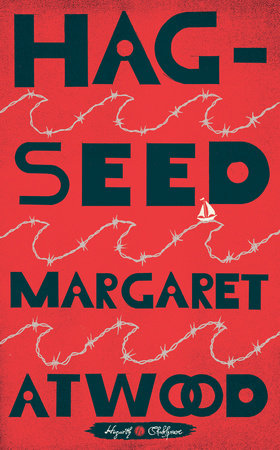
—from Hag-Seed, by Margaret Atwood.

And I am cursing my family (most lovingly) for having descended on me this past week, leaving me no time to read.

Monday, July 04, 2016

Goofball advice

"When you're worried about something," said Henry abruptly, "have you ever tried thinking in a different language?"

"What?"

"It slows you down. Keeps your thoughts from running wild. A good discipline in any circumstance. Or you might try doing what the Buddhists do."

"What?"

"In the practice of Zen there is an exercise called zazen — similar, I think, to the Theravedic practice of vipassana. One sits facing a blank wall. No matter the emotion one feels, no matter how strong or violent, one remains motionless. Facing the wall. The discipline, of course, is in continuing to sit."

There was a silence, during which I struggled for language to adequately express what I thought of this goofball advice.
— from The Secret History, by Donna Tartt.

Anything in it?

Thinking in a different language slows you down, keeps your thoughts from running wild. I tend to think it's true; however, I tend to invoke this ability only when my mind is already in a leisurely state, not pressed.

Sunday, June 05, 2016

Lingua franca

I wave to the crowd, focusing on an imaginary space where my family ought to be standing. In these situations, I have to remember that I'm not a child who's won a prize; I'm an unpopular man whose contribution to humanity has been to diminish its worth. It's difficult to gauge the nature of the crowd. It's not exactly a mob. There are too many neutrals for that. But certainly there is a minority who would probably wish death upon me.
Lingua Franca, by William Thacker, is a terrifically entertaining novel.

Miles Platting is that blight upon humanity, founder of a successful agency called Lingua Franca. It specializes in branding. So Miles is busy partnering towns around England with corporate sponsors. (Miles lives in Stella Artois.)

His (kind of ex-)wife, meanwhile, is a high-school English teacher, a profession Miles left behind. So they have some pretty heated discussions about the importance of language, debating whether a rose by any other name would smell as sweet. And so on.

But one town's citizens don't take to being renamed after a frozen fish retailer. They stage a revolution the only way they can. They take back the language. Their ZipIt campaign promotes silence:
If you've ever visited the Sistine chapel, you'll know how much nicer it would be if everyone would shut the fuck up.
(I love that line, because it's true. I vividly recall the boom of the priest, Silencio!, failing to hush the multitudes.)

Language is this magical thing that's imbued with meaning and allows us to communicate. But it's also the source of miscommunication, and when misused can be meaningless. This novel is chock-full of linguistic theory, and takes sharp aim at marketing language and corporate practices.

This book brings to mind Tom McCarthy (Remainder and Satin Island) — about the same level of absurdity. Lingua Franca is more comic, a little less cerebral. It's clever, funny, fast, and fun.

I will definitely be watching for more from this author.

Reviews
Annabel's House of Books
The Bookbag
Little Bookness Lane
A View from the Balcony

Wednesday, March 18, 2015

Word neutrality is destabilizing

We were enclosed in Audio Booth 4, basically an audio recording cabinet floating on foam and designed to be sound-neutral. Words spoken in Booth 4 sounded unnaturally deadened, like inanimate objects. The walls of the booth, the floor, the ceiling, none of it added any energy or shape by reflectance or geometry to the sounds that came out of our mouths, and this had a mysterious effect on the meaning and the impact of the words themselves that was hard to calculate. It made me realize that word neutrality in human communication is destabilizing; there is a paper to be written there.
— from Consumed, by David Cronenberg.

Tuesday, February 10, 2015

And what does our purportedly decluttered mind now allow us to do?

Do you use an online dictionary? Have you ever "liked" a word, or shared it on social media? Have you ever commented on a dictionary entry? I mean, by leaving a comment that satisfies the prompt (What made you want to look up ___? Please tell us where you read or heard it.). I've often wondered why anyone would be motivated to do that, apart from students of English as a second language, who seem quite genuine in their queries regarding usage. But what if you could vote a word up or down? What if its definition were crowdsourced? What if its shape, meaning, sound, morphed as data was received?

What if it all happened with the aid of the technology of our very near future, with a kind of Google Glass or a chip integrated directly into our neural network? Among its other functions for day-to-day living (hailing cabs, making payments, checking contact details, researching background info — with less than a blink of the eye), it would fulfill linguistic services, not only looking up unknown words and supplying their meanings but suggesting entire conversational tacks. What if you could devise a business model that earned you money for every look-up, while dumbing down the culture and creating a dependence on your service? You might need a monopoly on the dictionary industry first, of course.
It is comforting to believe that consigning small decisions to a device frees up our brains for more important things. But that begs the question, which things have been deemed more important? And what does our purportedly decluttered mind now allow us to do? Express ourselves? Concentrate? Think? Or have we simply carved out more time for entertainment? Anxiety? Dread?

We fear that Memes may have a paradoxical effect — that indeed, contrary to Synchronic's claims, they tend to narrow rather than expand consciousness, to the point where our most basic sense of self — our interior I — has started to be eclipsed. Our facility for reflection has dimmed, taking with it our skill for deep and unfettered thinking. And another change is taking place: our capacity for communication is fading.

In the most extreme cases, Meme users have been losing language. Not esoteric bits of linguistic debris but everyday words: ambivalence, paradox, naïve. The more they forget, the more dependent on the device they become, a frightening cycle that only amplifies and that has grown to engulf another of Synchronic's innovations, the Word Exchange.
The Word Exchange, by Alena Graedon, is on its surface a mystery story — a search for a missing person. But soon enough it takes on thriller-like aspects, with corporate intrigue on an international stage. But it's also a linguistic nerd's dream. It covers synchronic versus diachronic approaches to language study, the basics of lexicography, Hegel's philosophy of language (Graedon acknowledges guidance from Jim Vernon), the theory of universal grammar, book burnings, Jabberwocky-type nonsense and countless references to Lewis Carroll's wonderland ("When I use a word, [...] it means just what I choose it to mean.").

Also, secret libraries and pneumatic tubes!

What if the Word Exchange were hacked, and everyone who used the device were infected with Word Flu, effectively losing language?
Maybe Hegel had it wrong: laber there's no mystical link between the speaker of a word and the recipient of its sound. Maybe language isn't unity but domination. Unilateral. Unkind.
Fantastic premise, wonderful vocabulary usage. Mostly interesting characters. Somewhat uneven pacing, but it's Graedon's first novel.

Interview
Bustle: Q&A: Alena Graedon on 'The Word Exchange': The Influence and Influenza of Words

Reviews
New York Times: World Wide Web
Slate: When Smartphones Attack
Tor.com: Science Fiction Saves the Dictionary: The Word Exchange by Alena Graedon
Toronto Star: The Word Exchange by Alena Graedon: review

Wednesday, January 28, 2015

Neither present nor past

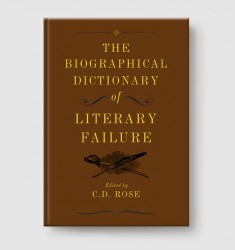
From the entry for Otha Orkkut (1890-1943), poet, translator, and historian, in The Biographical Dictionary of Literary Failure, edited by C.D. Rose:
Cimbrian, it is said, was a unique language in that it contained a tense which was used to describe a person or object which had gone missing or been lost: neither present nor past, still existing in a space or time which no non-Cimbrian can ever properly comprehend.

A number of critics and translators are currently at work on Orkkut's books, her manuscripts now inhabiting the realm of that unique Cimbrian tense.
Identified as a Bothno-Ugaric language, "Cimbrian" may be referencing the same language known in Italo Calvino's quarters as "Cimmerian," described by Professor Uzzi-Tuzzi as "a modern language and a dead language at the same time."

I treated myself to this lovely volume at Christmas, to add to my shelf of weird dictionaries. This collection of 52 lives, by turns tragic and comic, easily lends itself to browsing; I reach for it for inspiration, for reminders, for warnings.

The introduction alone is worth the price of admission, exploring the concepts of erasure, "faith in the ineffable," linguistic negation, "literature of the unword," "stories that would prefer not to."

Reviews
Biographile: "The simple fact is this: books are real; writers aren't."
PopMatters: "It's questionable whether insanity is a prerequisite for the arts."

Excerpt.

Wednesday, November 26, 2014

Novembernebel

"The season in which we were born is peculiarly akin to us, and we to it. [...] For really, in my experience, there is a sympathetic relation between ourselves and the season that produced us. Its return brings something that confirms and strengthens, that renews our lives."
— from The Black Swan, by Thomas Mann.

That's how I feel about November.

I have been taking German classes now for eight weeks. I have learned how to count, how to conjugate, and how to conduct a stilted and limited conversation in a very specific, unrealistic scenario.

I have learned also that German is much stranger than I'd ever imagined. For example, the verb takes second position in a sentence. Weiso? So the addition of a sentence adverb therefore changes everything.

I still cannot read Rilke.

The compounding of nouns, however, has its own kind of poetry. Like "der Kugelschreiber" — the pen, a bullet for writing. And "der Fernseher" — the television, for watching at a distance.

I love the fact of Novembernebel, that November has its own kind of fog.

The assignment in lesson 4 was to describe a scenario in a train using the vocabulary learned to date. Here is the story I wrote:
Der Zug
Robert Walser, Stefan Zweig, und Thomas Mann fahren nach Berlin. Sie spielen Karten für kurze Zeit. Robert schläft. Stefan schreibt eine Fabel. Thomas weint. Sie arbeiten zu viel.

Monday, August 11, 2014

Shifgrethor

Ursula K. Le Guin in The Left Hand of Darkness invents an alien world that has its own cultures, religions, mythologies, and languages. Her invented language includes some fairly nuanced concepts. The Karhidian language, for example, has several dozen terms for various type of snow. This may be out of a necessary response to the extreme environment, but this same environment, the flora and fauna, and how the land can be used, also shapes the culture philosophically.

Estraven is repeatedly described as a shadow when he comes to Genly's aid, serving as Genly's shadow (and therefore also his shifgrethor), as Genly has none of his own.

shif•gre•thor noun \ˈshif-grə-thȯr\
1: prestige, face, place, pride-relationship; all-important principle of social authority in Karhide and among other civilizations of Gethen, of which native Karhidians have an innate sense but outsiders lack
2: code of social decorum
3: standard of individual behavior
4: recognition of the level of the manifestation of this quality and the status accorded it

Usage Notes 1. One may discard, forego, waive shifgrethor. 2. One may risk, stake shifgrethor; highly valued and must be given due regard. 3. One's shifgrethor may be degraded, diminished, impugned, insulted. 4. To play shifgrethor is to engage in political games, usually at an individual level, often petty and malicious, always intricate, but sometimes also internationally; can be played on the level of ethics.

Usage Examples
1. I waive shifgrethor; I discard it.
2. We must forego shifgrethor, forbid all acts of vengeance, and unite together.
3. He could lower all his standards of shifgrethor.
4. The shifgrethor of Karhide will be diminished.

Etymology Karhidish, from Old Gethenian "shadow"; possible derivation by analogy "shift" + "grey thore", which is widespread and fastidiously husbanded for maximal usage, minimal erosion, and full integration and balance, therefore "a shift in the balance". Discussion When Getheren of Shath, in the hearth-tale of The Place Inside the Blizzard, takes back his name and his shadow, he is owning his actions, making peace with both his internal conscience and the external society. In so doing he re-establishes the responsibility and dignity of which shifgrethor is borne. As every Karhidian casts his own shadow, shifgrethor is an internal shadow, functioning as a conscience, moral compass, social guide. Karhidian shifgrethor stems from Getheren's original sin and exile and bears the rightness of acknowledgement, necessity, atonement. Honorable men come to be outlawed, yet their shadow does not shrink. They live without shadows (shifgrethor) in Orgoreyn.

Related Words conscience, dignity, etiquette, high-mindedness, honour, integrity, irreproachability, manners, nobility, protocol, respectability, righteousness, right-mindedness, scrupulousness, self-sufficiency, tactfulness, virtuousness
Near Antonyms debasement, disgrace, disreputableness, looseness, pervertedness, reprehensibleness, shamelessness, unscrupulousness, weakness, wretchedness

(This is a revised version of the "essay" I submitted for the relevant unit in the MOOC Fantasy and Science Fiction: The Human Mind, Our Modern World. As the assignment limited me to 320 words, I have here added an introductory statement and expanded slightly on some points for the sake of clarity.)

Thursday, August 07, 2014

The fitness of that city

Following the east bank of the great Rive Kunderer I came on my third morning in Orgoreyn to Mishnory, the largest city on that world.

In the weak sunlight between autumn showers it was a queer-looking city, all blank stonewalls with a few narrow windows set too high, wide streets that dwarfed the crowds, street-lamps perched on ridiculous tall posts, roofs pitched steep as praying hands, shed-roofs sticking out of housewalls eighteen feet above ground like big aimless bookshelves — an ill-proportioned, grotesque city, in the sunlight. It was not built for sunlight. It was built for winter. In winter, with those streets filled ten feet up with packed, hard-rolled snow, the steep roofs icicle-fringed, sleds parked under the shed-roofs, narrow window-slits shining yellow through driving sleet, you would see the fitness of that city, its economy, its beauty.
Big aimless bookshelves! The Left Hand of Darkness, by Ursula K. Le Guin, is a remarkable novel and already I look forward to rereading it someday.

It is a beautifully written love story set amid a harsh environment against a backdrop of political intrigue. Which has to do with interplanetary contact. Also, there's a strong feminist message in the portrayal of a genderless society.

Aside: I think The Left Hand of Darkness bears a remarkable similarity to China Miéville's Embassytown, which is one of my favourite books, across all genres. The novels bring a studied anthropological perspective to alien contact, and the problem of communication across languages and cultures, which greatly appeals to my inner linguist. Both novels play with words, and the relationship between language and concepts.

Le Guin's Weaver — who weaves together the psychic energy of the foretellers — also reminded me of Miéville's Weaver in
Perdido Street Station, though his is absolutely weirder and more poetical. It would not surprise me to learn that The Left Hand of Darkness was a tremendous influence on Miéville.

Le Guin builds her world on the Sapir-Whorf hypothesis, showing how language determines its speakers' worldview. This is particularly evident in the concept of shifgrethor, an untranslatable term for a kind of honour code or code of conduct, which governs the behaviour of the Karhidians and their resultant estimation of each other, while the Terran visitor fails to fully understand its mechanisms and implications. She also demonstrates how the Karhidian language reflects the environment on this planet the Terrans call Winter; borrowing from Whorf's examples, she presents a culture that has a multitude of terms for "snow."

The same concept is evident in the excerpt above — the style of architecture has evolved under the influence of the environment — and Le Guin extends it to all facets of life. The people have not developed flight, because there are no birds.

The sexual behaviour on this other world didn't make a particularly strong impression on me — to me this is not the main focus of the novel. Perhaps because I'm naturally openminded regarding people's sexual choices. Perhaps because since the novel was written our society really has changed and established some level of gender equality (at least in theory), and is coming to realize that biological sex need not determine social roles or even sexual roles. The novel is perhaps best known for its exploration of gender, which is fine, but I just want to go on record as saying that The Left Hand of Darkness is so much more than that.

[Oh! I just read Jo Walton's take, and it seems we agree.]

And really, the whole business of crossing the glacier, the blizzard, and no shadows — spectacular!

I read this novel as part of the coursework for a MOOC (Fantasy and Science Fiction: The Human Mind, Our Modern World). I can't tell you what exactly I'm learning from this course (in the professor's view, every rocketship is a penis, and some feminists are angry) apart from some trivial facts, like that Le Guin is American (I'd always assumed she was British). But I have been enjoying the reading and the discussion.

I suppose Le Guin is significant on the SF landscape for being among the first to bring real anthropological theory into the text (which is one the things I most love about the genre), shifting the genre away from straight-up action-adventure. (Although, many writers had already done that, no? Maybe it's the feminist angle that's supposed to be so groundbreaking. Frankly, I don't understand the logic behind the curriculum and I'm disappointed that it's so American-centric. )

I'm so relieved this novel lived up to the hype, and surpassed my expectations. You can bet I'll be reading more Le Guin over the months to come.

See also:
Sarah LeFanu, The Guardian: The king is pregnant
Jo Walton: Gender and glaciers: Ursula Le Guin’s The Left Hand of Darkness
The Paris Review: Ursula K. Le Guin, The Art of Fiction No. 221

And here's a list that may be (mostly) worth working through: 21 Books That Changed Science Fiction And Fantasy Forever.

Tuesday, July 29, 2014

Cleaning up the language

"Everything You Always Wanted to Know About: Sects, Sets, Sex, prefix, frankforts, Waldorf, idle, American, peanuts, gin, Heritage, cabbage, Dictionary, Rasputin, bassoon, cohort, rum, putty, rotor, usage, coquette, alfalfa, zipper, Mississippi,…etc.: But Were Afraid to Axe!!"


(Via.)