For a recent MOOC, On Strategy: What Managers Can Learn from Great Philosophers, the final exam asked us to respond to Francis Bacon's assertion that "we must obey the forces we want to command," presenting two arguments, with a quotation and an example for each.
*************************
Francis Bacon famously wrote that we must obey the forces we want to command in reference to the laws of nature. One can readily transpose this dictum to other domains: market forces, military forces, cultural forces, psychological forces, etc. — each being subject to the same rigor and scrutiny we demand when performing natural science.
Literature is one such domain. Although it is steeped in tradition – the rules of language (from grammar to semantics), conventions of genre, formal narrative structures, as well as cultural expectations – truly original work emerges only once these elements are firmly understood [Argument 1]. The rules are acknowledged and assimilated, and subverted to new ends. This is especially true in the example of Oulipo – a formally defined literary movement. Cofounder Raymond Queneau described Oulipians as "rats who construct the labyrinth from which they plan to escape"[1].
Consider for a moment, though, how it (or any other constraint, for that matter) works. It places a restriction on the expressions and phrases that can be used in a poem, and it determines to some extent what the poet is able to say. It makes the process of writing both more difficult — by short-circuiting habitual modes of self expression — and, paradoxical as it may seem, easier: certain decisions have already been made for the writer. A constraint confronts the writer with a puzzle to solve, not a blank page, and this can be strangely comforting. Finally, a constraint will almost always force a writer to be creative, to seek out new means of self expression.[2]
Clearly the forces of language are fully obeyed by Oulipians in order that their practitioners can bend them to their will.
Science has evolved since Bacon’s time, and its ambitions have become more complex and its progress more nebulous. The pursuit of artificial intelligence is limited in exactly the way Bacon’s dictum would suggest [Argument 2]: "How do you make a search engine that understands if you don't know how you understand?"[3].
Douglas Hofstadter is a cognitive scientist who has become disillusioned with the common approach: "Sometimes it seems as though each new step towards AI, rather than producing something which everyone agrees is real intelligence, merely reveals what real intelligence is not"[4].
While advances have been made in data processing, and a form of "intelligence" has grown out of this capability, we have not yet achieved a truly artificial intelligence. We cannot master this domain until we have fully understood the workings of the mind and can obey the algorithms that are in play.
Bacon's assertion is thus borne out in both successes and failures across domains.
1. Raymond Queneau. Definition provided at Oulipo meeting. Apr 5, 1961.
2. Paul Kane. Review of Oulipo Compendium. Oct 2006.
3. James Sommers. "The Man Who Would Teach Machines to Think." Atlantic Monthly. Oct 23, 2013.
4. Douglas Hofstader. Gödel, Escher, Bach: An Eternal Golden Braid. 1979.
Monday, September 29, 2014

Thursday, September 25, 2014
Caffeine or alcohol?
Why, I briefly wondered as I took a seat on the sofa, did everyone but me seem to find caffeinated beverages more conducive than alcohol to pondering the mystery of existence?
I'm with Jim Holt on this one. His book Why Does the World Exist? An Existential Detective Story is under discussion tonight at Argo Bookshop. I'm hoping the bookclub also favours alcohol over caffeine.
Although in essence it's a retrospective of modern philosophy and the major theories that might shed light on why there is something instead of nothing, but I love how it's framed as a personal journey, how sitting with one philosopher led Holt to call up the next.
I haven't actually finished reading the book — I just ran out of time — but I can't wait to see how it ends.
Check out Jim Holt's TED Talk for a summary of the issues.
Wednesday, September 24, 2014
In which I am disillusioned by Comiccon
The kid and I went to Montreal Comiccon the other week. I'd never been to a comiccon. In past years I've been in the area of the convention and was hugely entertained by the cosplay. Looked like fun.
And when we discovered Matt Smith would be there this year, it was decided. We had to go. Geronimo!
We bought tickets. It turns out that "The Hour of the Doctor" featuring Matt Smith was being treated as a separate event. So we bought tickets for that too.
Then I figured out how the rest of it worked: Book a timeslot to have your picture taken with Matt Smith, $110. Want an autograph? That's another $110. (I believe Smith commanded the highest price among the attending celebrities. Patrick Stewart, a mere $80.)
Sorry, kid. No upclose photos for us. We'd have to settle for hoping to be able to snap something candid.
But we reviewed the schedule and got excited. We'd make a day of it: start off with some Walking Dead cast members, treat ourselves to a nice lunch, wander around, see what there is to see, before settling in to be regaled by the Doctor's charm and wit.
And then the day was upon us.
Walking Dead event: cancelled.
But there was a lot to see. Comic book stores, more comic book stores, poster shops, costume shops, artists selling their comic or comic-inspired wares. Kiosks selling swords and chainmail. And a recruitment booth for the army reserves (really!). And more comic book stores.
 Mostly, I'm kind of galled that we paid admission for the privilege of buying stuff. Most arts and crafts fairs don't even do that anymore — event organizers these days tend to waive admission fees and pass the costs of leases and rentals etc. onto the exhibitors.
Food onsite was also incredibly limited: $7 for a slice of pizza. With the anticipated turnout, I'd've thought more options than this would be made available.
I should have known, of course, that it's all about money.
To cap off the day, Matt Smith: cancelled.
And there were tears. He's her ultimate Doctor, after all. (To the point that she refuses to watch Capaldi — "he's sssoo ooolllld.")
Yes, our tickets for the special event are being refunded, but I can't help but wonder, in general, where all the money goes. Does it really go into the celebrities' pockets? I thought comiccon was all about the fans. Does it add value for a fan if the fan pays $100 for some artifact? Does it add value to fans knowing the celebrities aren't doing it for the fans, or for the love of the character, but for cold hard cash, that they're being paid off to perpetuate the myth of a given franchise? Of course it's about the franchise, and the franchise is about the money.
But it wasn't all bad. We had a great time just people-watching and identifying characters (there were Timelords!). Also, watching people try to raise Thor's hammer over their shoulders — "106 pounds of pure steel"!
And we did finally get to board the TARDIS. But this is the way to do it: The Doctor Who Society of Canada sponsored the props, and they'd take your picture for you for a donation (any donation) to the Montreal Children's Hospital. That's something I can get behind.
And when we discovered Matt Smith would be there this year, it was decided. We had to go. Geronimo!
We bought tickets. It turns out that "The Hour of the Doctor" featuring Matt Smith was being treated as a separate event. So we bought tickets for that too.
Then I figured out how the rest of it worked: Book a timeslot to have your picture taken with Matt Smith, $110. Want an autograph? That's another $110. (I believe Smith commanded the highest price among the attending celebrities. Patrick Stewart, a mere $80.)
Sorry, kid. No upclose photos for us. We'd have to settle for hoping to be able to snap something candid.
But we reviewed the schedule and got excited. We'd make a day of it: start off with some Walking Dead cast members, treat ourselves to a nice lunch, wander around, see what there is to see, before settling in to be regaled by the Doctor's charm and wit.
And then the day was upon us.
Walking Dead event: cancelled.
But there was a lot to see. Comic book stores, more comic book stores, poster shops, costume shops, artists selling their comic or comic-inspired wares. Kiosks selling swords and chainmail. And a recruitment booth for the army reserves (really!). And more comic book stores.

Food onsite was also incredibly limited: $7 for a slice of pizza. With the anticipated turnout, I'd've thought more options than this would be made available.
I should have known, of course, that it's all about money.
To cap off the day, Matt Smith: cancelled.
And there were tears. He's her ultimate Doctor, after all. (To the point that she refuses to watch Capaldi — "he's sssoo ooolllld.")
Yes, our tickets for the special event are being refunded, but I can't help but wonder, in general, where all the money goes. Does it really go into the celebrities' pockets? I thought comiccon was all about the fans. Does it add value for a fan if the fan pays $100 for some artifact? Does it add value to fans knowing the celebrities aren't doing it for the fans, or for the love of the character, but for cold hard cash, that they're being paid off to perpetuate the myth of a given franchise? Of course it's about the franchise, and the franchise is about the money.
But it wasn't all bad. We had a great time just people-watching and identifying characters (there were Timelords!). Also, watching people try to raise Thor's hammer over their shoulders — "106 pounds of pure steel"!
And we did finally get to board the TARDIS. But this is the way to do it: The Doctor Who Society of Canada sponsored the props, and they'd take your picture for you for a donation (any donation) to the Montreal Children's Hospital. That's something I can get behind.
Monday, September 22, 2014
The most important French writer you've never heard of
The Guardian calls Emmanuel Carrère "the most important French writer you've never heard of," and I quite agree. (Except for all the important French writers I've actually never heard of.)
It's an interesting profile for a few reasons, which are maybe all the same reason.
1. Major themes are identity and memory. The Moustache was brilliant on these points. (There's a novel that has really aged well in my memory.)
2. He seems to have found his niche writing nonfiction novels. Whether he recounts episodes from his own life, or somebody else's, what's the difference? (Must get my hands on his book about Philip K. Dick.)
3. He seems particularly interested these days in exploring his Russian heritage, which interests me in hopes that it may shed light on my own desire to know my Polishness. Which has nothing to do with the culture per se, but rather the need to know from whence you come.
Check him out in interview with the CBC's Eleanor Wachtel (Writers & Company).
It's an interesting profile for a few reasons, which are maybe all the same reason.
1. Major themes are identity and memory. The Moustache was brilliant on these points. (There's a novel that has really aged well in my memory.)
2. He seems to have found his niche writing nonfiction novels. Whether he recounts episodes from his own life, or somebody else's, what's the difference? (Must get my hands on his book about Philip K. Dick.)
3. He seems particularly interested these days in exploring his Russian heritage, which interests me in hopes that it may shed light on my own desire to know my Polishness. Which has nothing to do with the culture per se, but rather the need to know from whence you come.
I stopped writing fiction and began to write "non-fiction novels." I tried to write about the world and about myself, describing reality through my own experience.
Check him out in interview with the CBC's Eleanor Wachtel (Writers & Company).
Sunday, September 21, 2014
The evolution of book technology
Norway, 2001
Spain, 2010
Sweden, 2014
I've posted all of these separately to Google+ over the last few weeks, and I'm sure everyone's seen the bookbook by now. But I thought they bore collecting in one spot to demonstrate the evolution of the technology.
The latest iteration doesn't offer much new value, but it has the clear benefit of better packaging and marketing.
Wednesday, September 17, 2014
"The Galaxy is going to pot!"
I'm reading Isaac Asimov's Foundation. Classic of science fiction, blah, blah, epic and political, I never had any interest. Plus its daunting reputation, the bigness of it, a TRILOGY, the titles often all caps, as if it really were the foundation of something.
Well, a friend pressed it on me. And it's so small, Foundation is just over 200 pages. And me between reading plans, and looking to augment my sci-fi education. So here I am.
In all these years, how come nobody ever uttered the words "Encyclopedia Galactica"?
The back cover is all empire and warfare, blah, blah.
Had somebody told me "Encyclopedia Galactica," and explained "foundation" as in "research foundation" to assemble a repository of all human knowledge, I'd've been all over this years ago, even if the project is just a pretense.
We all know that one respect in which the Hitchhiker's Guide to the Galaxy scores over the Encyclopedia Galactica is that it has the words "Don't Panic" inscribed in large, friendly letters on the cover. The publishers of Foundation should learn a lesson from this. Every edition of Foundation I've ever seen has the opposite of large, friendly letters on the cover. They usually bear large, imposing letters, self-important, sometimes angry, sometimes mocking, god-like. On the cover of the book I'm actually reading, the title is small, but still unfriendly all caps, overly confident; the gold foil makes it brash. If it looked friendlier, if it soothingly assured me everything was going to be alright, I'd've warmed to it much sooner.
I'm about a third of the way in. To this point, Foundation:
Well, a friend pressed it on me. And it's so small, Foundation is just over 200 pages. And me between reading plans, and looking to augment my sci-fi education. So here I am.
In all these years, how come nobody ever uttered the words "Encyclopedia Galactica"?
The back cover is all empire and warfare, blah, blah.
Had somebody told me "Encyclopedia Galactica," and explained "foundation" as in "research foundation" to assemble a repository of all human knowledge, I'd've been all over this years ago, even if the project is just a pretense.
We all know that one respect in which the Hitchhiker's Guide to the Galaxy scores over the Encyclopedia Galactica is that it has the words "Don't Panic" inscribed in large, friendly letters on the cover. The publishers of Foundation should learn a lesson from this. Every edition of Foundation I've ever seen has the opposite of large, friendly letters on the cover. They usually bear large, imposing letters, self-important, sometimes angry, sometimes mocking, god-like. On the cover of the book I'm actually reading, the title is small, but still unfriendly all caps, overly confident; the gold foil makes it brash. If it looked friendlier, if it soothingly assured me everything was going to be alright, I'd've warmed to it much sooner.
I'm about a third of the way in. To this point, Foundation:
- Brings a whole new level of understanding and humour to The Hitchhiker's Guide to the Galaxy. I never knew how much the Guide owed to Foundation — an awful lot, with regard to theme, plot points, and structure, it seems.
- Defines psychohistory as "that branch of mathematics which deals with the reactions of human conglomerates to fixed social and economic stimuli." Which ties in very nicely with my reading of late (neuroeconomics, two-system thinking, black swans, etc.), as well as setting the stage for an infinite improbability drive.
- Takes a piss at academia — indeed, the University structures are "almost ivory in color." Hands-on research is eschewed in favour of the scientific method: book-learning.
"The Encyclopedia first," ground out Crast. "We have a mission to fulfil."
"Mission, hell," shouted Hardin. "That might have been true fifty years ago. But this is a new generation."
"That has nothing to do with it," replied Pirenne. "We are scientists."
And Hardin leaped through the opening. "Are you, though? That's a nice hallucination, isn't it? Your bunch here is a perfect example of what's been wrong with the entire Galaxy for thousands of years. What kind of science is it to be stuck out here for centuries classifying the work of scientists of the last millennium? Have you ever thought of working onward, estending their knowledge and improving upon it? No! You're quite happy to stagnate. The whole Galaxy is, and has been for Space knows how long. That's why the Periphery is revolting; that's why communications are breaking down; that's why petty wars are becoming eternal; that's why whole systems are losing atomic power and going back to barbarous techniques of chemical power.
"If you ask me," he cried, "the Galaxy is going to pot!"
Monday, September 15, 2014
Fabulous, magnificent!

Finally I was able to give myself over to them. Their meditative quality demands a slower pace, some introspection. These stories are lovely! Full of life and humanity. Here there are keen observations of people of diverse kinds, many of them in the theater, their peculiar behaviours, their interactions with others, but also their relationship to the space they occupy. Truly, Berlin is the most magnificent character inhabiting these stories.
Robert Walser, Swiss-born, moved to Berlin in 1905 to join his artist brother. The stories in this collection were written between 1907 and 1917. The city was burgeoning.
This book is highly quotable. It seems every couple pages I'd turn to someone: "Listen to this — Isn't that perceptive, don't you find that's true?" I've noted so many passages, it's hard to choose what to share.
Often I heard through the thin wall a sound that I was only ever able to explain to myself with the thought that someone was weeping. The tears of a wealthy, stingy woman are surely no less doleful and deplorable, and speak a surely no less sad and moving language than the tears of a poor little child, a poor woman, or a poor man; tears in the eyes of mature human beings are appalling, for they bear witness to a helplessness one might scarcely believe possible. When a child cries, this is immediately comprehensible, but when old people are induced or compelled to weep despite their advanced years, this reveals to the one hearing and seeing this the world's wretchedness and untenability, and such a person cannot escape the oppressive, devastating thought that everything — everything — that moves upon this unfortunate earth is weak, shaky, and questionable, the quarry and haphazard plaything of an insufficiency that has entwined itself about all that exists. No, it is not good when a human being still weeps at an age when one should consider it a divinely lovely activity to dry the tears of children.
Berlin Stories was for me a badly needed breath of fresh air, reminding me to slow down, not just in my reading. Just look around you, really look.
My favourite story by far is "Fabulous," written in 1907. Just three paragraphs long (text available here), it evoked for me such joy the morning I read it. Magnificent!
You Are the Robert Walser! sums up the mood quite nicely.
Friday, September 12, 2014
Your suffering's taste

You must suffer long, not knowing what,
until suddenly out of bitterly chewed fruit
your suffering's taste comes forth in you.
Then almost instantly you'll love what's tasted. No one
will ever talk you out of it
— Rainer Maria Rilke
Paris, March 1913
It's a bilingual edition, and I read aloud in my imaginary German.
I've been looking into taking German classes. Am I crazy? I want to learn German for the poetry. No one will ever talk me out of it.
Monday, September 08, 2014
Hockey, poetry
I don't watch a lot of TV, hence I don't see many commercials, so forgive me if you've been overexposed to this ad, but I couldn't help but pay attention when this aired other night. Apart from it being funny and clever, I think it says something interesting about the target demographic. Sports video games are for people who have disposable income, but this ad also presumes they'll get the joke — they're of a certain age, but also of certain cultural smarts. Hockey, video games, beat poetry — they go so well together, n'est-ce pas?
Sunday, September 07, 2014
Berlin is outstanding

A city like Berlin is an ill-mannered, impertinent, intelligent scoundrel, constantly affirming the things that suit him and tossing aside everything he tires of. Here in the big city you can definitely feel the waves of intellect washing over the life of Berlin society like a sort of bath. An artist here has no choice but to pay attention. Elsewhere he is permitted to stop up his ears and sink into willful ignorance. Here this is not allowed. Rather, he must constantly pull himself together as a human being, and this compulsion encircling him redounds to his advantage. But there are yet other things as well.— from "Berlin and the Artist" in Berlin Stories, by Robert Walser.
Berlin never rests, and this is glorious. Each dawning day brings with it a new, agreeably disagreeable attack on complacency, and this does the general sense of indolence good. An artist possesses, much like a child, an inborn propensity for beautiful, noble sluggardizing. Well, this slug-a-beddishness, this kingdom, is constantly being buffeted by fresh storm-winds of inspiration. The refined, silent creature is suddenly blustered full of something coarse, loud, and unrefined. There is an incessant blurring together of various things, and this is good, this is Berlin, and Berlin is outstanding.
I've been wanting to visit Berlin for more than twenty-five years now, since I first saw Wings of Desire. I must go someday.
I love this passage. Reminds me a little of Patrick Hamilton's description of London in The Slaves of Solitude.
(Perhaps I shall begin collecting literary city descriptions, to compile a sort of travelogue...)
More excerpts from this and other Walser stories at The New York Review of Books.
Friday, September 05, 2014
All kinds of thinking
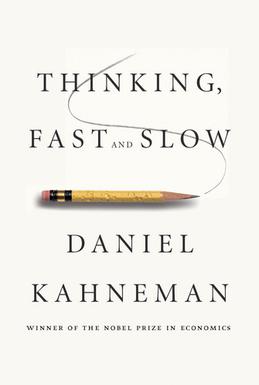
The course actually covered some fairly familiar concepts regarding intuitive thinking versus rational thinking, how responses are affected by whether a situation is framed positively or negatively, how those responses can be primed by unrelated factors in our environment, etc. And the material referenced the work of scientists with which I'm actually conversant, like Antonio Damasio and Steven Pinker.
And then: Nobel laureate Daniel Kahneman. And I realized I have a book of his lying around somewhere unread that I received for Christmas a few years ago. Well, Thinking, Fast and Slow: no longer unread.
Kahneman summarizes the book in his conclusion:
I began this book by introducing two fictitious characters, spent some time discussing two species, and ended with two selves. The two characters were the intuitive System 1, which does the fast thinking, and the effortful and slower System 2, which does the slow thinking, monitors System 1, and maintains control as best it can within its limited resources. The two species were the fictitious Econs, who live in the land of theory, and the Humans, who act in the real world. The two selves are the experiencing self, which does the living, and the remembering self, which keeps score and make the choices. In this final chapter I consider some applications of the three distinctions.
I read the whole book word for word, cover to cover (is that how people read nonfiction?). The writing's a bit tedious at times; basically it's a retrospective of Kahneman's career, touching on all his research and the discoveries he made along the way. Anyone with an interest in cognitive processes will find examples and case studies to entertain or to puzzle over, some resonating more than others.
What Kahneman saves for the conclusion, though, caused a lightbulb moment. Individuals make intuitive but irrational decisions, and contradictory judgments, and "objective" assessments imbued with external influences — and these issues hold at the societal level of decision making as well. Kahneman makes a soft appeal for libertarian paternalism, where, given the known workings and weaknesses of systems of reasoning, policymakers should judiciously guide individuals using the principles of behavioral science (with experts to advise the policymakers, of course). Examples of applications of these principles include opt-out enrolment in social plans (like health care) and regulations regarding the labeling on food packaging and the framing of disclosures regarding fuel consumption. So, not just brain theory stuff.
Reviews and Insight
Two Brains Running — Jim Holt in the New York Times
And frowning — as one learns on Page 152 of this book — activates the skeptic within us: what Kahneman calls "System 2." Just putting on a frown, experiments show, works to reduce overconfidence; it causes us to be more analytical, more vigilant in our thinking; to question stories that we would otherwise unreflectively accept as true because they are facile and coherent. And that is why I frowningly gave this extraordinarily interesting book the most skeptical reading I could.
How to Dispel Your Illusions — Freeman Dyson in the New York Review of Books
There are huge differences between Freud and Kahneman, as one would expect for thinkers separated by a century. The deepest difference is that Freud is literary while Kahneman is scientific. The great contribution of Kahneman was to make psychology an experimental science, with experimental results that could be repeated and verified. Freud, in my view, made psychology a branch of literature, with stories and myths that appeal to the heart rather than to the mind. The central dogma of Freudian psychology was the Oedipus complex, a story borrowed from Greek mythology and enacted in the tragedies of Sophocles. Freud claimed that he had identified from his clinical practice the emotions children feel toward their parents that he called the Oedipus complex. His critics have rejected that claim. So Freud became to his admirers a prophet of spiritual and psychological wisdom, and to his detractors a quack doctor pretending to cure imaginary diseases. Kahneman took psychology in a diametrically opposite direction, not pretending to cure ailments but only trying to dispel illusions.
The King of Human Error — Michael Lewis in Vanity Fair
There's a quality both impish and joyous to Kahneman's work, and it is most on display in his collaboration with Amos Tversky. They had a rule of thumb, he explains: they would study no specific example of human idiocy or irrationality unless they first detected it in themselves. "People thought we were studying stupidity," says Kahneman. "But we were not. We were studying ourselves." Kahneman has a phrase to describe what they did: "Ironic research."
Tuesday, September 02, 2014
Why is there something instead of nothing?
Why is there something instead of nothing? That's the question — along with some variations ("What banged? Why did it bang? And what was going on before it banged?") — Jim Holt asks, and sets out to answer (but, unsurprisingly, doesn't, entirely), in Why Does the World Exist: An Existential Detective Story.
Coincidentally I was about 20% of the way through this book (so maybe Holt does answer it, I dunno) when this TED Talk turned up. Why Does the World Exist? is Argo Bookshop's next book club title, set for discussion on September 25.
Coincidentally I was about 20% of the way through this book (so maybe Holt does answer it, I dunno) when this TED Talk turned up. Why Does the World Exist? is Argo Bookshop's next book club title, set for discussion on September 25.
Saturday, August 30, 2014
Craving fiction
I've been a bit irritable this week. There was a bit of stress in getting the kid back to school — her supplies, our routine — but not enough, I don't think, to account for my crankiness. I think it's because I'm not reading enough fiction.
Working from home a couple days and getting a lift a couple other days meant not reading on my commute. My days are regularly grounded, or framed, or inspired, or escaped, by those twice-daily quarter-hour immersions in an imaginary world. Their absence is felt.
I'm still reading, though, but nonfiction. I'm actively reading two nonfiction books, one because it's related to a MOOC I've been following, another is for book club; there's a third languishing on my nightstand — I read a page now and then. They're all very interesting. But they're not exactly entertaining.
I deliberately decided that I needed to supplement my current nonfiction reading with some fiction. Short pieces by Robert Walser (which I've been meaning to get to for a couple years) seemed to fit the bill. But I was wrong. These Berlin "stories" are lovely prose poems, meditative essays, descriptive vignettes; but they're not stories.
[I've even found myself craving (gasp!) television this week.]
But I feel compelled to finish all these books before starting something new. So, here's to a couple more days of restlessness, here on a fact-based Earth, before escaping to a fictional universe.
Working from home a couple days and getting a lift a couple other days meant not reading on my commute. My days are regularly grounded, or framed, or inspired, or escaped, by those twice-daily quarter-hour immersions in an imaginary world. Their absence is felt.
I'm still reading, though, but nonfiction. I'm actively reading two nonfiction books, one because it's related to a MOOC I've been following, another is for book club; there's a third languishing on my nightstand — I read a page now and then. They're all very interesting. But they're not exactly entertaining.
I deliberately decided that I needed to supplement my current nonfiction reading with some fiction. Short pieces by Robert Walser (which I've been meaning to get to for a couple years) seemed to fit the bill. But I was wrong. These Berlin "stories" are lovely prose poems, meditative essays, descriptive vignettes; but they're not stories.
[I've even found myself craving (gasp!) television this week.]
But I feel compelled to finish all these books before starting something new. So, here's to a couple more days of restlessness, here on a fact-based Earth, before escaping to a fictional universe.
Monday, August 25, 2014
Vampires!

Importance of names —
Most appellations appear to displease them; they would prefer not to be discussed at all, I believe. The expression "un-dead" is often considered distasteful. (I use it privately here, but would never utter it aloud in the club.) "Revenant" will do at a pinch, though the connotations of burial and return are a little indelicate. I asked Verner what name he preferred. He said that I was considering the question from the wrong angle. "We don't need words for ourselves," he said. "It's the living we're always watching out for."
"What do you call us, then?" I asked.
He said that there were few names he would care to repeat — the kindest being "bleaters." "Blood bag" is another. A buxom human female, in low circles, might be termed a "claret jug." He added that amongst those with better manners, the most widespread term for us is "the Quick."
Then he smiled — an effort made solely to discompose me. "Not always quick enough, of course."
Lauren Owen's The Quick is a vampire novel. Why this should be a secret is beyond me. But I'm betting that:
1. If you've heard at all about The Quick through the usual internetted ways, then you already know there are vampires.
2. Readers of this blog would be more inclined to pick up this novel knowing it's actually a vampire novel, not just a romance steeped in Victorian gothic atmosphere.
(Quite frankly, while the jacket copy about secret societies intrigued me, it wasn't enough to get me to read this book. It's the vampires that grabbed me; I agreed to a review copy only after I'd heard about this twist.)
It's a hefty book, but action-packed and with interesting characters, so it's quick to read.
It's positively dripping with Victorian gothic atmosphere. It reminds me of Susanna Clarke's Jonathan Strange (though I can't recall the details of that book, the mood stays with me) and Diane Setterfield's Bellman & Black (which I loved for how it let the reader hover in uncertainty). The most obvious reference would of course be Bram Stoker's Dracula, but at the time of the events told in The Quick it was not yet written.
Owen's creatures fit nicely into the vampire tradition, building on fundamental notions we have, primarily via Dracula, but with a few qualities invented or borrowed from elsewhere. These vampires have not been reinvented into something unrecognizable; they are updated classic, and they are scary.
And as in Dracula, those affected by the creatures take up a scientific exploration of their nature, so fact and myths are affirmed and dispelled for the reader as they are learned by the characters. In both books we see the investigators turning to medical and technological innovations (even if to establish a scientific basis in folkloric remedies) to aid them in defeating, or curing, the monster. Certainly typewriters will record their accumulated knowledge for posterity.
Owen discussed some the themes in her novel in an interview with The Bookseller:
"In modern representations of the vampire, the vampire is a metaphor for sex and romantic relationships, but in earlier depictions of the vampire there is more leeway into folklore," Owen says. "There's the idea of the vampire coming back to his family and sickening them and the rest of the village with his attacks, so that was part of the choice.
"I think family relationships are very interesting; the idea of what you tell the people who are closest to you and what you don't tell them — or what you're able to tell them, and whether or not being able to tell them everything about yourself means that your love for your family is not complete."
The vampire as metaphor for sex is already firmly established in Dracula, and it's nice to see this fiction stretch a little further back into the lore. Owen explores a lot of different family relationships in this novel, which puts some store in the saying that blood is thicker than water. Vampires would live by that too.
Sunday, August 24, 2014
Sunday only ever existed at home
Park air welcomes me; the many thousand green leaves of the lofty trees are lips that wish me good morning: So you're up already too? Indeed, yes, I'm surprised myself. A park like this resembles a large, silent, isolated room. In fact it's always Sunday in a park, by the way, for it's always a bit melancholy, and the melancholy stirs up vivid memories of home, and Sunday is something that only ever existed at home, where you were a child. Sundays have something parental and childish about them.— from "The Park" in Berlin Stories, by Robert Walser.
It's Sunday, and I find something heart-wrenchingly true in these words. Later, "Sundays only exist around the family table and on family walks." I can't reproduce my childhood Sundays. My parental Sundays waver; they are less grounded, still (still!) finding their way.
Wednesday, August 20, 2014
Never underestimate the determination of a kid who is time-rich and cash-poor
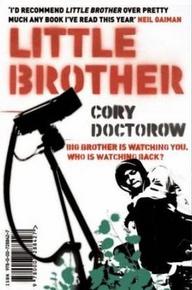
If you love freedom, if you think the human condition is dignified by privacy, by the right to be left alone, by the right to explore your weird ideas provided you don't hurt others, then you have common cause with the kids whose web-browsers and cell phones are being used to lock them up and follow them around.This is an excerpt from the introduction to Little Brother, by Cory Doctorow.
If you believe that the answer to bad speech is more speech — not censorship — then you have a dog in the fight.
If you believe in a society of laws, a land where our rulers have to tell us the rules, and have to follow them too, then you're part of the same struggle that kids fight when they argue for the right to live under the same Bill of Rights that adults have.
This book is meant to be part of the conversation about what an information society means: does it mean total control, or unheard-of liberty? It's not just a noun, it's a verb, it's something you do.
This is a very puzzling novel. Doctorow has a message he wants to spread, and he's not very subtle about it.
A terrorist attack in San Francisco gives rise to a state run by the Department of Homeland Security, by which 17-year-old Marcus is tortured, his right to privacy confiscated, his entire way of life threatened.
This novel was on the reading list for the MOOC Fantasy and Science Fiction: the Human Mind, Our Modern World. One of the issues to arise in the discussion forums was whether this novel should be considered science fiction. The professor posits that it's a thought experiment, a what-if novel. But some students observe that there's no what-if about it.
This is not a novel for readers. This is a novel for schoolchildren. It includes a history of civil rights movements and discussion of civil liberties, as well as a history of underground communications and Internet computing. I believe the tiresome explication is a desperate plea to be taken seriously.
Little Brother is a contradiction. It is free for download while being a marketing brochure for the bookstores of corporate America (every chapter is dedicated to a bookstore deemed significant by Doctorow, including Amazon and several large chainstore). It is didactic enough for inclusion on school curricula, while purporting to be a defense of autodidacticism. Its intent can only be to subvert from within. It is a how-to guide to hacking. It is a call to revolution.
This is not a novel. This is a manifesto. It is not about the future; it is about the now.
In many ways, I think this is not a very good novel. But I think it's a necessary book. It lacks subtlety, because the world of today lacks subtlety. It is attempting to equip the youth of today, who through our overprotection are sadly ill-prepared to face some social and political realities. What Doctorow has to say is more important than how he says it.
"Never underestimate the determination of a kid who is time-rich and cash-poor."
Tuesday, August 19, 2014
Some books might be better off as movies
There are some notable exceptions to the generally accepted truth that a book is better than its movie adaptation. Jaws comes to mind. Children of Men. Bladerunner. And there are other titles that stand as art in both mediums; arguably they are not adaptations, but interpretations. I'm thinking of films like Kubrick's 2001 and The Shining and Tarkovsky's Solaris and Stalker, that are equal to but different from the books they were inspired by (with credit to Clarke, King, Lem, Strugatsky).
But every know and then I encounter a book that should've bypassed its print incarnation entirely. Archetype and its sequel Prototype, by M.D. Waters, fall into this category. I enjoyed Archetype when I read it last winter. I started Prototype earlier this summer and was interrupted by life, but I've spent the last couple days complaining about this book that I couldn't stop reading.
The dialogue lacks prompts, which helps with immediacy, but for extended conversations leads to confusion. The action sequences are full of vivid description, but are somehow overly visual; the angle of the kick, the position of the gun, the bodies in motion — too many details and I lose my spatial orientation.
I'm not sure who the intended audience is. There's steamy romance (with cheesy, soap opera-like "lines") and there's a militia resistance enacting covert operations and raids. One chapter to the next didn't quite feel like the same book.
However, I would've gladly given over two hours of my life to watch this onscreen. A futuristic dystopian sci-fi action adventure romance. Something for everyone. A real blockbuster.
There are some great themes of identity and memory in these novels related to cloning, with an undercurrent of feminism. But to my liking, these are underdeveloped. And in fact, Prototype never delivers on one subplot that it is hinted at throughout (whether one of the main characters is himself a clone).
The books were really unputdownable, but with the sequel clocking in at 384 pages, I resented it.
Have you read any books that should've gone straight to film?
But every know and then I encounter a book that should've bypassed its print incarnation entirely. Archetype and its sequel Prototype, by M.D. Waters, fall into this category. I enjoyed Archetype when I read it last winter. I started Prototype earlier this summer and was interrupted by life, but I've spent the last couple days complaining about this book that I couldn't stop reading.
The dialogue lacks prompts, which helps with immediacy, but for extended conversations leads to confusion. The action sequences are full of vivid description, but are somehow overly visual; the angle of the kick, the position of the gun, the bodies in motion — too many details and I lose my spatial orientation.
I'm not sure who the intended audience is. There's steamy romance (with cheesy, soap opera-like "lines") and there's a militia resistance enacting covert operations and raids. One chapter to the next didn't quite feel like the same book.
However, I would've gladly given over two hours of my life to watch this onscreen. A futuristic dystopian sci-fi action adventure romance. Something for everyone. A real blockbuster.
There are some great themes of identity and memory in these novels related to cloning, with an undercurrent of feminism. But to my liking, these are underdeveloped. And in fact, Prototype never delivers on one subplot that it is hinted at throughout (whether one of the main characters is himself a clone).
The books were really unputdownable, but with the sequel clocking in at 384 pages, I resented it.
Have you read any books that should've gone straight to film?
Monday, August 18, 2014
Jetsetting, Helena-style
She's gone now, for a week. But she left me this picture on the whiteboard.

Saturday, August 16, 2014
Still life
It happened far too often. Normally death came at night, taking a person in their sleep, stopping their heart or tickling them awake, leading them to the bathroom with a splitting headache before pouncing and flooding their brain with blood. It waits in alleys and metro stops. After the sun goes down plugs are pulled by white-clad guardians and death is invited into an antiseptic room.Still Life, by Louise Penny, is a wonderful palate cleanser of a book (a little too much SF for me lately). We've had cool, rainy days lately, and the leaves are starting to think about turning. The perfect backdrop for a perfect cosy mystery.
But in the country death comes, uninvited, during the day. It takes fishermen in the their longboats. It gabs children by the ankles as they swim. In winter it calls them down a slope too steep for their budding skills, and crosses their skis at the tips. It waits along the shore where snow met ice not long ago but now, unseen by sparkling eyes, a little water touched the shore, and the skater makes a circle slightly larger than intended. Death stands in the woods with a bow and arrow at dawn and dusk. And it tugs cars off the road in broad daylight, the tires spinning furiously on ice or snow, or bright autumn leaves.
Louis Penny brings death in the morning to Jane Neal, lovely, likeable old woman who'd just had a piece accepted to the community art show. And, like most of the villagers, there's a secret hidden in it.
I've read a few of Penny's novels before, but Still Life is the book that started the series of mysteries featuring Chief Inspector Gamache of the Sûreté du Québec. Her first book is every bit as assured in tone, plotting, character, and wit as the others I've read. There's only less Montreal (where Gamache's home and office are) and less departmental politics.
Excerpt.
"Life is change. If you aren't growing and evolving you're standing still, and the rest of the world is surging ahead. Most of these people are very immature. They lead 'still' lives, waiting."Perhaps the sentiment is a little anti-zen. More like stagnant stillness as opposed to being in stillness. But worth thinking about, no?
Tuesday, August 12, 2014
Things my daughter texts me

I burst out laughing, because: who talks about plane brands? But she's right. It is funnier, while also true.
Subscribe to:
Posts (Atom)
