Showing posts with label Patrick Modiano. Show all posts

Sunday, March 12, 2017

Sending out coded signals

Why do people whose existence you are unaware of, whom you meet once and will never see again, come to play, behind the scenes, an important role in your life?
So You Don't Get Lost in the Neighborhood was originally published in French just the week before Patrick Modiano was awarded the Nobel Prize in Literature. No doubt this speeded along its translation.

I've read a few Modiano novels now, enough to confidently say this one is typical, if slighter.

This can easily be read in one sitting, if you don't count my getting up to fix myself a cocktail.

This book is all mood, and great to get lost in, but if you're looking to get from point A to B via a traditional story, with, you know, an ending, this book won't get you anywhere.

So You Don't Get Lost in the Neighborhood starts in the Paris apartment of Jean Daragane, an aging novelist, who receives a mysterious phonecall, which leads to a meeting with a mysterious couple and further meetings with the young woman (with a mysterious dress), and a mysterious file folder containing a mysterious yet familiar passport photo, and from there it meanders down mysterious memory lane.

The couple had asked Daragane about a specific man, but his memories of him are vague and convoluted and intertwined with equally fuzzy memories of other figures from his past. He'd used the name of that man in one of his novels, and a few episodes also had basis in his memory of his reality.
He had written this book only in the hope that she might get in touch with him. Writing a book, for him, was also a way of beaming a searchlight or sending out coded signals to certain people with whom he had lost touch. It was enough to scatter their names at random through the pages and wait until they finally produced news of themselves.[...] He had never understood why anyone should want to put someone who had mattered to them into a novel. Once that person had drifted into a novel in much the same way as one might walk through a mirror, he escaped from you forever. He had never existed in real life. He had been reduced to nothingness...
So were they important names, or weren't they?

We never learn what really became of the figures from the past, we never learn much about the murder beyond the fact that there was one (and it's mentioned barely as much as I mention it here), we never know where the dress came from and the young woman never comes back for it. Most puzzling of all to me, we never know what happened to Jean's mother, or why he was temporarily in the care of others.

Tellingly, when Daragane goes to investigate the house of his memories, the local doctor suggests the best informant might be the little boy who was present — but this of course is Daragane himself. I mean, there are episodes from my childhood that, weirdly, my mother knows nothing about. But I know I don't understand them fully because I processed them the way a 7-year-old would.
Many years afterwards, we attempt to solve puzzles that were not mysteries at the time and we try to decipher half-obliterated letters from a language that is too old and whose alphabet we don't even know.
It's very Paul Auster, City of Glass, only more realistic. All very fuzzy and mind-bendy. The mood, and the way Daragane processes his memories, is very much exacerbated by the unseasonable heat — it makes everything urgent, sexual, restless, confused.

Reviews
LA Times, Patrick Modiano's many detours into echoes, longings and tension:
It also has to do with how the past appears to rise up from the streets around us, mingling with the present until we are no longer sure where (or when) we are.
The Northwest Review of Books:
As we age, our brains accept and absorb events differently, and thus our perception of the importance of these events changes too. Storytelling often suggests clean causality, but that, for Daragane, is a youthful interpretation. For him, older and more isolated, the sheer vastness of his memory makes these connections nearly impossible to make.
The New Yorker, The Mysteries of Patrick Modiano

Friday, November 25, 2016

On not buying books

Yesterday for lunch I went to the bookstore. Food for thought, food for the soul. Usually I just like to browse, just being in a bookstore brings me comfort (and I'm lucky to have recently found a non-big-box-chain store near my office — I blame the shifting streets of Old Montreal, like mischievous Hogwarts staircases, for keeping it hidden from me for so long), but yesterday, uncharacteristically, I splurged on impulse.

I have tried to keep in check the acquisition of books, but when displaying my spoils back at the office (just three books), a coworker, having witnessed me purchase books on two occasions and at other times open packages of books, called me on this delusion of mine.

Since September,
  • The Ballad of Black Tom, Victor LaValle — because a review made me want it, it's Lovecraftian
  • Le Chat, Georges Simenon — to practice my French
  • The Crying of Lot 49, Thomas Pynchon — because I've been planning to read it for years, so finally now
  • The Door, Magda Szabó — because I wanted Iza's Ballad (because the name) but it wasn't available, and NYRB Classics books are beautiful
  • Exercises in Style, Raymond Queneau — because it's exercises in style, so I can argue that it's related to my work
  • The Familiar, Volume 2, Mark Z Danielewski — because volume 1 was exhilarating, and it's fascinating as an object
  • The Hand, Georges Simenon — because I'd never heard of it, and since it's not available in Canada it's that much more precious
  • The Invisible Library, Genevieve Cogman — because it was on all sorts of books-to-watch-for lists and it cost less than 2 dollars, and it might be about a library
  • The Last Days of New Paris, China Miéville — because Miéville is one of the few authors about whom I feel I must own his entire oeuvre
  • The Loney, Andrew Michael Hurley — because I had it on a list somewhere, I don't know why
  • Monday Starts on Saturday, Arkady and Boris Strugatsky — because now available in English, plus it's an excellent title
  • So You Don't Get Lost in the Neighbourhood, Patrick Modiano — because I'd never heard of it, and I felt a connection to Modiano this summer, and it was shelved in the thriller section
  • The Vegetarian, Han Kang — because I've been wanting to see what the fuss is about, but it wasn't available at my library, and I know I can hand it off to someone afterward
And before September, the last time I purchased a book was August, and before that was June. If you don't count the travel guide I picked up in July, along with some other vacation-reading material.

That's not counting the books I've purchased as gifts for other people, which typically occasion an oh-I'll-just-pick-up-a-little-something-for-myself-then-too moment, which helped contribute to the above.

Some of the above books were rationalized in a my-birthday-is-coming-soon way, and then an it-was-just-my-birthday-so-of-course-I-should-treat-myself way.

I'm proud to be using the library more regularly this year (quite suddenly they have a decent selection of ebooks), and when I'm hankering for something new I'm likely to browse NetGalley review copy offerings. At least some of the books listed above are ebooks (for which I'll rarely allow myself to spend more $5). I have not listed here the free ebooks I've acquired.

But believe me when I say it's not a spending problem so much as a space problem. I've become adept at slipping books in and overlooking them mentally; physically, it's a bit more challenging. Surely I'm a victim of book creep — the steady but so-slow-as-to-be-almost-imperceptible advance of books from designated shelves and corners onto most surfaces of my living space.

Me not buying books? Not very good at it.

Sunday, June 19, 2016

We were light, so light. . .

There are some mysterious persons — always the same ones — who stand like sentinels at every crossroads in your life.
Who are these people? The same people, over and over, across the course of one's life? Or the same people standing across many people's lives? Are some people marked to be sentinels? Who is my sentinel who is here now, and who was there then? Am I someone's sentinel?

For Victor Chmara, the sentinel is the hotel reception clerk. It seems odd, but also not, that the narrator should remark on this while recollecting the summer he was eighteen. The clerk had made an appearance in his life ten years previously, just a compelling figure at the Tuileries. And probably never again.

Why do some people leave an impression on others? It is rarely felt mutually, always imbalanced, one party remember a moment of great significance, the other does not.
We spent lazy days. We'd get up fairly early. In the morning, there was often mist — or rather a blue vapor that freed us from the law of gravity. We were light, so light. . . When we went down Boulevard Carabacel, we hardly touched the sidewalk. Nine o'clock. Soon the thin mist would be burned by the sun.
Villa Triste, by Patrick Modiano, is a strange little book. The whole time I was reading this novel I was confused by what time I was in; what is the time of the narrator, what is the time he is recollecting? It was an eternity of a summer, but maybe only a few weeks. Reading it felt like watching Last Year at Marienbad; moments of clarity amid a haze of people, of comings and goings, and suddenly everything dissolves again.
We were floating. Our gestures were infinitely slow, and when we moved, it was inch by inch. Snail's pace. Any abrupt movement would have broken the charm. We spoke in low voices. The evening invaded the room by way of the veranda, and I could see motes of dust languishing in the air. A cyclist passed. I continued to hear the whirring of his bike for several minutes. He woo was advancing inch by inch. He was floating. Everything around us was floating. We wouldn't even turn on the light as the dark came on. The nearest streetlamp, on Avenue Jean-Charcot, cast a snowy brightness. Never to step out that villa. Never to leave that room. To stay where we were lying on the sofa or perhaps on the floor, as we did more and more often. I was surprised to discover in Yvonne such an aptitude for abandon. With me, that corresponded to a horror of movement, and anxiety about everything that passes and changes, the desire to stop walking on shifting sands, to come to rest somewhere, to petrify if necessary. But with her? I think she was simply lazy. Like algae.
The biggest mystery to me is the identity of the narrator. He calls himself a count, but we learn that he borrowed his name, and the story he tells as his past. A few years of his childhood in Alexandria. He assumes an air of familiarity among the luxurious surroundings, a fashionable spa resort. Has he been here before, or not? He had fled Paris, "convinced that the city was becoming dangerous for people like me." The summer of 62, I believe. The Algerian war is drawing to a close. A deserter? There must be more to it. He has only one tie, and passes himself off as a Russian count of precarious health. He is not the bored rich boy people take him for. But who is he? "Who would have ever thought of coming to look for me among these distinguished summer vacationers?"
At the hotel reception desk, I exchanged my 50,000-franc notes for the equivalent in bills of 500 francs, which I carried upstairs in a beach bag. I emptied them all out on the bed. She put all her banknotes on the bed too, and together they formed an impressive pile. We marveled at that mass of paper money, which we wouldn't be long in spending. And I recognized in her our shared taste for ready cash, I mean for money easily won, the wads you stuff in your pockets, the wild money that slips through your fingers.
His love affair with Yvonne is founded on illusions. She is a great beauty, and there is no doubt regarding the passion he feels for her. But to most readers it will be obvious as the fleeting passion of youth, fueled by circumstance, little more. She is an aspiring movie actress, but she is clearly of humble origins and a pretender looking forward to a brilliant season at the resort. (How does she afford this lifestyle?)

The eponymous villa doesn't feature till late in the novel; as a symbol, it is something small that becomes much bigger.
In fact, the Meinthe villa didn't exactly radiate good cheer. No. Nonetheless, at first I thought the adjective "triste" unsuited to the place. Eventually, though, I realized Meinthe had been right, provided you could detect something dulcet and crystalline in the sonority of the word. Upon crossing the villa's threshold, you pervaded by a limpid melancholy. You entered a zone of calm and silence. The air was lighter. You floated.
In the frame story, our narrator has returned to the town, twelve years later, wondering about the people who pass through our lives, perhaps deliberately trying to seek some of them out, but he maintains a fairly anonymous presence. Monsieur Meinthe, the "older" gay man who saw them through that summer is now thirty-seven, with more mysterious dealings than ever. Perhaps the narrator is marked as a sentinel on Meinthe's life.

This is the second Modiano book that I've read, and I'm sure to read more. Beautiful and strange. All melancholy.
The uncle made no move to turn the radio off, and since I didn't dare intervene, I heard a continuous crackle of static that eventually sounded like the rustling of the wind in eaves. And the dining room was invaded by something fresh and green.

Tuesday, May 24, 2016

Fixed points

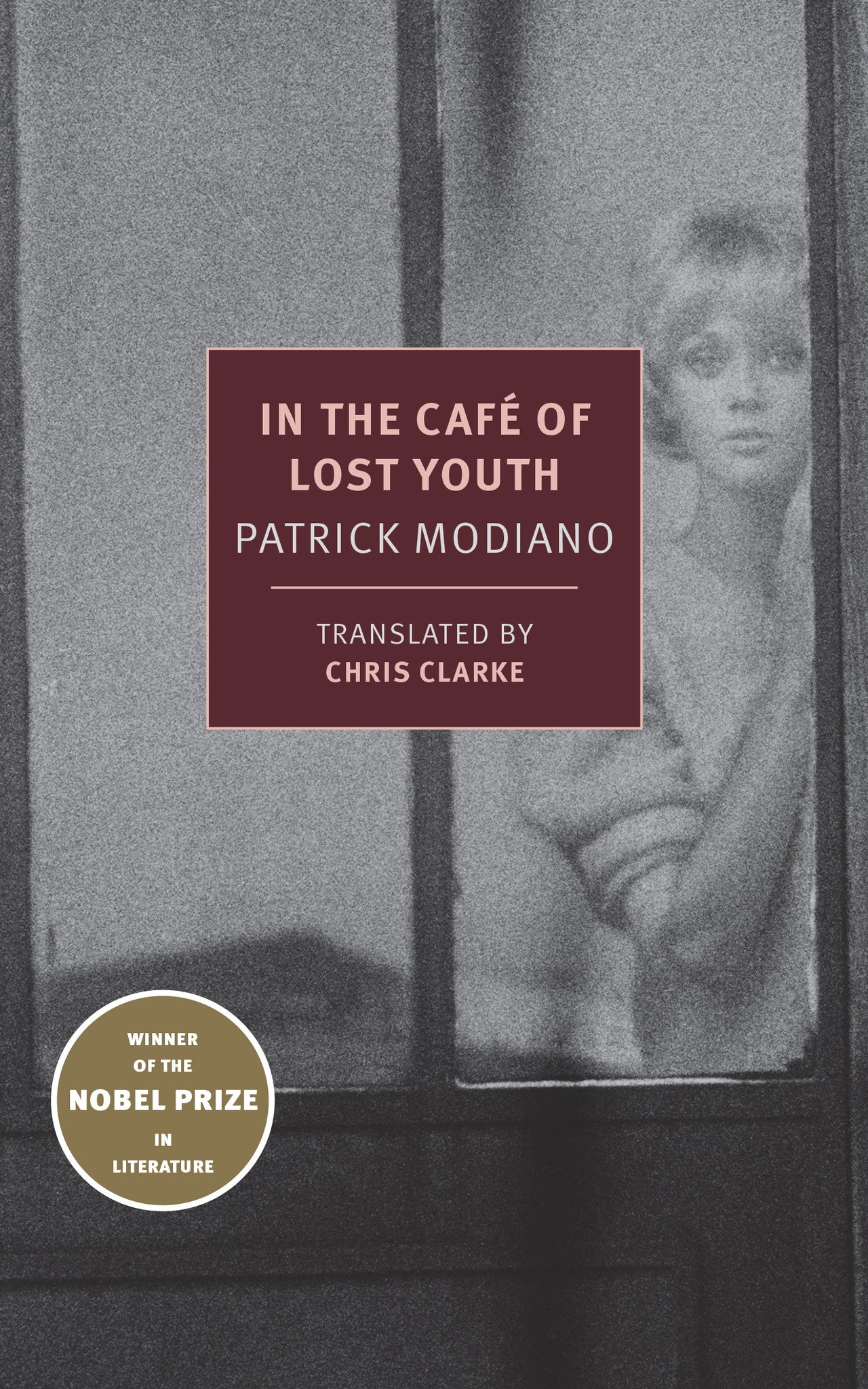
It is the café of lost youth not in the sense that I'm older now and I've lost my youth, nor that I lost my youth too by growing up too fast. This is the place where the lost souls come. A lost generation. Like every generation.

I know this place. I spent my twenties there. And in truth that café (pub, in my case) represents all these interpretations of lost youth.
I've always believed certain places are like magnets and draw you towards them should you happen to walk within their radius. And this occurs imperceptibly, without you even suspecting. All it takes is a sloping street, a sunny sidewalk, or maybe a shady one. Or perhaps a downpour. And this leads you straight there, to the exact spot you're meant to wash up.
The world Patrick Modiano weaves in The Café of Lost Youth is spell-binding. Time slows. Read a page or two on the commute and the walk across the neighbourhood is suddenly infused with new meaning. I move in a haze, embraced by the city, a stand-in for Paris, and I find myself looking for fixed points.
In this uninterrupted stream of women, men, children, and dogs that pass by and end up lost from sight among the streets, it would be nice to hold on to a face once in a while. Yes, according to Bowing, amidst the maelstrom that is a large city, you had to find a few fixed points.
Louki is the fixed point of this story, a young woman who frequents the café among the many writers and bohemians. Her identity is elusive, few know even her real name, but it is around her that the texts revolve.

Four sections, chronologically overlapped, with four distinct narrators, Louki herself one of them.

The opening section presents the café through the eyes of a student at École Supérieure des Mines. He dares not tell the clientele that he's a student though, for fear he'll be mocked.
At the Condé, we never questioned each other about our origins. We were too young and we didn't even have pasts to reveal, we lived in the present.
I remember wishing I had a past. I miss not having a past.

The second narrator is Caisley, who smokes American cigarettes and occasionally calls himself an art publisher. He seems to have connections on both sides of the law, and alludes to some shady dealings. This section tells of his stint as a private investigator, hired by a man whose wife has gone missing.
I had a habit of getting to know the lay of the land before jumping straight into the thick of things. In the past, Blémant criticized me for it and thought that I was wasting my time. Dive in, he told me, rather than running in circles around the edge of the pool. Personally, I felt the opposite way. No sudden movements, but instead a passivity and slowness that allow you to be softly penetrated by the spirit of the place.
Clearly he is penetrated by the spirit of the café.
In this life that sometimes seems to be a vast, ill-defined landscape without signposts, amid all of the vanishing lines and the lost horizons, we hope to find reference points, to draw up some sort of land registry so as to shake the impression that we are navigating by chance. So we forge ties, we try to find stability in chance encounters.
Louki narrates the third section. She's a liar, but she's honest about it. Kind of the way Holly Golightly's a phoney, but a real phoney. In fact, now that I've made the connection to Breakfast at Tiffany's, I wonder if more couldn't be made of it — the need to run, the need to reinvent oneself. What fixed points does one navigate by then?
I was never really myself when I wasn't running away. My only happy memories are memories of flight and escape.
It is through Roland, the fourth and final narrator, that we process Louki's end. As Louki's friend and lover, he is privy to Louki's spiritual longing, her need for a guru.
I had the impression that since those days at Guy de Vere's, no time had passed. Instead it had stood still, frozen into some sort of eternity. I remember the text I had trying to write back when I knew Louki. I had called it On Neutral Zones. There was a series of transitional zones in Paris, no-man's-lands where we were on the border of everything else, in transit, or even held suspended. Within, we benefited from a certain kind of immunity. I might have called them free zones, but neutral zones was more precise.
Roland obsessed about the Eternal Return.

Time stood still for me reading this book. As if I had regained my neutral zone. Anything is possible.

I want to read it again. I want to be 20 again.

This book may be a fixed point.

Tuesday, May 10, 2016

So have you found your happiness?

Yes, that bookstore wasn't only a refuge; it was also a step in my life. I would often stay there until closing time. There was a chair next to the shelves, or rather a tell step stool where I would sit as I leafed through different books. I wasn't sure that he was even aware of my presence. After a few days, without looking up from his reading, he would speak to me, always the same sentence: "So have you found your happiness?" Much later, someone informed me with great certainty that the one thing we cannot remember is the tone of a voice. And yet even now, during my bouts of insomnia I often hear that voice and its Parisian accent — the accent of the slopes — asking me, "So have you found your happiness?" And that phrase has lost none of its kindness or mystery.
— from In the Café of Lost Youth, by Patrick Modiano.

Friday, May 06, 2016

A personal anecdote of longing and regret

It's a relaxed morning, the kid's away, and I'm feeling good. Heading to work in my Gucci sunglasses. The scarf I got at a Paris flea market, only one cigarette burn hole in twenty-five years.

Through the park to the metro it's dog walkers, joggers, and a juggler. A ruggedly handsome juggler. He's mesmerizing. The path I'm walking shifts trajectory to follow my gaze. I have to keep correcting my course. Three balls, red white blue, red white blue, under the leg, he's juggling with his foot now, red white blue. I'm staring. He drops one, finally. I'm smiling.

"Beau sourire," he calls out.

And in a millisecond I imagine several possible responses, not excluding allusions to his dexterity, and all potential outcomes, most of them variations of lusty abandonment. But the voice of "reason" drowns out the murmurs: what is he doing juggling at the park at 9:30 in the morning?, he can't possibly have a job, when you start planning to vacation together in Turkey next year who's going to pay for it?

I'm passing him now; I turn slightly and give him a thumbs up. (What the fuck does that even mean?) He laughs, and I walk on.

************

I take a seat in the metro and open my novel, In the Café of Lost Youth, by Patrick Modiano. It makes me melancholy.
I took the envelope from my pocket and I pored over the pictures for a long while. Where was she now? In a café, like me, sitting alone at a table? Doubtless the phrase he had spoken earlier had given me this idea: "It's all about trying to create ties." Encounters in the street, in a Métro station at rush hour. We ought to shackle ourselves to each other at that moment. What connection can resist the tide as it carries you away and diverts your course?

************

The busker is strumming out Wicked Game; I hum along. He sings more like Barry Gibb than Chris Isaak; it feels purer this way, less animal, but more tragic. I walk the long tunnel out to the exit, imagining myself clinging to Sailor's snakeskin jacket. I miss being twenty.

************

Why did he laugh?

************

"Maybe he's a dentist," one friend suggests. "They work odd hours."

"Independently wealthy. He's just always wanted to master juggling. What's wrong with that?"

"Cirque du Soleil, obviously."

"Lots of people take Friday off."

Some of them call me an idiot.

************
We ought to shackle ourselves to each other at that moment.
I can't wait for Monday and the walk through the park on my way to work. True story.

Missed connection w4m, Parc Laurier, May 6, 9:30 am.