Showing posts with label relationships. Show all posts

Tuesday, January 19, 2021

The suprasensual fool

I approached the beautiful woman, who had never looked so seductive as today in her cruelty, in her scorn.

"Another step," Wanda ordered. "Kneel down and kiss my foot."

She stretched her foot out from under the white satin hem, and I, the suprasensual fool, pressed my lips on her foot.

Last summer I met a man who, after we'd met for a drink and parted ways, offered — rather, begged that I grace him who was not worthy with the divine privilege — to be my slave. I asked him what he meant by this and he told me it meant anything I wanted it to mean, it didn't have to mean anything at all, so long as I treated him like the dog he was.

He may as well have sent over a copy of Venus in Furs.

Venus in Furs, by Leopold von Sacher-Masoch, is such an unassuming little book, yet it is considered "the blueprint of masochistic aesthetics" in describing the condition named for its author: masochism. The book was published in 1870. The diagnostic term was coined in 1890, alongside sadism.

I found Venus in Furs listed among overlooked erotic classics; however, it's not likely to inspire one-handed reading. At most it may elicit a fascination with a certain kind of mind.

In Coldness and Cruelty, Gilles Deleuze notes:

But whether the descriptions are rosy or somber, they always bear the stamp of decency. We never see the naked body of the woman torturer; it is always wrapped in furs. The body of the victim remains in a strange state of indeterminacy except where it receives the blows. 

(I admit, I did not read the essay in its entirety. Why would I do that to myself? I just skimmed it for the juicy bits.)

A review of Roman Polanski's film version of a stage adaptation of the novel boldly claims that "A masochist is a power-freak disguised as a slave. Perhaps this is why we speak of sadists and masochists in the same breath."

While in popular culture we tend to think of sadism as masochism as complementary flipsides of the same coin, they require a very different mindset — a sadist would never choose a masochist as the object of their torture, and vice versa. Deleuze goes on to explain how Sacher-Masoch was "in search of a peculiar and extremely rare feminine 'nature.' The subject in masochism needs a certain 'essence' of masochism embodied in the nature of a woman who renounces her own subjective masochism." That is, it's a little more complex than meets the eye.

"It's no longer a whim!" she cried.

"What is it then?" I asked, terrified.

"It must have been latent in me," she murmured, lost in thought. "Perhaps it would never have seen the light of day, but you awoke it, developed it, and now that it has become a powerful drive, now that it fills me entirely, now that I enjoy it, now that I can't and won't help it — now you want to back out. You — are you a man?"

[I wonder sometimes what is latent in me, what do others recognize in me that I fail to see for myself. (Also, I cannot deny the glorious feeling of luxurious fur against my bare skin.)]

The relationship between Severin (an obvious stand-in for Sacher-Masoch) and the object of his devotion, Wanda, may not represent conventional love, but it's not trivial. The story is relayed from Severin's point of view, but Wanda's role is never dismissed — they are, after all, symbiotic.

According to Wanda, "I believe that you love me, and I love you too, and, even more important, we interest one another." They discuss the nature of their potential marriage "in order to see whether we can find ourselves in one another."

On the surface, Severin's motivation seems straightforward: "Give me a woman who's honest enough to tell me: 'I'm a Pompadour, a Lucretia Borgia,' and I'll worship her." (Though, the psychologists hint that something more manipulative is going on, consciously or not.)

"Because she's a hypocrite," I said. "I can respect a woman only if she is truly virtuous or openly lives for pleasure."

"Like me," Wanda countered jokingly. "But look, my child, a woman can do so only in the rarest cases. She can be neither as cheerfully sensual nor as spiritually free as a man. Her love is always a blend of sensuality and spiritual attachment. Her heart longs to captivate the man permanently, while she herself is prey to shame. And so, usually against her will, a dichotomy, a pack of lies and deception comes into her conduct, into her being, and corrupts her character."

[...]

"Make a point of remembering what I'm about to tell you: Never feel safe with the woman you love, for a woman's nature conceals more dangers than you think. Women are neither as good as their admirers and defenders would have it nor as bad as their enemies make them out to be. A woman's character is her lack of character. The best woman sinks momentarily into filth, the worst woman rises unexpectedly to great good deeds, putting her despisers to shame. No woman is so good or so evil as not to be capable at any moment of both the most diabolical and most divine, both the foulest and the purest thoughts, feeling, actions. Despite all progress of civilization, women have remained exactly as they emerged from the hand of Nature. A woman has the character of a savage, who acts loyal or disloyal, generous or gruesome, depending on whatever impulse happens to rule him at the moment. In all times, only deep and earnest formation has created the moral character. Thus, a man, no matter how selfish, how malevolent he may be, always follows principles, while a woman always follows only impulses. Never forget this and never feel safe with the woman you love."

Venus in Furs is a short novel of great historical and psychosexual interest, but it's also loaded with drama: romance, intrigue, exotic locales. It should also be noted that it tries to engage in social commentary. It ends jarringly on this note:

The moral is that woman, as Nature has created her and as she is currently reared by man, is his enemy and can be only his slave or his despot, but never his companion. She will be able to become his companion only when she has the same rights as he, when she is his equal in education and work. 

This is open to debate. I'm not convinced that the novel as a whole supports Severin's final argument; it strikes me as a last-ditch effort to rationalize his behaviour. And I'm not sure Wanda would agree with him either.

Saturday, November 16, 2019

The actual women weren't really people. They were just a theory.

Whatever kind of woman you are, even when you're a lot of kinds of women, you're still always just a woman, which is to say you're always a little bit less than a man.
I just finished reading a fucking amazing book and I want everyone to read it, I want to press it on all my friends, but I'm afraid that they won't get it, that they won't get me. I sobbed all morning, I sobbed into my pillow when I woke up way too early and couldn't fall back asleep, I sobbed into my morning coffee as I settled into the novel's homestretch, I sobbed over my keyboard as I swallowed up the final pages between work emails.
When I told people what I did, they'd say, "Being a mother is the hardest job there is." But it wasn't. The hardest job there was was being a mother and having an actual job, with pants and a commuter train pass and pens and lipstick.
But this is not about being a stay-at-home mom or a working mom.

I want to sob on someone's shoulder, not by myself.

I want to talk to all my friends about it, but my friends are all single and childless, or married and childless, or happily married with kids, or lesbian, or newlywed, or with a newborn, or young, so young. Not a single middle-aged divorced working mother among them (how did that happen? how do I not have friends within my own demographic?).

I want to give my ex a copy, a passive-aggressive attempt to give him a piece of my mind, to yell at him without inhibition, without fear of child support payments being withheld, to give him shit for being absent as a father to our child, then and still, and for taking so much of me and then just vanishing into freedom, not when I asked him to but when it was convenient for him.

And, oh yeah, fuck the patriarchy.

It's actually a male friend who brought this novel to my attention. It was early-going for him. He doesn't know yet.
If you don't ask too many questions and just let people talk, they'll tell you what's on their mind. In those monologues, I found my own gripes. They felt counted out, the way I felt counted out. They felt ignored. the way I felt ignored. They felt like they'd failed. They had regret. They were insecure. They worried about their legacies. They said all the things I wasn't allowed to say aloud without fear of appearing grandiose or self-centered or conceited or narcissistic. [...] I realized that all humans are essentially the same, but only some of us, the men, were truly allowed to be that without apology. The men's humanity was sexy and complicated; ours (mine) was to be kept in the dark at the bottom of the story and was only interesting in the service of the man's humanity.
That's it, isn't it? The female experience. The thing I discovered just last week.

Fleishman Is in Trouble, by Taffy Brodesser-Akner, is not what you think it is. It's whip-smart, it's funny, it's oh-so-relatable in so many ways, and then it turns everything you think you know on its head. Suddenly it's a whip-smart, scathing indictment of... Fleishman. But also dating culture, porn culture, smartphone culture, marriage, careerism, consumerism, keeping-up-with-the-Joneses, yoga retreats, and sweatpants. That is, life today.

Poor Fleishman. On his way to divorce. He didn't know what hit him. Neither did I. He started dating. So did I. It both excited him and exhausted him. Same. The unfairness of it all. Full-time single parenting. How would he (I) even find time to date? Or the energy and commitment to better his (my) work circumstances? It takes his lawyer to point it out to him — he's the wife in all this.

Where's Rachel in all this? What the hell happened to Rachel? Rachel Fleishman only matters as an extension of her ex-husband. It's there in the title, it's there in the table of contents. I was ready for it, I knew it was coming, but still I couldn't bear it.
When Rachel and I were little girls, we had been promised by a liberated society that had almost ratified the Equal Rights Amendment that we could do anything we wanted. We were told that we could be successful, that there was something particular and unique about us and that we could achieve anything — the last vestiges of girls being taught they were special mingled with the first ripples of second-wave feminism. All that time, even as a sixth-grader, I remembered thinking that it seemed weird that teachers and parents were just allowed to say that, and they they'd say it in front of the boys and the boys didn't seem to mind. Even back then I knew that the boys tolerated it because it was so clear that it wasn't true.
The thing is: I didn't know it wasn't true. I believed it. And then I believed it was my own shortcomings that held me back. It's my own fault that my career and salary were held back when I had a baby, that's a choice I made.

[I ranted this very rant at work a few months ago, to my (male) boss no less. Somehow it seemed relevant. I work for a company that skews heavily male. This summer, allegations of inappropriate conduct were made against the CEO. I wanted to talk about it. No one wanted to talk about it. And so one day I ranted about the lie I'd been sold.]

The older women I know, they're fighting the same fight they always were, or they've shrugged their shoulders and moved on, they know what's what, and they've done what they can. The younger women — I don't think they were lied to, they just assumed it to be true, and they haven't woken up yet. They're just starting to wake up, #metoo. Me, I'm just angry.

The lie belongs to a very specific window of American history, along with the promise of a 4-day workweek, and even Freedom 55. Reaganomics ruined us.

So that's in the book too, I think.
That these men could be so delicate, that they could lack any inkling of self-examination when it came time to try to figure out why their women didn't seem to be batshit enthusiastic over another night of bolstering and patting and fellating every insecurity out of them — this was the thing we'd find intolerable.
After I sobbed for a day, I decided to find a therapist, to help me deal with my anger and resentment and how tired I am by it all. So here's the book that made me seek out therapy.
If you are a smart woman, you cannot stand by and remain sane once you fully understand, as a smart person does, the constraints of this world on a woman.
Fleishman was allergic to crazy. That's why he fell for Rachel, not crazy, not at first. But to hear him tell it, most women are crazy. At least he stands up for his women patients, and he stands up for his daughter. But poor Fleishman, he doesn't seem to understand that that doesn't make him a hero. And he really didn't stand up much for his wife.

The narrator of this story refers to a (fictional) hero of journalism, one whom a later generation was embarrassed to teach. He was finally recognized as a misogynist, or a man of his times.
He hated women, they said, even as I could count a hundred examples in his writing of the way he worshipped them. Yes, the young women said, it looked like worship but it was actually something uglier. It was an obsession with sex and a wholesale contempt for what he saw as the condition of the sex, or its barrier, or its delivery device: the actual women. The actual women weren't really people. They were just a theory. He wrote about them the way he'd written about Vietnam — ugly, romantic, poignant, unwinnable.
Reviews
Electric Lit: The Women Who Write Themselves Out of the Story
HuffPost: "Fleishman Is In Trouble" Investigates The Gender Sympathy Gap
New Yorker: "Fleishman Is in Trouble" Turns the marriage Novel Inside Out

Excerpt.

Sunday, April 17, 2016

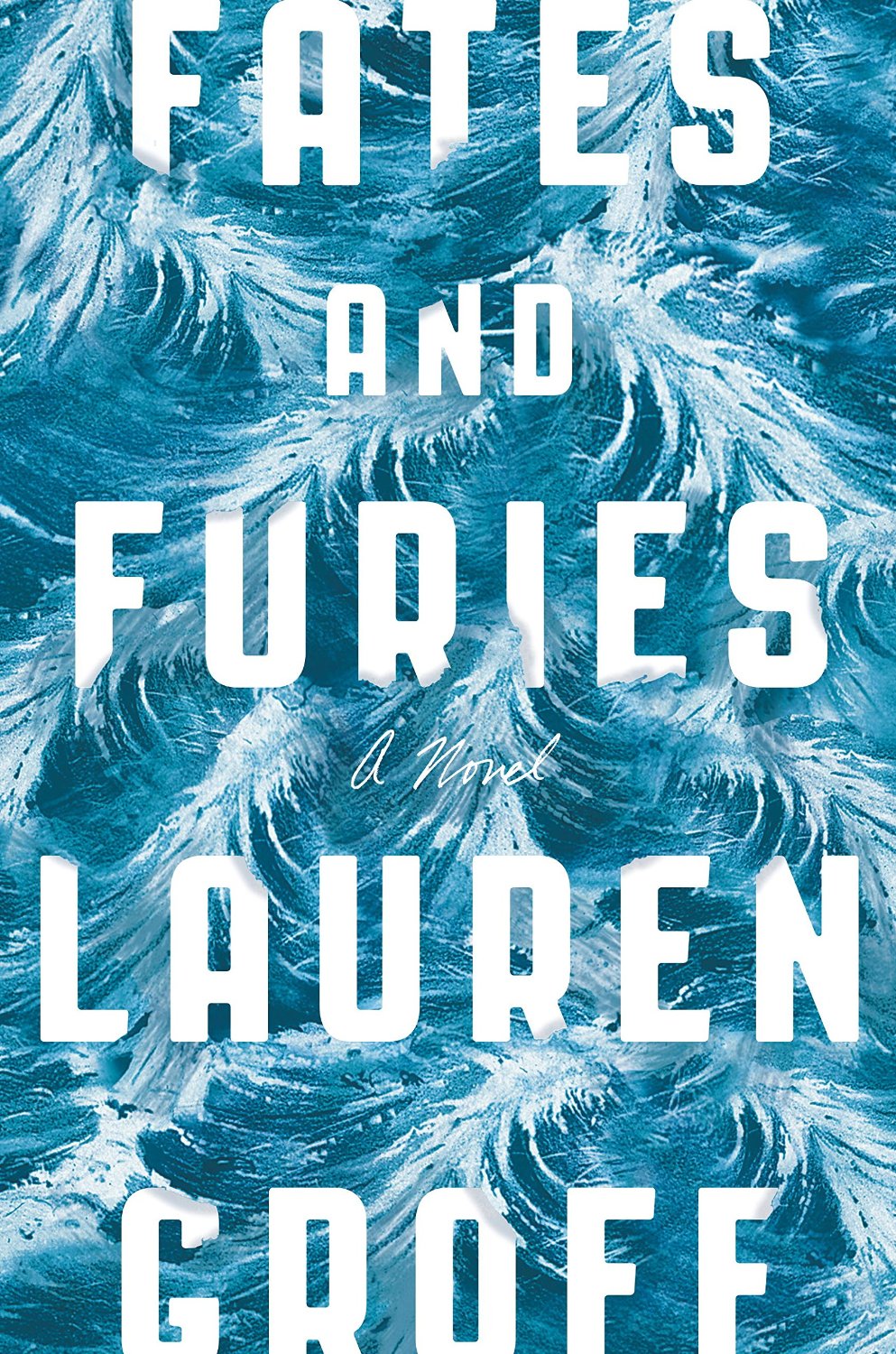
Fates and furies, wings and egos

I went to a wedding a long time ago, the wedding of close friends (where, coincidentally, I met my then future but now ex-partner), which made a huge impression on me. I was both moved and puzzled by what the priest said. That a marriage is more than one plus one. There are three in a marriage: husband, wife, and holy ghost. I'm skeptical about the holy ghost bit, but it's clear to me that any relationship is larger than its parts. But as most marrieds will tell you, the sum maintains its integrity only so long as the parts maintain their individual identity.

Sometimes, indeed, that third entity, Marriage, does not swallow up the others so much as form its own separate whole, for better or for worse.
Their marriage picked itself up off the ground, stretched, looked at them with its hand on its hips.
Fate and Furies, by Lauren Groff, is about a marriage. First we hear Lotto's version, and then Mathilde's. Surprise: they're not the same.

The novel has been making a lot of waves since it was published last fall. Obama's favourite book of the 2015. But the hype is starting to dwindle. It's when the novel came back as a zombie in this year's Tournament of Books that I finally felt compelled to read it.

I thoroughly enjoyed reading this book while I was in it. I couldn't wait to get home from work and go to bed early so I could find out what happened next. I spent several lazy Saturday hours in my reading chair with it. I mostly loved it. It gets all playwright-y and stylized at the end of part one, and I skimmed through a lot of that — just not my cup of tea — but I was pretty invested in this novel and cared how it turned out. A couple weeks on, however, I'd say the honeymoon is over, the thrill is gone, and I'm starting to wonder what I saw in it in the first place.

Here's a great but spoiler-infested review by James Woods. I wholeheartedly concur. There's just one thing he gets wrong; when Lotto finds success as a playwright, Woods notes, "Thanks to his wife, Lotto never again scrubs a toilet or pays a bill," but I'm fairly certain he hadn't done either since he met Mathilde nearly a decade earlier.
"Huge thing's your ego. Awful that you weren't the only man for her. Girl scrubs your toilets for twenty-three years, you begrudge her the life she had when you weren't around."
Laura Miller in her commentary on the TOB zombie round proclaimed "Gone Girl is brilliant, a better novel than Fates and Furies" (which so much makes me want to go read Gone Girl, which movie I loved):
One thing I like about the pairing of these two books, though, is that it does highlight the degree to which I think Fates and Furies has been enjoyed by readers as a kind of satire. It’s got a privilege-assuming, rather spoiled golden boy of a husband who is completely oblivious to the reality of his wife’s life.

Given that most readers of literary fiction are middle-class women, I’d bet a lot that this is a reason for its success.
Much is made of the novel's structure. I like the idea of changing perspectives, but these are hardly parallel narratives. Mathilde's story chronologically picks up where Lotto's left off, though through flashbacks, they do cover much of the same ground.

There's something like a Greek chorus that intermittently comments on the story, sometimes filling in the past, sometimes telling us the future, sometimes waxing philosophical.
[The ones made for music are the most beloved of all. Their bodies a container for the spirit within; the best of them is music, the rest only instruments of flesh and bone.]
I'm not familiar with Greek mythology beyond the basics, so all that fates and furies stuff is lost on me. I'm guessing that much of the tragedy in this novel comes from the Classics, but it reads like an engrossing domestic drama regardless. At times the prose feels a little too abstracted from reality, but it's mostly beautiful.
Rachel was afraid that Mathilde, whom Rachel loved as dearly as anyone, was about to bust out of it all in a commotion of wings. Poor Lotto. Poor all of them if Mathilde left him.
Mathilde's childhood and youth, it turns out, is so thoroughly fucked up, though not unbelievably, that it's no wonder she shuts the door on her past and lives a disciplined life in accordance with a strict set of rules. Lotto, on the other hand, is thoroughly oblivious, but also not unbelievably, because men can be stupid.

Was their marriage successful? I don't know.

Wednesday, August 15, 2012

Her box of confidences

When one unlocks a woman's body, her box of confidences also spills. (You should try 'em yourself one time, women I mean.) Might this be connected to their hopelessness at cards? After the Act, I am happier just lying still, but Jocasta talked, impulsively, as if to bury our big black secret under littler grey ones. Learnt Ayrs contracted his syphilis at a bordello in Copenhagen in 1915 during an extended separation and has not pleasured his wife since that year; after Eva's birth, the doctor told Jocasta she could never conceive another child. She is v. selective about her occasional affairs, but unapologetic about her right to conduct same. She insisted that she still loves Ayrs. I grunted, dubiously. That love loves fidelity, she riposted, is a myth woven by men from their insecurities.

— from Cloud Atlas, by David Mitchell.

Monday, July 16, 2012

A girl who doesn't exist yet

I found Life Is Short and Desire Endless, by Patrick Lapeyre, to be a quirky and infuriating little novel. And yes, there's something decidedly French about it. Somewhere between the lightly philosophical musings on human relations of Hervé Le Tellier and Michel Houellebecq's more blatant crude and caustic cynicism. Gentler than Houellebecq, definitely, but I am beginning to discern a spectrum of contemporary French male novelists.

The story centers around Nora — a free spirit and aspiring actress, a little bit Holly Golightly. But we never really get to know her. Rather, we try to home in on her by triangulating the perspectives of Blériot, her married French lover, who is "prepared to uphold that any man who hasn't loved two women at once is condemned to remain incomplete"; Murphy, an American in London, works in finance, whom she's "left"; and the more peripheral Vicky, a childhood friend. They each of them have had their turn at playing house with Nora, and they pine for her, with varying degrees of disabling obsession.

Despite the distance separating them, it's as if Murphy and Blériot are moving on either side of a thin partition, as transparent as a paper screen, each aware of the other's existence, inevitably thinking about him, but unable to give him a name or a face, so that they both seem to be groping their way like sleepwalkers along parallel corridors.

It becomes rather clear that Nora's lovers, and there are others beyond those three, know her as little as we do. But they are desperately in love with the idea of her. And this seems to be something she cultivates.

The actors who play Nina Zarechnaya, she explains, mostly take their inspirations from other Ninas they've seen at the theater or from people they've met, imitating the way they speak or move. As a result, the effect is almost always disappointing. Because everyone already knows Nina.

Now she'd like to incarnate someone who doesn't exist yet.

"Do you understand?"

He understands and he doesn't understand. Either way, he's take with the idea of loving a girl who doesn't exist yet.

Then just when you think you've pinned her down, she's gone.

Neither Nora nor Blériot are particularly likable (and it's a bit tiresome to read about Blériot's constant groping. Really, is that all men — and French men in particular — ever think about? I'd only just started believing we'd got past all that...), and the others don't have enough screen time for me to pass judgement. This story doesn't cover any new territory, and ultimately it's something of a downer, but it is compelling in its exploration of desire, what drives people to each other, and what it is that makes relationships work (or not).

Read Guy Savage's thoughtful review at His Futile Preoccupations.

Tuesday, July 10, 2012

Like in myths and legends

His conjugal affection has never actually been as vehement as he claims, and their relationship, despite intermittent bonds of complicity and tenderness, had become more or less incomprehensible.

In fact, no one in their circle of friends understand it at all.

But Blériot doesn't mind what people say. It's a relationship with no logical explanation, like in myths and legends.

— from Life Is Short and Desire Endless, by Patrick Lapeyre.

So how does your marriage measure up?

I was sold on the title, but it took me a while to warm to this novel. I'm still not feeling exacty warm about it, but something about it challenges me emotionally, and for this reason it is compelling.

Thursday, September 25, 2008

The kindred smile on our lips

Rainer Maria Rilke and Louise Andreas-Salomé shared a love story, or something like it.

My day also wishes me to tell you: it is poor because you are not near it; it is rich because your goodness spreads light over all its things. I talk to you often and speak of you with all that is mine. Live, sad to say, among people who interrupt my dreams with their loudness, and know, of course, not a single one of them. They are people who talk about trips, rainy days, and raising children, who bow deeply to each other, smiling and rubbing their hands, and greet each other with "Good Morning" ten times a day in loud, disagreeable voices." And so I associate only with Stauffer-Bern, who, though unpleasant in many respects, still seems an interesting and remarkable man. I look forward to telling you about this strange Bernbeurger, who is a mixture of daring and cowardice, of quiet, pellucid feeling and brutal, callous assertion, and who seems to express these inner contradictions (always magnifying them awkwardly) whenever he is in the presence of a woman. But the real tragedy of Stauffer's life lies not in the self-doubt that again and again subjects his hope to bitterness and leads him away from one branch of art off toward some other, before he can ever really flourish in any one: but rather in the fact that neither he nor Frau Escher recognized early enough (or wished to recognize?) what really attracted them to each other; and that then, when such recognition did belatedly arrive, in the sacred day of their having at last found each other, such violent storms erupted that all the young sprouting seeds could not but be destroyed. It is not enough for two people to find each other, it is also very important that they find each other at the right moment and hold deep, quiet festivals in which their desires merge so that they can fight as one against storms. How many people have parted ways because they did not find the time slowly to grow close to each other? Before two people can experience unhappiness together, they have to have been blissful together and possess a sacred memory of that time, which evokes a kindred smile on their lips and a kindred longing in their souls. They become like children who have lived through the festivities of a Christmas night together; when they find a few minutes to catch their breath during the pale, drawn-out days, they will sit down together and tell each other with glowing cheeks about that pin-tree-scented nighttime full of sparkling lights . . .

Such people will weather all storms together.


— Rainer Maria Rilke to Lou Andreas-Salomé, September 5, 1897, from Rilke and Andreas-Salomé: A Love Story in Letters.

This is a remarkable book. I've read it slowly, very slowly, over months, which I think is the only way, really. It's been my summer book, from first flush to cool comfort. This summer has been bracketed — set off from the rest of my life — between its covers.

And it is a love story, or so the subtitle claims. The love is difficult to disentangle sometimes from the writer's block, the writer's despair, the treatises on art, the plans, the endless plans for visits, travels, studies, work, plans many of which never came to fruition.

They are each of them in love with their work, but their love for each other remains something of a mystery.

The first of the letters is from Rilke, following their first meeting, an afternoon tea with a mutual friend, in 1897. They became lovers shortly thereafter, and spent a good part of the next couple years together, though this I learn from the notes, the exact nature of their relationship being rather difficult to discern from the letters themselves.

Their correspondence continued until Rilke's death in 1926.

Rilke's letters are at times effusive and nostalgic for the the time they spent together. Above all, they are poetic. Even while he despairs of not being able to produce anything worthwhile of his own, he grasps for life — passionately — in the work of Rodin and Baudelaire. He is excited to discover, and share, Proust and Rabindranath Tagore. Later, he is a fervent admirer of, and feels a deep affinity for, the poetry of Paul Valéry and throws himself into the task of its translation.

One of the most interesting letters, one which excites discussion throughout the ensuing exchanges, concerns Rilke's impressions of Rodin — both the sculptor-artist and the person. Rodin is clearly not just an artist, but a craftsman, as well as being of a disposition that includes the focus and discipline that his art-craft demands; these are characteristics Rilke strives for (virtually to the end of his days), but it's apparent that his chosen medium — words — doesn't allow for the same tangibility of effect.

Nothing he chooses to sculpt has for him even the slightest hint of vagueness: it is a region where thousands of tiny surface elements have been fitted into space, and his task, when he creates an artwork after it, is to fit the thing even more tightly, even more passionately, a thousand times more adroitly than before, into the breadth of space around it — so that it wouldn't move even if one shook it. The thing is definite; the art-thing must be more definite; removed from all accident, torn away from every uncertainty, lifted out of time and given to space, it has become enduring, capable of eternity. The model seems, the art-thing is. Thus the latter is that inexpressible advance over the former, the calm and mounting realization for the desire to be that emanates from everything in nature. By this is banished that error which would view art as the vainest and most capricious of vocations; art is the humblest service and founded absolutely on law. But all artists and all the arts are infected by this error, and so a very powerful man had to rise up against it; and he had to be someone whose pronouncements are deeds, someone who doesn't talk and incessantly creates things. From the beginning art for Rodin was realization (and such the very opposite of music, which transforms the seeming realities of the everyday world, and de-realized them even further by absorbing them into the easy glissando of appearances. Which is why this opposite of the art-work, this vague act of non-condensing, this temptation toward diffuseness, has so many friends and advocates and addicts, so many who are unfree, who are chained to pleasure, who have no inner powers of intensification and must be enraptured from without. . . .).


As entrancing as the words and ideas are, let us not forget that Rilke writes all this to one woman in particular (though it is easy to forget — a great portion of Andreas-Salomé's letters did not survive).

The big question: Who is this woman who could so engage the bright minds of Europe? It's rumored Nietzsche proposed to her (though biographers dispute this). Though married, she seemed to have enjoyed intense correspondences and relationships with many intellectuals, Freud also among them.

Her writing is cold and clinical. She offers encouragement to Rilke by way of analyzing, explicating, his letters to her and the state of his mind behind them, highlighting his artistic and emotional progress. It is only in the later years that she herself shows any glimmer of real feeling:

And I am looking forward more than words can say to my rooms and woods; to the wanderings and exploratory side-trips one undertakes so deep within oneself while trees, tiny animals, clouds, mountaintops look on in silent sympathy. It is almost divinely beautiful that life knows and can embrace this alternation from the outside to the inside and vice versa. Often, often, often I am with you in all my thoughts and discover there again and again such fullness, which I ever so gradually relive, since in the actual moment of our being together there was not nearly enough time to experience it.


— Lou Andreas-Salomé to Rainer Maria Rilke, October 28, 1913, from Rilke and Andreas-Salomé: A Love Story in Letters.

(I'm struck also by how correspondence has changed. I write dozens of emails a day, for work, but some personal, too; they are instantaneous, and then they vanish. They are sometimes just a sentence, or even a word. Some are wordless — a punctuation mark, or an emoticon, will do. Yet these are full conversations, relationships. It seems to me, however, that we lack the time, and indeed often the interest, to explore an idea with any vigour of more than a soundbite. There is an irony, too, that with those people with whom I communicate more sporadically I also enjoy perhaps a richer exchange, full of stories, analysis, progress, reflection. Meanwhile, those relationships of my everyday lack this communicative depth; we are in a position to "observe" each other living and feel (wrongly) that explication is no longer deemed required; exchange is spread thin, made superficial, stretched into the fabric of banality. Ah, for a proper letter!)

See also:
July 25, 1903
October 19, 1904
September 9, 1914

Sunday, June 15, 2008

Possibility

So I found a book in the bargain stacks the other week and immediately snapped it up, without, unusually for me, giving it a second thought.

I've been reading Michel Houellebecq's The Possibility of an Island on my daily commute, and it makes me feel a bit conspicuous — a bit dirty actually. What do others make of the woman so flagrantly reading Houellebecq on public transportation?

Michel Houellebecq is widely considered to be a racist and a misogynist, and it's disputed whether his work has any literary merit. According to Wikipedia, "a recurrent theme in Houellebecq's novels is the intrusion of free-market economics into human relationships and sexuality."

So what am I doing reading this book?

Well, for starters, it's about clones. Who doesn't love a book about clones?!

The book cover beseeches readers to consider, "Who, among you, deserves eternal life?" (Do I?)

Another reason: I read Elementary Particles and I liked it. Evidently I don't hold to the same standards as the New York Times ("a deeply repugnant read"), because I found something appreciable in it. It was — that cop-out of all adjectives — interesting, on many levels, not least because it tested my own limits and sensibilities.

It's the problem of utopia (that book and this one), to which I'm compelled to return over and over and over again, ever since I discovered that there was such a word, that others also dreamed an ideal and tried to design a foolproof blueprint. Now, in Houellebecq's case that ideal seems to be based in sexual freedom and sexual liberation. The problem of utopia lies somewhere in the disconnect between theory and practice. The problem with a sexual utopia is that that disconnect is (for me) felt much more strongly, emotionally.

I'm reading this book openly on the metro, and the vulgarities make me cringe, whether they're directed at Arabs, Jews, or women. Do other commuters know what's inside these covers and judge me? As open-minded as I may be and always eager to hear all sides, this just feels wrong.

Women are valued for sex, and only so long as they are sexually desirable, often traded in for younger models. As if to validate the narrator's (author's?) attitude, the women are fully complicit, knowing their worth to be exactly that and doing everything in their power to increase and preserve it (thus powering the beauty industry).

So why am I reading this book? I guess it's a kind of test. There are some valid points. (Where exactly are my limits?) And it's interesting besides. (And there seems to be a cultish religious angle developing.)

It's boiling down to this: Is the human experience necessarily a sexual one? How do relationships work? How do men really think? (Who didn't try to figure this all out as a teenager, at the first whiff of romance, and why am I bent on trying all over again to figure it out?)

And on this last point, I'd love to know: Is Houellebecq at all representative of the male population? Outlier or straight shooter?

The story? Thus far: Daniel1, from whom the other narrators were generated, is a stand-up comedian, who dabbles in film-making. The world is cultivating indifference, sounding the death knell for morality.

Beyond the hackneyed subject of paedophilia, this film strove to be a vigorous plea against friendship, and more generally against all non-sexual relationships. What in fact could two men talk about, beyond a certain age? What reason could two men find for being together, except, of course, in the case of a conflict of interests, or of some common project (overthrowing a government, building a motorway, writing a script for a cartoon, exterminating the Jews)? After a certain age (I am talking about men of a certain level of intelligence, not aged brutes), it's quite obvious that everything has been said and done. How could a project as intrinsically empty as boredom, annoyance and, at the end of the day, outright hostility? Whilst between a man and woman there still remained, despite everything, something: a little bit of attraction, a little bit of hope, a little bit of a dream. Speech, which was basically designed for controversy and disagreement, was still scarred by its warlike origins. Speech destroys, separates, and when it is all that remains between a man and a woman then you can consider the relationship over. When, however, it is accompanied, softened and some way sanctified by caresses, speech itself can take on a completely different meaning, one that is less dramatic but more profound, that of a detached intellectual counterpoint, free and uninvolved in immediate issues.


Hmmm.

They say (you know, "they") that when sex is gone, at least there is conversation. At the end of the day you want to come home and have someone to talk to. Or just to be with? Are they different things?

What happens when there is nothing left to talk about? Do we repeat ourselves, smile and nod. And what of the notion of a shared, companionable silence — is this, then, as mythical as postcoital cuddling? An empty commentary on a nonexistent main event.

I don't know the answers to any of these and many related questions, and the fact is they're very relevant, as currently I feel (experiencing inside) and see (standing outside) both myself and my relationship aging. I can't wait to figure out where Houellebecq stands.

The thing is: it's really hard to critically dismiss a book when it has me thinking so many intense things when I'm only on page 75 (of 345).