Sunday, January 12, 2014

The MOOC experience, continued

I recently completed my second massive open online course (MOOC). This time the course was User Experience for the Web offered by Open2Study. The course was self-paced.

It was completely different from my first MOOC.

The differences are attributable to three main things:
Details and observations
While the recent course was self-paced, mostly what this means is the material is already canned. You don't have to wait until the following week for the next block of videos and quizzes to be released.

This course does actually have some structure, 4 modules that could be consumed over 4 weeks. (Quite likely this course may actually have been first introduced with weekly releases.)

The course information for User Experience indicated that the material would require 2-4 hours a week. I'd say it's significantly less. (For Kierkegaard, I'd put in more time than indicated.)

(One could at this point access the Kierkegaard material and consume it at one's own pace, condensing it all into a week or so. But I doubt many people would want to do so, given the intensity of the subject and the time commitment for an 8-week course.)

Each module consisted of 8-10 topics presented in videos ranging in length from about 2 to 7 minutes. There is a 1-question quiz at the end of each video segment that reinforces a key point.

I did most of the coursework (that is, watched the videos) over my morning coffee. With the videos at about 4 minutes a pop, they're bite-sized and it's really easy to say, just one more. I did about 2 modules a week (with a break for Christmas between weeks). I can easily imagine that one might complete the entire course in 1 day.

This setup really did motivate me to keep going.

The videos show the instructor talking, and writing key points on a clear-glass whiteboard. It's all shot against a black background; he uses pink, yellow, green, and blue pens. The presentation is very clean and minimal. While it doesn't compare to the production of the Kierkegaard course videos, it is well suited to the course material.

No required reading. No essay.

Because the course is self-paced, the forum has the feel of a static archive more than of an ongoing and dynamic discussion. The discussion is filtered by module, but this wasn't obvious to me. The setup does not encourage participation.

Class stats indicate that 8,386 students have taken this course and that there are 1,316 classroom posts. (Less discussion and fewer students than Kierkegaard, but no organization. Invisible yet chaotic.)

Open2Study gives you badges for "accomplishments" (like linking a social media account). I hate this kind of thing (I wonder who likes this kind of thing). The alerts are distracting, not motivating. (The alerts are probably configurable, but I'm lazy.) (My skepty-sense is tingling: badges are less to do with motivating a user than generating soundbites that are sharable on social media for the purpose of product promotion disguised as individual accomplishment.)

The final grade is based on the module "assessments" — multiple-choice tests consisting of 5 or 10 questions. (I suspect the format may have been changed from 5 to 10 questions sometime during my enrollment, as for the first three modules, 10 questions now appear, 5 of which I have not answered.)

This course was not affiliated with any university or other learning institution (other than Open2Study itself). The instructor was a professional consultant.

Intangibles
For Kiekegaard, the course page felt like its own place, with discussions, assignments, resources all handy and centralized. I felt engaged and immersed in the course material. I felt like a student.

For User Experience (ironically) I felt very much like a consumer; the classroom is just a slight corner of the Open2Study brand.

I felt less invested in the User Experience course, partly because of the subject, but the whole of the presentation of the course contributed to my not taking it too seriously.

This was reflected in my grade, an easy 88%. A perfect score would be in easy grasp for anyone, but because of both online and real-life distractions, I didn't care enough to make it happen. Contrast this to the 92% I scored for Kierkegaard, of which I am immensely proud and I feel I worked hard for.

I don't feel that I learned anything; rather it served to consolidate what I already know from business experience, editorial instinct, and common sense. (This is still worth something.)

The User Experience course felt very lightweight. That's definitely due to a combination of factors: the subject and my attitude towards it, as well as the course design.

Summary
It's probably fair to say that you get from MOOCs what you put in to them.

I took the User Experience course because I have a mild interest in the subject as it relates to my work; it's not a deep personal interest or an academic curiosity as I felt with Kierkegaard. And I was curious to see how other types of courses in different MOOC environments operated.

Also, I think I may be somewhat addicted to MOOCs, the rush of the combination of learning, discipline, and achievement.

This week I start 2 more courses: Content Strategy for Professionals: Engaging Audiences for Your Organization and Writing for the Web. They are a little more closely related to each other in terms of subject matter (and I'm taking both because of how they're related to my work, rather than purely for personal interest), but they are on different platforms, so they should be easier to compare.

See you on the other side.

Friday, January 10, 2014

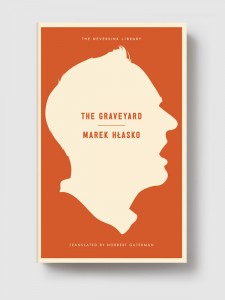
Such faces

A corpulent man with a friendly face rose from his seat behind the desk. He had the clay-colored complexion of those who never get enough to eat, live in stuffy rooms, and breathe large amounts of stale smoke. His cheeks were pendulous and his eyes red from constant lack of sleep; most of the people entrusted with looking after the souls of others have such faces.
— from The Graveyard, by Marek Hłasko.

That's how I feel this week. And it shows. All those souls to look after.

Thursday, January 09, 2014

Interzone

Last week I went to Interzone. David Cronenberg: Evolution, an exhibition exploring the filmmaker's oeuvre, is on at TIFF until January 19.

Seeing as my brother's a film buff, and an enthusiast of Cronenberg in particular, this seemed like an appropriate event to make a present of over the holidays. My sister joined us (she drove).

While I wouldn't exactly call myself a fan of Cronenberg — I've seen his work from The Fly through Crash, and a smattering of more recent movies — Naked Lunch is one of my favourite films of all time (perhaps because it affirms that art is shit).

You don't need to be a film geek to appreciate this exhibit, though there were plenty on the premises. You don't need to know anything about Cronenberg going in; you will know plenty when you come out. It would help at least to like movies, and be open to exploring one of the twisted minds that creates them.

The minutiae of film-making
Multiple drafts, discarded drafts, deleted scenes. Promotional material. Comment cards from focus group screenings (of Videodrome, "awful").

The periodicals strewn across coffee tables. The letterhead notepads on desks. Those horrid surgical instruments from Dead Ringers. The Telepod. Labels on pill bottles, labels on bus spray. Storyboards, designs, mock-ups. Loads of props and costumes.

Film clips on monitors throughout the exhibit give context, as well as behind-the-scenes footage and commentary.

Here's a picture of my brother sidling up to a Mugwump.

One employee (at least, I think he was an employees) approached us to share anecdotes of Cronenberg's early days of filmmaking in Montreal. When he found a suitable apartment complex for his film location, he rewrote the characters of the neighbours to match the actual residents. The employee was brimming with enthusiasm for this method, as if he'd just learned of it and was dying to share.

Cronenberg on Cronenberg
Three short films were being screened on a loop just outside the main exhibition space. They are framed as being an autobiographical commentary.

Camera (2000), created as part of the celebration of the 25th anniversary of the Toronto Film Festival, features an older man being filmed by a group of kids who've found a camera, and sharing his internal monologue while he experiences it. He comments that we think of a camera as recording a moment, but rather it records the death of a moment.

At the Suicide of the Last Jew in the World in the Last Cinema in the World (2007), commissioned by Cannes Film Festival for its 60th anniversary, is hilarious, in a very dark way (as if that really needs to be qualified). Reality-TV style, the title character, played by Cronenberg, prepares to shoot himself, while the annoying commentators natter on about Jews and Hollywood.

The Nest was made expressly for this exhibition. It's weird in a way that's precariously balanced between funny and uncomfortable. This is a recording of a woman's presurgery consultation filmed from the perspective of the doctor, as if he has a camera strapped to his head. Her top is bare; she wants to have her left breast cut open in order to remove the nest of insects she hears rustling around in there. The "doctor" — who denies being a psychiatrist, she thought she'd be meeting a psychiatrist — is hesitant about the procedure and wonders about consulting with an entomologist, although he makes some pretty precise observations for someone who claims not to know anything about bugs. Also, the consultation takes place in what is obviously a dingy garage, complete with air pump, paint cans, gardening tools, and a pile of old fluorescent tubes.

Ongoing immersive narrative
Upon exiting the exhibition space, one is encouraged to visit "the lab." Serious stuff — 3D printers, walls of jars, embryonic pod structures in fluid. The narrative begins with the activities of BMC Labs, a fictional biotech firm that has partnered with David Cronenberg to develop biotech accessories inspired by the intellectual property found in his films.

(The white-coated lab technicians are remarkably straight-faced, but I managed to reduce one to laughter.)

The real adventure is online. Body/Mind/Change uses an "artificial intelligence recommendation engine" to custom-design a POD (Personal On-Demand), a biotech enhancement for implantation into your brain stem.

A series of unsettling questions is used to calibrate your personal pod with a psychological profile on scales of fear, anger, joy, sadness, regret. The experience unearths flashes of memories that you are asked to respond to and to interconnect. My pod's story has now been woven into that of other pods, and the narrative continues. The algorithm also offers suggestions for books to read, personal challenges to undertake, and career choices.


A wholly unique and clever exercise to undertake if you're at all interested in how we construct identity and tell stories: www.bodymindchange.ca.

Tuesday, January 07, 2014

Weight, comfort, inevitability

Lata went for poetry. On the way, however, she paused by the science shelves, not because she understood much science, but, rather, because she did not. Whenever she opened a scientific book and saw whole paragraphs of incomprehensible words and symbols, she felt a sense of wonder at the great territories of learning that lay beyond her — the sum of so many noble and purposive attempts to make objective sense of the world. She enjoyed the feeling; it suited her serious moods; and this afternoon she was feeling serious. She picked up a random book and read a random paragraph:

It follows form De Moivres's formula that zn = rn (cos n + i sin n). Thus if we allow complex number z to describe a circle of radius r about the origin, zn will describe n complete times a circle of radius rn as z describes its circle once. We also recall that r, the modules of z, written |z|, gives the distance of z from O, and that if z'=x'+iy', then |z-z'| is the distance between z and z'. With these preliminaries we may proceed to the proof of the theorem.

What exactly it was that pleased her in these sentences she did not know, but they conveyed weight, comfort, inevitability. [...]

She read the paragraph again, looking serious. "We also recall" and "with these preliminaries" drew her into a compact with the author of these verities and mysteries. The words were assured, and therefore reassuring: things were what they were even in this uncertain world, and she could proceed from there.

— from A Suitable Boy, by Vikram Seth.

Sunday, January 05, 2014

No resolution

In 2013 I read approximately 50 books. Some were very long, and some were very short. I say approximately because some were so short it doesn't quite seem fair to count them. And it depends if you count all three parts of the trilogies that were packaged as single volumes. And there's the book I mostly reread, cuz I was looking for something and got sucked in, but I didn't count it because I skipped a few pages here and there. And then I included something I read for work and not for fun. And I'm too lazy to make a decision about these things and go back and count them properly. I read approximately 14,000 pages (why, yes, I did keep track). I say approximately because some page counts include endpapers and other book matter, and given the wide variety of material I read, one cannot establish a standard page. Also, about a third of my reading was e-reading.

About a book a week. That's about normal for me for the last several years. About 38 pages a day. That's not likely to ever change much, as that's just how much time there is in a day. Good for me. As for people who continue to say they don't have time to read: whatever.

My very favourite book that I read in 2013 was Kate Atkinson's Life after Life.

To everyone who visits my humble little blog, cheers! I just uncovered a slew of comments I was previously unaware of, made mostly via Google+, I think. I didn't mean to ignore you, I just didn't know you were there.

Random Things

How awful was The Time of the Doctor? Taking shortcuts in all the wrong places in favour of overly drawn-out sentimentality. And a bunch of it was just dumb (see this review, for example).

The article "How Do E-Books Change the Reading Experience?" demonstrates how people continue to conflate content with form. One of the contributors writes, "E-reading opens the door to distraction." Get a little self-discipline, I say.

I started a self-paced MOOC back in December, User Experience for the Web, mostly for work-related reasons but also because I'm kind of hooked on the MOOC concept. I'm determined to finish it in the next couple days, and I plan to report on the experience here.

Started playing Psychonauts with the kid. It's no Grim Fandango, but it's fun, and it does take me back... (to a simpler time? a previous life?).

I am reading A Suitable Boy, by Vikram Seth, with a few people. A very big book. A coworker and I had drawn up a reading schedule — we're slated to finish by May. I was a couple weeks late getting started, but now I find myself pulling ahead. It's really wonderful — soap-opera-y and political. I was delighted to find that it is being read by dovegreyreader and company, so there are some resources for us to fall back on.

Monday, December 30, 2013

"Why write? Life is a cage of empty words."

The Diary of Edward the Hamster 1990-1990, by Miriam Elia and Ezra Elia, was waiting for me under the Christmas tree.
Friday, September 26th

He says his name is Wolf, although he is not a wolf.

He is a hamster.

I tried to goad him into debate on the nature of our captivity, on the emptiness of life and our irrational will to live.

He burped, laughed and defecated in the food tray.

He is either mad or profoundly stupid.

I am crushed.

He sleeps again. Perhaps I shall do the same.

It is my only option.

Edward was a hamster who smoked, went on hunger strikes, questioned his existence. Edward loved and Edward lost. These are his scratchings, translated from the original Hamster.

This little hardcover book, illustrated with black and white sketches, full of hamster musings, was a lovely way to spend an hour and round out my year of Kierkegaard.


Read an excerpt.

Article: New York Post.
Quiz: Who said it? Edward the Hamster or some other existentialist philosopher?

Saturday, December 28, 2013

Why do you want to write? It must be so upsetting!

"Leontii Sergeyevich" remarked Ivan Vasilievich, "has brought me a play."

"Whose play?" asked the old woman, gazing at me sorrowfully.

"Leontii Sergeyevich has written the play himself."

"What for?" asked Nastasya Ivanovna anxiously.

"What do you mean — what for?... H'm... h'm..."

"Aren't there enough plays already?" asked Nastasya Ivanovna in a tone of kindly reproach. "There are such lovely plays and so many of them! If you were to start playing them you couldn't get through them all in twenty years. Why do you want to write? It must be so upsetting!"

She was so convincing that I could find nothing to reply, but Ivan Vasilievich drummed his fingers and said:

"Leontii Leontievich has written a modern play!"

This disturbed the old lady and she said: "We don't want to attack the government!"

"Why should anyone want to?" I said in her support.

"Don't you like The Fruits of Enlightenment?" asked Nastasya Ivanovna shyly and anxiously. "Such a nice play... and there's a part in it for dear Ludmilla..." She sighted and got up. "Please give my respects to your father."

"Sergei Sergeyevich's father is dead," put in Ivan Vasilievich.

"God rest his soul," said the old lady politely. "I don't suppose he knew you were writing a play, did he?"

Black Snow, by Mikhail Bulgakov, is a very funny novel. Bulgakov never finished it, and it was not published for more than thirty years after his death.

It starts off as a book about the creative process, and veers off into the surreal (weird). There's a failed suicide attempt (funny) and a Mephistophelean editor (funny!), and before long it's a nightmare of financial dealings, with characters, offices, and assets disappearing over night (funny, in a dark way). Most of the novel, however, has the pacing and tenor of a 1930s screwball comedy, befitting the theatrical farce that it is.

For example, the theatre itself is opulent, the foyer hung with portraits in gilded frames, including depictions of Sarah Bernhardt, Molière, Shakespeare, various actors and other theatrical personages, and the Emperor Nero (hilarious!).
"By order of Ivan Vasilievich," said Bombardov, keeping a straight face. "Nero was a singer and an artiste."

The business of the theatre is chaotic and has a logic all its own. Bulgakov captures the mystique with an almost filmic precision:
The three telephones rang incessantly and sometimes the little office was deafened by all three ringing at once. None of this disturbed Philipp in the least. With his right hand he picked up the receiver of the right-hand telephone, clamped it between his shoulder and his cheek, with his left hand he picked up the other receiver and pressed it to his left ear. Freeing his right hand he used it to take one of the notes being handed to him and began talking to three people at once — into the left-hand telephone, the right-hand and then the visitor again. Right-hand telephone, visitor, left, left, right, right. Dropping both receivers back on to their rests at once and thus freeing both hands, he took two of the scraps of paper. Refusing one of them, he picked up the receiver from the yellow telephone, listened for a moment and said: "Ring up tomorrow at three o'clock." He hung up and said to the petitioner: "Nothing doing."

In time I began to understand what they wanted from Philipp Philippovich. They wanted tickets.

Black Snow is based on Bulgakov's own experiences with writing for the Moscow Art Theatre. Bulgakov mercilessly satirizes the theatre milieu and its famous director, Konstantin Stanislavski (he of the eponymous acting method). It is much less political than I might have expected, but it does deal with censorship of a kind — how a playwright's work ceases to be his own.

Despite feeling uneven, like three or four different novels rolled into one though they might have wandered off in different directions, Black Snow is a highly entertaining insider's view of the workings of the theatre.

Tuesday, December 24, 2013

O'er the hills of snow

Christmas Freilachs, by the Angstones.

Pretty much my favourite Christmas medley ever, capturing the chaotic spirit of the season.

I bought this cassette single back in... I dunno, some 20 years ago or so. And in 20 years of Internet, I haven't found an easy way to share it, but finally I found a link.

It never fails to put a smile on my face. Hope you're smiling too.

Saturday, December 21, 2013

Telling the story is hard

"I am writing the story," she says. "The story of you, and me, and the Pigoons, and everyone. I am writing about how we put Snowman-the-Jimmy and Adam One into the ground and Oates too, so that Oryx can change them into the form of a tree. And that is a happy thing, isn't it?"

"Yes. It is a happy thing. What is wrong with your eyes, Oh Toby? Are you crying?" says Blackbeard. He touches her eyebrow.

"I'm just a little tired," says Toby. "And my eyes are tired as well. Writing makes them tired."

"I will purr on you," says Blackbeard.

Among the Crakers, the small children do not purr. Blackbeard is growing quickly — they do grow faster, these children — but is he big enough to purr? Apparently so: already his hands are on her forehead, and the mini-motor sound of Craker purring is filling the air. She's never been purred on before: it's very soothing, she has to admit.

"There," says Blackbeard. "Telling the story is hard, and writing the story must be more hard. Oh Toby, when you are too tired to do it, next time I will write the story. I will be your helper."

"Thank you," says toby. "That is kind."

Blackbeard smiles like daybreak.

MaddAddam, by Margaret Atwood, is a most satisfying conclusion to the near-future postapocalyptic scenario laid out in Oryx and Crake and The Year of the Flood. But I think you do really need to read the first two books to fully understand the dynamics of this one.

This volume gives Zeb's backstory, and through him, the story of Adam One.

MaddAddam is funny, mostly in its depiction of the Crakers, the naïve genetically engineered humans, as they are beginning to undergo evolution, at least of a social and cultural sort as they learn from the surviving "natural" humans and develop a mythology of their own. And it seems that the future of humanity depends on their interbreeding.

The characters are wonderful — genuine and sympathetic if not always likeable. While the first two volumes set the stage of this new world, its creatures, environments, and issues all reasonably extrapolated from science that is being performed today, this volume, in my view, now that the world-building is done, is simply about a group of (somewhat misfit) survivors trying to get along and cope with a (very) tough situation. The first two might be considered cautionary; this book, remarkably, is unabashedly hopeful.

It made me smile like daybreak.

Thursday, December 19, 2013

Sunday, December 15, 2013

My ambiguous self

One of the most beautiful books I read this year was Azazeel, by Youssef Ziedan, an Egyptian scholar who specializes in Arabic and Islamic studies. It won the International Prize for Arabic Fiction in 2009 and has been condemned by the Coptic Orthodox church.

In a wonderful review, "In Case of Doubt, Choose Doubt," Andreas Pflitsch says that this historical novel is a plea against religiously motivated violence.

Set in the 5th century AD, these are the memoirs of Hypa, a Coptic monk who journeyed from Upper Egypt to Alexandria and then Syria.

It's not a period in history that I know much about, but several aspects of it are fascinating. It covers a culture in transition between pantheism and Christianity. It shows the significance of the life and death of woman mathematician and philosopher Hypatia of Alexandria.

And it features Nestorius, Archbishop of Constantinople, condemned by the Council of Ephesus for his belief that Christ's human and divine natures could not be reconciled. (Lucky for me I read this novel while studying Kierkegaard, who didn't care so much about reconciling them, so I had ample opportunity to consider the absurdity of faith.)

Hypa meanwhile is consumed with the problem of reconciling, or accepting, his own human and divine natures, that is, satisfying both physical and spiritual yearnings. Azazeel, the devil, is the voice inside him, a daimon, who does not lead him to temptation so much as reflect it back to his conscience.
I sat up, filled with a fear the source of which I did not know. I asked myself: should I go to church now, to feel a little peace of mind? The night prayers must have started. Being in a group would relieve the anxiety, since nothing is more conducive to fear than being alone. Or should I go to Martha's cottage nearby and mend what was broken in our relationship, then sleep on the floor under her bed? Does Martha sleep in the bed where we made love two days ago? Or does she lie on the floor like me? I don't know much about her. I've never seen her from the inside. In fact I've never seen anything from the inside. I always skirt around the surface of things and never go deep. In fact I think I'm afraid of looking deep inside myself, yet I know the truth about my ambiguous self. Everything about me is ambiguous — my baptism, my being a monk, my faith, my poems, my medical knowledge, my love for Martha. I am one ambiguity after another, and ambiguity is the opposite of faith, just as Satan is the opposite of God.

Azazeel is by turns adventurous, sensuous, thrilling, and mysterious; it is laden with historical detail and religious intrigue. It shows great insight and sensitivity to matters of spirituality and faith (or lack thereof, as I have none), and lends itself to slow and contemplative reading.

Reviews
The Bookbag
The Guardian
Winston's Dad

There is also a sampling of international response to the novel on the book's website.

Friday, December 13, 2013

War was where it belonged — in the hands of the individual

Based on Robert Sheckley's short story "Seventh Victim."


(via)

See also Movies and Books Like The Hunger Games (full text of the story is posted there).

Wednesday, December 11, 2013

I would not have gone crazy about Beethoven so unexpectedly

I went crazy for Beethoven quite unexpectedly.

Witold Gombrowicz on Beethoven:

Quartets! Sixteen quartets! It is one thing to dip occasionally into one of them, in passing, and another to step into the building, to immerse oneself, to wander from hall to hall, wander in the galleries, take in the vaults, examine the architecture, uncover the inscriptions and frescoes ... with a finger to one's lips. Form! Form! It is not him I look for, the building is not full of him, but his form, which I get to know in the course of this gradual self-composition of adventures, changes, acquisitions — similar to creatures human and nonhuman from ancient fairy tales. […]

Certainly, if not for that elegant sound of four stringed instruments, if not for that polyphonic quartet refinement, thanks to which all music that passes between these four instruments undergoes an inordinately subtle transformation, I would not have gone crazy about Beethoven so unexpectedly.

I went crazy for Beethoven quite unexpectedly. Overrated sellout, I used think; as a teenager, I snubbed the establishment. But then I listened, I was made to listen. And it's the aural sculpture of the quartets that sent me reeling into the unknown depths of my own self. To this day I cannot get enough of the quartets.

It was about the same time I discovered Gombrowicz's Diary.

Monday, December 09, 2013

The MOOC experience

I've completed my first massive open online course (MOOC). It was weird at the start, but it didn't take long to get my bearings.

Here's how it worked.

I enrolled in Soren Kierkegaard: Subjectivity, Irony, and the Crisis of Modernity. So did 23,000 other people.

Every week new course material was released: 3 or 4 videos, each on average about 20 minutes long; a list of required reading (PDFs were supplied); a discussion question; a quiz.

So over the last 2 months, I have watched several hours of professional documentary-quality video, and read a couple hundred pages of Kierkegaard, with some Plato and Hegel thrown in.

The quality of the video lectures really surprised me; this was not merely a recording of some fuddy-duddy lecturing in front of a classroom. This professor was a great speaker; he was filmed in various locations around Copenhagen. There were also several interviews with other Kierkegaard scholars. Each video ended with a quiz question, which was not graded but was meant simply to reinforce your understanding of the video material.

The weekly quiz consisted of 10 multiple-choice questions. These did count toward the final grade. They weren't hard, but they weren't easy. I learned early to take my time and refer to my notes, which meant taking better notes during the lectures. Before you submit each quiz, you must check the box indicating that you will abide by the honor code, which states something to the effect of your work being your own (but there's nothing to preclude me from using my notes).

In the first days, the discussion forum exploded with 23,000 people sharing their enthusiasm and trying to get to know each other. That was a bit overwhelming. But I eventually learned to identify which discussions I wanted to follow and know that I couldn't stay on top of them all in any meaningful way even if I devoted all my waking hours to the task. I learned to tune out the white noise.

The course information indicated that the material would require 3-5 hours a week. I'd say it's a bit more. And that estimate doesn't include the potential timesink of the forums.

Some people complained about the deadline for the final essay. I was amazed, and disappointed, that the deadline was adjusted to accommodate the whiners. The schedule had been made clear at the outset of the course, and I expected everyone to stick to it; in fact, pushing back the deadlines by a week very nearly jeopardized my ability to complete the final stage (peer review) because I had organized my life around the original dates. It worked out though, but this shouldn't happen. An extra week for the final essay should've been built in from the start — working on an essay while keeping up with the regular weekly assignments is tough.

It's difficult to grade the humanities in the best of circumstances, and a MOOC is not the best of circumstances. The grade breakdown for this course was 70% from quiz scores (best 7 of 8) and 30% from an averaging of your peers' assessments of your essay. My feeling is that the quizzes were too easy to be given that weight. Essay marks, however, are hard to control — less quantifiable, more open to dispute.

Is it a perfect setup? No. But can you teach the humanities via MOOCs? Absolutely.

According to this article in The Chronicle of Higher Education and the survey they conducted, the median for MOOC registrations is about 33,000 students (so my Kierkegaard course is a bit on the low side).
  • The rate of completion in MOOCs is believed to be around 10 percent.
  • For students who so much as submit the first assignment, the completion rate leaps to 45 percent.
  • And it goes up again if students pay for the course.

So I'm proud to have finished.

And I've already registered for more.

Sunday, December 08, 2013

A net made of money

The Financial Lives of the Poets, by Jess Walter, is one of the funniest novels I've read in some time, but also, as you might intuit from the fabulous title, one with great depth. (What a great title!)


Matt, out of work reporter and about to lose his house, goes out one night to the convenience store to pick up some milk (like, nine dollars a gallon!) for the kids, for their cereal for breakfast, and ends up giving a lift to a couple guys and smoking dope with them, and before the high wears off he's decided that dealing drugs is a sound option, a sensible path out of his fiscal troubles.

Informed of Matt's recent life decision, a friend tells him, "I'll say this about your new life, Matt. You're the only person I know who has anything to talk about right now other than budget deficits and layoffs and the death of newspapers."

Which is ironic, because Matt is all about the money, hyper aware of the cost of milk at the convenience store, and his course of action is a direct result of layoffs and the death of newspapers. It's all he rambles on about in his head. Selling drugs seems like a way out. At three hundred an ounce and a fifty percent profit if he's selling to his peers (nostalgia types, who wouldn't know where else to go), he need just roll his savings over three, four times to forestall the foreclosure on his house.

This may be the great Great Recession novel.
We're broke, Lisa and me — something important cracked in us. And I have no idea how to fix it, any more than I know how to keep from losing our house, or for that matter, how to build a tree fort. All I know is that I have a check in my pocket for less than ten thousand dollars, a check that represents the last threads of the money we always assumed would serve as our safety net, and that might be the stupidest thing we did — not starting a poetry-business website or buying shit on eBay or taking the six-month stay of financial execution, not emailing old boyfriends or getting high at a convenience store — no, the truly stupid mistake was believing that when we fell, a net made of money could catch us.

Matt has so many lapses in judgement, but he believes so strongly that he's actually thinking clearly and logically that I nearly believe it too. Because, this is the big financial mess we're all in, you buy a nice house and a big TV, lease a car and you want to send your kids to a nice school; it feels like anyone could make a mistake or two (or ten), like Matt, and how do you get yourself out of it?
I don't bring up her insistence on remodeling and her online shopping binge and she doesn't stare across the dinner table and say, with all due respect, Matt: financial fucking poetry? And on and on we go, not talking — all the way to the incriminating cheating and weed-dealing mess we're in now.

We're not husband and wife right now; we are unindicted coconspirators.

(Cuz there's that time when Matt gave up his day job to commit himself to a website that gave stock tips in free verse.)

We recently met with the rep for our daughter's education savings plan, and she told us what great shape we're in, which took me by surprise, because we don't plan well, we don't even consider our options much because from where we sit there aren't that many options anyway and they're mostly the same, we just muddle along and I think we're lucky. It's not that we're stupid with money and lucky about it, we just don't give it much thought at all, and I think we could be proactively smarter about it. But it turns out we're doing better than I thought, and maybe we have made some smart choices, like not buying a bigger house than we could afford. Maybe I just take fiscal conservatism and being sensible with money for granted. Which, if you think about it, is pretty lucky.

Matt gets in trouble, but he gets through it. Not exactly a happy ending, but a financially sensible one, which, I guess, is a happier ending than a lot of Americans get.

Reviews
LA Times
The New Dork Review of Books
New York Times

Thursday, December 05, 2013

All best, Margaret Atwood

What a remarkable lady!

Last night I saw Margaret Atwood at the Rialto. One can't always be sure what one is going to get when an author makes an appearance; expectations aren't always properly set*, and so much depends on the author's personality, the venue, the crowd's energy. Chances were good this would be good. But Atwood was brilliant. I think she must always be brilliant. (I have seen her before, and she's always been brilliant.)

*I made the trek last week to see Chris Hadfield, but was disappointed to find it was a signing only — no reading, no musical number, no magic tricks I mean science experiments, just some dumb astronaut signing your book, I mean oh my gawd I shook an astronaut's hand and his handshake is so firm and he signed my book! But you see my point, I hope.

She started off singing, a hymn from The Year of the Flood. She is by no means an extraordinary singer, but she sings just fine, loud and proud. She actually sang! And cracked that some people really do tell her to keep her day job.

And she read, from MaddAddam, the recently released third book in the speculative trilogy that began with Oryx and Crake. I only started reading the book a few days ago, and in a happy coincidence, she read the section that I had just arrived at (she read pages 106 to 109).

And then she talked. With the very personable Sheila Heti (whose work I have not read, but I intend to someday). That's them in the picture above. (Really.) They chatted (well, mostly Peggy chatted, while Sheila prompted) about the power of storytelling, and what parts of the brain light up when engaging in narrative, indicating that it's a basic thing in humans, along with language, music, rhythm, not like algebra or reading for that matter.

Also edible body products (when the apocalypse comes, go to the spa), cats (everyone knows that one of the most useful things to do for a migraine is to put a purring cat on your head; science has yet to figure out how to keep it there), the future (and extrapolating toward it), Menippean satire (but the world is moving so fast, satire has to push farther to keep up), the Amazon drones (if she'd included that technology back in the day of Oryx and Crake, it would've been considered beyond belief), Archie comics, Northrop Frye, origin stories and the tendency to mythologize (which comic books and science fiction are particularly great at). And other stuff.

Oh, right, and a bit about the book: how God's Gardeners mix scripture, nature, and science with imperfect results; the nature of the Crakers (in their society there would never be a book by Sheila Heti called Women in Clothes); why Jimmy is reluctant to share his story — he cannot envisage a reader — contrasted with Toby, who can, which is hopeful.

She entertained questions from the audience: She advised against hallucinogens as a writing aid, affirmed that social media is good for literacy (citing Smarter Than You Think), commented on Rob Ford (Toronto is paying for its great sin of puffed-uppedness), and scoffed at the idea of writing exercises (you mean like summer camp? let's pretend to be a triangle).

Also she said some smart things about the control (or lack thereof) the author has over the reader. You never know who your readers are going to be. A reader doesn't want to see Austen pulling the puppet strings; the reader would much rather sit and listen to Mr. Darcy. As for authors connecting with their audiences, well, isn't that what the book is for?

And she signed my book! (Which I must hurry up and finish reading this week.)

Check out Margaret Atwood's website; it will lead you to new and interesting places. Also, know that there's a MaddAddam app, the game Intestinal Parasites (which I'm downloading this very minute).

Monday, December 02, 2013

Briefly it will seem as if you're free

light

Think of bars that cease to exist
the closer you get to them. Before you feel
their coldness, then their obstinacy, briefly it will seem
as if you're free. Think of a keyhole, of the eye
of a peephole that sees everything, or even more.
And think of your own eyelid, of your own soul
lurking just behind the pupil.

— Tadeusz Dąbrowski

Tadeusz Dąbrowski's Black Square, translated by Antonia Lloyd-Jones, is published in a bilingual edition (Polish-English) by Zephyr Press. My copy's inscribed to me by the poet (thanks to my sister, who, at my encouragement, attended a reading of his a couple months ago).

I had a tough time choosing a poem to cite here, so I give you this one because I can do so in its entirety. (Although, I must admit, when I first read this poem, I pictured some drunk someone, maybe me, stumbling along to the next bar, and thinking how tragic that the destination would be always removed and then must be reconsidered, infinitely. In Polish, however, the meaning of "bars," in the iron jailing sense, is quite clear.)

I find these poems beautiful, the sound of them, in English or Polish, and certain phrases transport me, particularly the love poems ("I carried you unintentionally in my arms from a go-/go club straight into my bed and thoroughly/ rubbed you into the bedclothes [...]" — emphasis mine, because, oh).

And I also find myself in smiling agreement ("This is the first line. This line means nothing./ And this is the second line, in which you are no longer you,/ i.e., you're not the person from the first line,/ and now you're not even who you were/ in the second and third, and fourth and on top of that/ the fifth. This poem is life, [...]") but then disagreeing quite passionately, which happens when the poem turns to God (and this one does).

I have loved some poetry, and I have hated some other poetry. Most poetry leaves me indifferent. But this may be my first love-hate relationship with a poet.

Wednesday, November 27, 2013

Mired deep in the relentless, endless mud of Russia

Why do so many Russian writers need to make their protagonist a victim or pain-bearer? Why this fixation with self-flagellation? With guilt?

My theory — based on absolutely no research whatsoever — starts with mud. Thick, sucking, up-to-your-knees mud. Centuries of it. Add millions of serfs all labouring away, mired deep in the relentless, endless mud of Russia. Lives worn away by the yoke of oppressive landowners. Throw into the mix long, dark, dismally cold winter. Pile on the gloomy weight of the church. Voilà! The only hope of survival is to admit your guilt and accept punishment for the unknown sin that landed you in this miserable existence. A resigned acknowledgement of your own responsibility. A spiritual masochism.
— from Terry Gilliam's introduction to Black Snow, by Mikhail Bulgakov.

Sunday, November 24, 2013

What is this world?

So I make one phone call, and just like that, we're eating pizza at 6:30. What is this world? You tap seven abstract figures onto a piece of plastic thin as a billfold, hold that plastic device to your head, use your lungs and vocal cords to indicate more abstractions, and in thirty minutes, a buy pulls up in a 2,000-pound machine made on an island on the other side of the world, fueled by viscous liquid made from the rotting corpses of dead organisms pulled from the desert on yet another side of the world and you give this man a few sheets of green paper representing the abstract wealth of your home nation, and he gives you a perfectly reasonable facsimile of one of the staples of the diet of a people from yet another faraway nation.

And the mushrooms are fresh.

— from The Financial Lives of the Poets, by Jess Walter.

This is Matt. He's forty-six, sleep-deprived, and somewhat stoned, having recently made the sound life decision to — seeing as he was recently laid off, they're foreclosing on his house next week, and he suspects his wife is cheating — become a drug dealer. Only that's not really working out either. Matt's world is unravelling, and now his mind is too.

Friday, November 22, 2013

Living poetically

We saw the circus last weekend.

Cirkopolis
C'est la quête identitaire d'un travailleur solitaire.
C'est l'obsession de retrouver son âme d'enfant.
C'est le parcours initiatique d'un clown
qui par sa poésie va changer son environnement.


A little purer than the now seemingly garish and bombastic Cirque du Soleil.

Wednesday, November 20, 2013

One great thing

There are lots of great things about Helena, but when the Nivea commercial came on while we were watching TV, I had to ask her, what did she think was one great thing about herself.

"I like to talk," she said without hesitation.

"No, wait. I like to think. Yeah. A lot. I really like to think."

(I love her to bits!)

Happy birthday, kid!

Monday, November 18, 2013

A Doris Lessing notebook

The Lessing Woman:
Fans of British Novelist Doris Lessing talk about a composite character called the Lessing Woman in much the same way as people once talked about the Hemingway Man. The Lessing Woman is a formidable female. She hasn't been to a university but she has read everything and remembers it. Her ideals are high and unsullied. She works (or has worked) at lost political causes. Although she loathes marriage, she gamely raises children and endures domestic woes. She cooks well, keeps a spotless house (except when depressed) and does excellent writing, research or secretarial work. She is any man's moral and intellectual superior, and she rarely hesitates to tell him so.

I was being domestic this morning, cleaning. For some reason I opened a drawer I almost never open. In it are some old work contracts, an address book, and, for some reason, two books that I keep separate from all the other hundreds of books in the house: Kwiaty Polskie, a volume of poetry by Julian Tuwim, in Polish; and Doris Lessing's The Golden Notebook. I took out the Notebook and fondled it; I like the feel of my edition, I like the look of all its not quite gold-hued lines. Not an hour later, in a meeting with the rep for my daughter's education fund, my phone alerted me that Doris Lessing had died.

My first Lessing book was The Marriages between Zones Three, Four, and Five, in a course on dystopian fiction, when I was 18. I've been reading Lessing regularly ever since.

The Making of the Representative for Planet 8, Prelude. Music, Philip Glass; libretto, Doris Lessing.

Lectures
Nobel lecture
Monique Beudert Memorial Lecture

Obituaries
Margaret Atwood, The Guardian: "She was political in the most basic sense."
Lorna Sage, The Guardian: "Commitment was one of the things from which she weaned herself away."
Lisa Allardice, The Guardian: "Lessing seemed to have an almost uncanny genius for pre-empting problems or social change."
Maev Kennedy, The Guardian: "Few writers have as broad a range of subject and sympathy."
Boyd Tonkin, The Independent: "Crucially, she also shook the dust of successive movements, styles and ideologies from her ever-restless feet: communism; feminism; psychoanalysis; social realism."
Charlie Jane Anders, io9: "Lessing was a master of combining characters with rich inner lives with a general hint of strangeness in the world around them."
Helen T. Verongos, The New York Times: "She divorced herself from all 'isms'."
Vicki Barker, NPR: "She was a campaigner against racism, a lover, an ardent communist, and a serial rescuer of cats."
Gaby Wood, The Telegraph: "How many women can be said to have been thought of as an Angry Young Man?"
Elaine Showalter, The Washington Post: "Cantankerous, irascible, outspoken, she thrived on controversy and outrage."

Excerpts
The Cleft
"Dialogue"
"How I Finally Lost My Heart"
On Cats
"Our Friend Judith"

Commentary
The Fifth Child
The Golden Notebook
The Good Terrorist
The Grandmothers
Mara and Dann
Memoirs of a Survivor
The Story of General Dann and Mara's Daughter, Griot and the Snow Dog

A quick review of this blog shows that I've managed to mention Doris Lessing while writing about Jim Crace, Jeanette Winterson, Keith Scribner, Lionel Shriver, Allen Kurzweil, China Miéville, Penelope Mortimer. She is a baseline. (And of there writers, I think only Miéville is in the same league as her, of the same ilk.)

Thank you, Doris Lessing, for introducing me to Patrick Hamilton, George Gissing, Anna Kavan. And for planting the idea that Charles Dickens would be good in bed (Tolstoy, not so much).
I do not believe that one can be changed by a book (or by a person) unless there is already something present, latent or in embryo, ready to be changed. Books have influenced me all my life. I could say as an autodidact — a condition that has advantages and disadvantages — that books have made me what I am. But it is hard to say of this book or that one: it changed me. How about War and Peace? Fathers and Sons? The Idiot? The Scarlet and the Black? Remembrance of Things Past? But now they all seem dazzling stages in a long voyage of discovery, which continues.

So I cannot say that Doris Lessing changed me, but she helped me recognize that I was ready to be changed, on several occasions.

Saturday, November 16, 2013

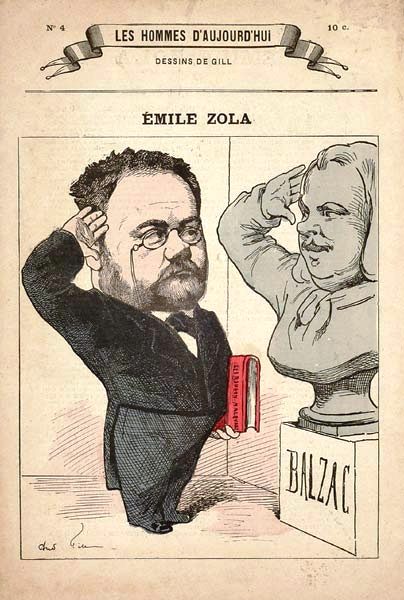
The Zola project

I am enthralled by The Paradise. This television series pushes all the right buttons for me, though I can't identify them all. Music is one positive factor, and the beautiful people are another. For some reason I find the department store setting fascinating. Exquisite production value, fine acting, etc., but why I should be so enamored of this program while others leave me cold (ahem, Downton Abbey) is due to some ineffable je ne sais quoi.

(I'm watching on PBS Masterpiece Theater and we're nearing the end of season 1, but I've just discovered that most of the series is available on YouTube. I expect I'll be binging on season 2 before Christmas.)

The Paradise is based on Émile Zola's Au Bonheur des Dames, the eleventh novel in his 20-volume Rougon-Macquart series. The television program has transposed the story from Paris to somewhere in northeast England. Of course, this leaves me wondering how much else has been changed. And what better way to find out than to read the source material for myself?

Meanwhile, my other half has been reading up on L'Assommoir, another novel in that series, after we were speculating about the origin of the name of a local bar that goes by that appellation. And he's become somewhat obsessed with Zola's concept.

The Rougon-Macquart cycle follows the life of a family during the Second French Empire. It includes a couple of Zola's best known works: Nana (which I in fact read, about 25 years ago) and Germinal, and lo they are interconnected.

In Différences entre Balzac et moi, Zola noted:
In one word, his work wants to be the mirror of the contemporary society. My work, mine, will be something else entirely. The scope will be narrower. I don't want to describe the contemporary society, but a single family, showing how the race is modified by the environment. (...) My big task is to be strictly naturalist, strictly physiologist.

The challenge then, for me and my other: to read the whole Rougon-Macquart cycle. Also, to read it in French. (This may take years.)

I will be following Zola's own recommended reading order with the following exception: I will pick up Au Bonheur des Dames first. The fact that I have some familiarity now with the story should help ease me into the language. Plus, I want all my pressing questions answered.

Wednesday, November 13, 2013

What is a poet?

What is a poet? An unhappy person who conceals profound anguish in his heart but whose lips are so formed that as sighs and cries pass over them they sound like beautiful music. It is with him as with the poor wretches in Phalaris's bronze bull, who were slowly tortured over a slow fire; their screams could not reach the tyrant's ears to terrify him; to him they sounded like sweet music. And people crowd around the poet and say to him, "Sing again soon" — in other words, may new sufferings torture your soul, and may your lips continue to be formed as before, because your screams would only alarm us, but the music is charming. And the reviewers step up and say, "That is right; so it must be according to the rules of esthetics." Now of course a reviewer resembles a poet to a hair, except that he does not have the anguish in his heart, or the music on his lips. Therefore, I would rather be a swineherd out on Amager and be understood by swine than be a poet and be misunderstood by people.
— from "Diapsalmata," in Either/Or, by Søren Kierkegaard.

This is a very strange and disjointed text, mostly dwelling on Kierkegaard's (self-termed) "depression." He sounds overly dramatic, and very much like those German Romantics he rails against.
I have, I believe, the courage to doubt everything; I have, I believe, the courage to fight against everything; but I do not have the courage to acknowledge anything, the courage to possess, to own, anything. Most people complain that the world is so prosaic that things do not go in life as in the novel, where opportunity is always so favorable. I complain that in life it is not as in the novel, where one has hardhearted fathers and nisses and trolls to battle, and enchanted princesses to free. What are all such adversaries together compared with the pale, bloodless, tenacious-of-life nocturnal forms with which I battle and to which I myself give life and existence.

How self-indulgent.

I was completely unprepared for this. It seems that after having defended his thesis (The Concept of Irony), Kierkegaard threw all notions of structure and form to the wind, one big middle finger to the Man, his traditions and institutions. This strikes me as a little at odds with his being a Christian theologian, but what do I know. (Maybe we'll cover this issue later in the course.) To Kierkegaard's credit, he practiced what he preached, practiced irony and found his own subjective truth.

It's pages upon pages of aphorisms concerning death, cereal, erotic love, Mozart, boredom, salmon, Sunday afternoons. It begs to be parodied. And it's wildly beautiful.
This is the way, I suppose, that the world will be destroyed — amid the universal hilarity of wits and wags who think it is all a joke.

Monday, November 11, 2013

No genuinely human life is possible without irony

In our age there has been much talk about the importance of doubt for science and scholarship, but what doubt is to science, irony is to personal life. Just as scientists maintain that there is no true science without doubt, so it may be maintained with the same right that no genuinely human life is possible without irony. Irony limits, finitizes, and circumscribes and thereby yields truth, actuality, content; it disciplines and punishes and thereby yields balance and consistency. Irony is a disciplinarian feared only by those who do not know it but loved by those who do. Anyone who does not understand irony at all, who has no ear for its whispering, lacks eo ipso [precisely thereby] what could be called the absolute beginning of personal life; he lacks what momentarily is indispensable for personal life; he lacks the bath of regeneration and rejuvenation, irony's baptism of purification that rescues the soul from having its life in finitude even though it is living energetically and robustly in it. He does not know the refreshment and strengthening that come with undressing when the air gets too hot and heavy and diving into the sea of irony, not in order to stay there, of course, but in order to come out healthy, happy, and buoyant and to dress again.

Therefore, if at times someone is heard talking with great superiority about irony in the infinite striving in which it runs wild, one may certainly agree with him, but insofar as he does not perceive the infinity that moves in irony, he stands not above but below irony. So it is always wherever we disregard the dialectic of life.

— from The Concept of Irony, by Søren Kierkegaard.

(Which is weirdly both unscholarly yet pretentious.)

Saturday, November 09, 2013

Subject to the profoundest doubt

Written in 1963, The Group, by Mary McCarthy, follows the intertwined lives of a set of Vassar graduates, class of '33.

I only became aware of this book because in season 3 of Mad Men, Betty slips into the bath with it. Generally regarded as an early feminist novel, The Group this year celebrated the 50th anniversary of its publication, though it is set several decades earlier still.

The book could equally be regarded as a set of intertwined short stories. Each chapter focuses on one member of the group, and we hear about the rest of the group from that perspective. The chapters could for the most part stand on their own, but they are more powerful within the context of the group.

Kay:
She had been amazingly altered, they felt, by a course in Animal Behaviour she taken with old Miss Washburn who had left her brain in her will to Science) during their junior year. This and her work with Hallie Flanagan in Dramatic Production had changed her from a shy, pretty, somewhat heavy Western girl with black lustrous curly hair and a wild-rose complexion, active in hockey, in the choir, given to large tight brassieres and copious menstruations, into a thin, hard-driving, authoritative young woman, dressed in dungarees, sweat shirt, and sneakers, with smears of paint in her unwashed hair, tobacco stains on her fingers, talking airily of "Hallie" and "Lester," Hallie's assistant, of flats and stippling, of oestrum and nymphomania, calling her friends by their last names loudly — "Eastlake," "Renfrew," "MacAusland" — counseling premarital experiment and the scientific choice of a mate. Love, she said, was an illusion.

Helena:
Her mother's habit of stressing and underlining her words had undergone an odd mutation in being transmitted to Helena. Where Mrs. Davison stresses and emphasized, Helena inserted her words carefully between inverted commas, so that clauses, phrases, and even proper names, inflected, by her light voice, had the sound of being ironical quotations. While everything Mrs. Davison said seemed to carry with it a guarantee of authority, everything Helena said seems subject to the profoundest doubt.

Norine is an outsider, not a member of the group, but after graduation she is a neighbour of Kay's and her life also becomes caught up in the group's fate:
"All I knew that night was that I believed I something and couldn't express it, while your team believed in nothing but knew how to say it — in other men's words."

And:
Watching her, Helena granted Norine a certain animal vitality, and "earthiness" that was underscored, as if deliberately, by the dirt and squalor of the apartment. Bedding with her, Helena imagined, must be like rolling in a rich moldy compost of autumn leaves, crackling on the surface, like her voice, and underneath warm and sultry from the chemical process of decay.

Chapter two covers Dottie's deflowering, and even while I was thinking, "Dottie, don't do it," and "The dialogue is ridiculous," and "Girls in 1933, huh", and "You're overthinking it," there was some laughing too, it also managed to make me blush. I may not have read 50 Shades, but I'm no prude, and this event was unabashedly, genuinely, beautifully female.

Is this book still relevant today? I want to say yes, but if I'm to be honest with you, I'll have to stammer that, well, it's not irrelevant, anyway. Certainly it was noteworthy on its release in 1963, but women have changed. Society and social expectations have not changed as much as they ought, and I fear today's women may neither recognize nor heed the warnings — about love, marriage, motherhood, parenting, career, gender equality, life — carried in The Group's gentle observations of what becomes of college girls.

See also:
Vassar, Unzipped!, by Laura Jacobs, Vanity Fair, July 2013.
The Mary McCarthy Case, by Norman Mailer, The New York Review of Books, October 1963.

Monday, November 04, 2013

The idea for which I am willing to live and die

What I really need is to be clear about what I am to do, not what I must know, except in the way knowledge must precede all actions. It is a question of understanding my own destiny, of seeing what the Deity really wants me to do; the thing is to find a truth which is truth for me, to find the idea for which I am willing to live and die. And what use would it be in this respect if I were to discover a so-called objective truth, or if I worked my way through the philosophers' systems and were able to call them all to account on request, point out inconsistencies in every single circle? And what use would it be in that respect to be able work out a theory of the state, and put all the pieces from so many places into one whole, construct a world which, again, I myself did not inhabit but merely held up for others to see? What use would it be to be able to propound the meaning of Christianity, to explain many separate facts, if had no deeper meaning for myself and my life?

— from Journal AA:12, Søren Kierkegaard, 1835.

I haven't decided how I feel about Kierkegaard. This passage speaks to me, but even while saying, "Yes, Søren, I can totally relate," another part of me is saying, "Really? Just how old are you? Every college student goes through this shit, and most of us get over it." Though the sentiments are common and it could've been written by any kid, the above passage is oft-cited because it is from a philosopher's journal.

One fellow MOOC student recently accused another of having reduced Kierkegaard to the psychological realm; I'm not sure it's wrong to do so. Kierkegaard is whiny, lovelorn, and full of bitter resentment.

Meanwhile, I'm currently suffering from irony overload (Socratic and other), and yeah, still looking for an idea for which I am will to live and die.

Friday, November 01, 2013

Unhappy few mortals

I'm one of those unhappy few mortals that can't put down a novel till I know how it comes out. Words cast a spell on me. Even the worst words in the worst order.

— from The Group, by Mary McCarthy.

Monday, October 28, 2013

Nature does not change

The One-Straw Revolution, by Masanobu Fukuoka, is a "manifesto about farming, eating, and the limits of human knowledge" that challenges our views on agriculture and how it fits into our (modern) way of living.
Few are able to grasp correctly that natural farming arises from the unmoving and unchanging center of agricultural development.

To the extent that people separate themselves from nature, they spin out further and further from the center. At the same time, a centripetal effect asserts itself and the desire to return to nature arises. But if people merely become caught up in reacting, moving to the left or to the right, depending on conditions, the result is only more activity. The non-moving point of origin, which lies outside the realm of relativity, is passed over, unnoticed. I believe that even "returning-to-nature" and anti-pollution activities, no matter how commendable, are not moving toward a genuine solution if they are carried out solely in reaction to the overdevelopment of the present age.

Nature does not change, although the way of viewing nature invariable changes from age to age. No matter the age, natural farming exists forever as the wellspring of agriculture.

And later,
There are always those who try to mix natural and scientific farming. But this way of thinking completely misses the point. The farmer who moves toward compromise can longer criticize science at the fundamental level.

Natural farming is gentle and easy and indicates a return to the source of farming. A single step away from the source can only lead one astray.

As if the point of our otherwise pointless lives is to aspire toward stillness.

I heard about this book when it was published as a New York Review Books classic a few years ago and it came up in relation to balcony gardening, which I was reading up on. Fukuoka's "do-nothing" philosophy has a great deal of appeal, although "do-nothing" is more work than it implies — more like "do no harm."

Fukuoka describes an epiphany he had that humanity knows nothing and that all our effort has no intrinsic value, is meaningless. I cannot help but relate this to my current readings on Socrates, Kierkegaard, and Hegel — having reached aporia, he intends to transmute it via negative action, not doing. Although nature does not change, Fukuoka states also that "nature is everywhere in perpetual motion"; he tries to achieve balance — a state (but, I think, not a process) of becoming.

I tend not to read much nonfiction but I am motivated because The One-Straw Revolution is a current book club selection. Come discuss it at Argo Bookshop tomorrow evening.

Larry Korn, a student of Fukuoka, and translator and editor of this book, has compiled several resources on Fukuoka and natural farming.

Thursday, October 24, 2013

As if they are from nature

Persian Ceiling

We are using gravity, centrifugal force, the heat, the fire, all of these different elements and in many ways we are not totally in control. Its letting the glass also make the form. Going with it, I want the pieces to be very often as if they are from nature. And so you are not sure, is it man-made? Is it made by nature?

— Dale Chihuly

Turquoise Reeds

Chihuly is on exhibit at the Musée des Beaux Arts de Montréal for a few more final days. See it. Download the app.

Like trying to understand the moon

And so when you're working with transparent materials, when you're looking at glass, plastic, ice, or water, you're looking at light itself. The light is coming through, and you see that cobalt blue, that ruby red, whatever the colour might be — you're looking at the light and the colour mix together. Something magical and mystical, something we don't understand, nor should we care to understand. Sort of like trying to understand the moon.
— Dale Chihuly

Wednesday, October 23, 2013

Die schwarze Spinne

Another, this time animated, interpretation of Jeremias Gotthelf's story The Black Spider.

Monday, October 21, 2013

What makes The Black Spider so creepy

The Black Spider, by Jeremias Gotthelf, has an incredibly high creepiness factor. The exceedingly creepy cover should have fully primed my expectations, but the book's contents managed to work their way even deeper under my skin.

Jeremias Gotthelf was the penname of Albert Bitzius, a Swiss pastor and novelist, who is celebrated for his detailed depiction of rural life. He lived 1797 to 1854, which makes him a contemporary of Adalbert Stifter, which I mention because the opening of The Black Spider quite reminded me of the style of Rock Crystal, the lyrical way in which the pastoral scene is set.

The story goes something like this:

An attendee of a christening party draws attention to a rough old post beside a window in an otherwise attractive home. Grandfather tells its tale:

A few centuries beforehand, the Swabian Hans von Stoffeln ruled the land, and by grandfather's account, he was not a reasonable man. After building his castle, the peasants were ordered to line the walk with trees. Having neglected their own harvests for several years already, the villagers had reached the point of desperation. A red-bearded huntsman in green comes upon them and offers to help. In exchange for an unbaptized child. After some deliberation, the villagers agree. The huntsman seals the deal with a kiss upon the cheek of the strong-willed Christine.

Babies are born and hastily baptized, cheating the devil out of his payment. Christine's cheek, meanwhile, burns and blackens and gives birth to a plague of spiders that infect the land, killing livestock and people. When Christine's attempt to kidnap a newborn to pay the debt is thwarted, the spider within bursts from her cheek — Christine shrinks into it and it fully consumes her. The spider is finally caught and imprisoned within a hole dug into that blackened post, which was plugged up.

Generations later, the people scoffed at the tale of the spider, and the spider came to be released. Again it was captured and imprisoned, and care was taken that it should not be released again. Thus the grandfather's tale serves to remind the villagers of their blessings, and that God is watching — and that the devil is, too.

A simple-enough pact-with-the-devil story, right?

The Swabian
The first creep factor to set me off was the mention of the "Swabian." It's a term I wasn't familiar with before reading Roberto Bolaño's 2666. and now every mention of Swabia, the region or its people, invokes for me the horror of 2666.

It turns out that there's a little something more to the connection. In the first section of 2666, The Part About the Critics, one of the critics has written a couple papers on Archimboldi, including one:
on the various guises of conscience and guilt in Lethaea, on the surface an erotic novel, and in Bitzius, a novel less than one hundred pages long, similar in some ways to Mitzi's Treasure, the book that Pelletier had found in an old Munich bookstore, and that told the story of the life of Albert Bitzius, pastor of Lützelflüh, in the canton of Bern, an author of sermons as well as a writer under the pseudonym Jeremiah Gotthelf.

Clearly Bolaño was familiar with Gotthelf, and that being the case, he was undoubtedly aware of (and likely read) the book considered to be his masterpiece: The Black Spider. Bolaño's influences were notoriously wide and varied, and I don't doubt Gotthelf (and specifically The Black Spider) was among them. (While it is fairly unknown among English readers, the story does seem to have cult following in German, and quite possibly other languages. Witness this rendering in Warcraft.)

It seems to me that The Black Spider and 2666 share a kind of insidious evil, that at times is embodied within an individual, sometimes pervades the collective social conscience, is part of the natural order of things, and at other times takes on cosmic proportions. It's Evil with a capital E, the likes of which not many novels can grapple with subtly and successfully (by which I mean they are not laughable allegories).

The contract
The second creep factor concerns the nature of the contract. The devil asks for an unbaptized child, and the villagers agree. It is not a contract concerning a particular child, or a particular mother-to-be. The child whose soul is at stake is not yet born, let alone consulted. The particular parents also are ignorant, though it may be argued that as villagers they have been complicit in the deal.

I read a commentary recently, I think it was in relation to the Rosemary's Baby (the movie, but I'm sure it applies to the book just the same), that the horror was not so much in the baby, or the devil, or the satanic cult even — it's in the fact that control is wrested from this poor woman, over her pregnancy and her child. I couldn't help but think of this while reading The Black Spider as one woman after another went into labour fearing for their babies. The women are forced to bear the consequences of not fulfilling a contract they had no part of.

So much of the horror has nothing to do with the spider or the huntsman who introduces it. It's to do with the fact that the villagers have decided someone else's fate.

The specific terms had not been set out in the contract. That is, there were no predefined rules. This is the horror.

The justice
Everybody ultimately gets theirs in this tale. What makes this justice uncomfortable is that it's not clear who is meting it out. The first wave of spiders killed indiscriminately, chaotically. But the Christine-spider strikes those villagers who were implicated in striking the bargain. She kills Hans von Stoffeln and his knights. But she spares those castle servants who had treated the peasants rightly. Is this Christine's justice, then? Or God's? If so, how could it come from what was implanted by the devil? And clearly it still sought an unbaptized child by which to fulfill the obligation. Is it God or the devil who demands a sacrifice?

Premonitions of a dreadful future rose before them, but not one had the courage to put a stop to things; their fear of the devil's plagues was stronger than their fear of God.

A story within a story
This novella has excellent pacing, making it feel much fuller than its 108 pages. When once I thought the story was coming to a head, it took another turn to keep me on the edge of my seat.

Also because the internal story has two parts within a frame story, it is enriched by the sense that it spans time. The frame story's present day seems to be in danger of falling into gluttony and sloth, thus making the hardships of the original peasants all the more poignant.

Unusually, this new edition from NYRB Classics translated by Susan Bernofsky has no introduction or afterword, no supplemental information of any kind. And if ever a story wanted some context, this Swiss horror classic from 1842 does.

Sunday, October 20, 2013

Die schwarze Spinne

I stumbled across this clip while doing a little background research into The Black Spider, by Jeremias Gotthelf, before I set about writing about it. I read it a couple days ago and it's creepy as all get out. This video captures the story and mood quite well.


Story by Jeremias Gotthelf. (The Black Spider is recently reissued by NYRB Classics.)

Soundtrack by Carlos Perón (possibly best known as a founding member of Yello).

Music and images from Mark M. Rissi's 1983 full-length film "The Black Spider."

Friday, October 18, 2013

Many walk their last roads without knowing it

Hans, the husband of the unfortunate woman, had kept his promise all too well. Slowly he had made his way, stopping to contemplate every field, gazing after every bird, watching as the fish in the brook leapt up to catch little flies before the storm. Then he would lurch forward and pick up his pace, at times even breaking into a run; there was something in him that drove him forward, that made his hair stand on end: It was his conscience telling him what a father deserved who betrayed his wife and child, it was the love he still bore for his wife and the fruit of his loins. But then something else held him back, something stronger than the first thing: his fear of men, his fear of the devil, and his love of all the devil could take from him. Then he walked more slowly again, slowly as a man walking his last road to the gallows. And perhaps he really was walking toward the place where his life would end; many walk their last roads without knowing it, and if they did, how differently they might walk there.
— from The Black Spider, by Jeremias Gotthelf.

Thursday, October 17, 2013

We think, therefore we are


Cool math aside, in this TED talk Adam Spencer talks up the power of collaborative mindset and distributed computing projects (such as SETI and GIMPS), that this is the greatness of the human race.

Tuesday, October 15, 2013

"The language neuterized at last!"

Acquired recently at the Antiquarian Book Fair, a pamphlet called The Sexless Dictionary, by John D. Hancock, published by Neuter Press, copyright 1976. A gem of a handbook, keeping my texts politically correct and my coworkers thoroughly entertained.

Because using "chairperson" and "salesperson" doesn't go far enough to establish gender equality.

Here's a representative sampling of entries:
APERSONS, interj. term used to notify the Deity that one's prayer is finished.

DEPERSONDS, n. humble requests made to the powerful by oppressed minorities.

GERPERSONY, n. a pacifistic country in Europe divided into two parts known as East Gerpersony and West Gerpersony.

ROPERSONTIC, adj. (1) characteristic of the delightful atmosphere favored by real and would-be lover; (2) characteristic of the notion that the good persons will always win.

Friday, October 11, 2013

How magnificent it is

"My friends, even if understanding is in fact an intellectual process, it is also a spiritual process, because the truths we arrive at through logic and mathematics, unless we feel them with our souls, will remain raw facts, and we will fall short of grasping how magnificent it is that we perceive them."

— from Azazeel, by Youssef Ziedan.

These words are attributed to Hypatia.